



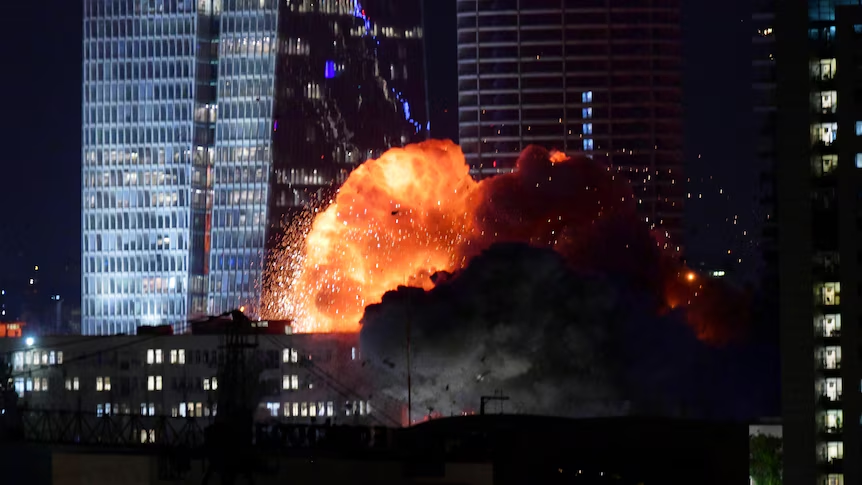
The intensifying conflict between Israel and Iran has now entered its fourth day, with both nations continuing to launch retaliatory air and missile strikes, leading to a death toll exceeding 240 and injuries to more than 1,200 civilians and military personnel.
According to Iran’s Health Ministry, at least 224 people have been killed in Iran, with over 1,200 injured since Israeli airstrikes began on Friday. The casualties include a significant number of civilians, as strikes have hit urban areas, including parts of Tehran and Isfahan. In Israel, government officials reported at least 24 deaths, with dozens injured, after Iran launched hundreds of missiles targeting cities such as Tel Aviv, Haifa, and Petah Tikva.
Unprecedented Retaliation
On Sunday night, Iran launched its largest missile barrage to date, firing over 270 projectiles, including drones and long-range ballistic missiles. While many were intercepted by Israel’s Iron Dome defense system, several penetrated defenses and caused damage to civilian areas.
In response, Israel intensified airstrikes across key Iranian targets, including suspected nuclear facilities, military installations, and missile launch sites. Iranian officials claim some of these strikes targeted oil refineries and civilian infrastructure.
Civilians Heavily Affected
The ongoing attacks have left entire neighborhoods devastated in both countries. Iranian emergency services are overwhelmed, and many hospitals are operating at capacity. Israeli cities have seen mass evacuations, and the government has opened emergency shelters nationwide.
UN agencies have raised alarms over potential humanitarian crises if the violence continues. Civilian infrastructure, including hospitals and schools, has been damaged in both countries.
Global Leaders Urge De-Escalation
World leaders are calling for immediate restraint. The G7 Summit, underway in Quebec, has shifted focus to the conflict, with urgent discussions around international mediation. The United Nations Security Council is also convening to discuss emergency measures.
Former U.S. President Donald Trump, speaking at a campaign event, revealed he had once vetoed an Israeli plan to assassinate Iran’s Supreme Leader Ayatollah Ali Khamenei, calling the move “too dangerous” and a potential trigger for regional war. He added, “Sometimes they have to fight it out before peace can happen,” drawing criticism for endorsing violent escalation.
Meanwhile, oil prices surged 4%, and financial markets remain volatile amid fears the crisis could spread across the region.
With both sides vowing further retaliation, analysts warn of an impending regional war that could draw in proxies from Lebanon, Yemen, and Iraq. The U.S. and EU reportedly engage in behind-the-scenes diplomacy, but no ceasefire appears imminent.




