



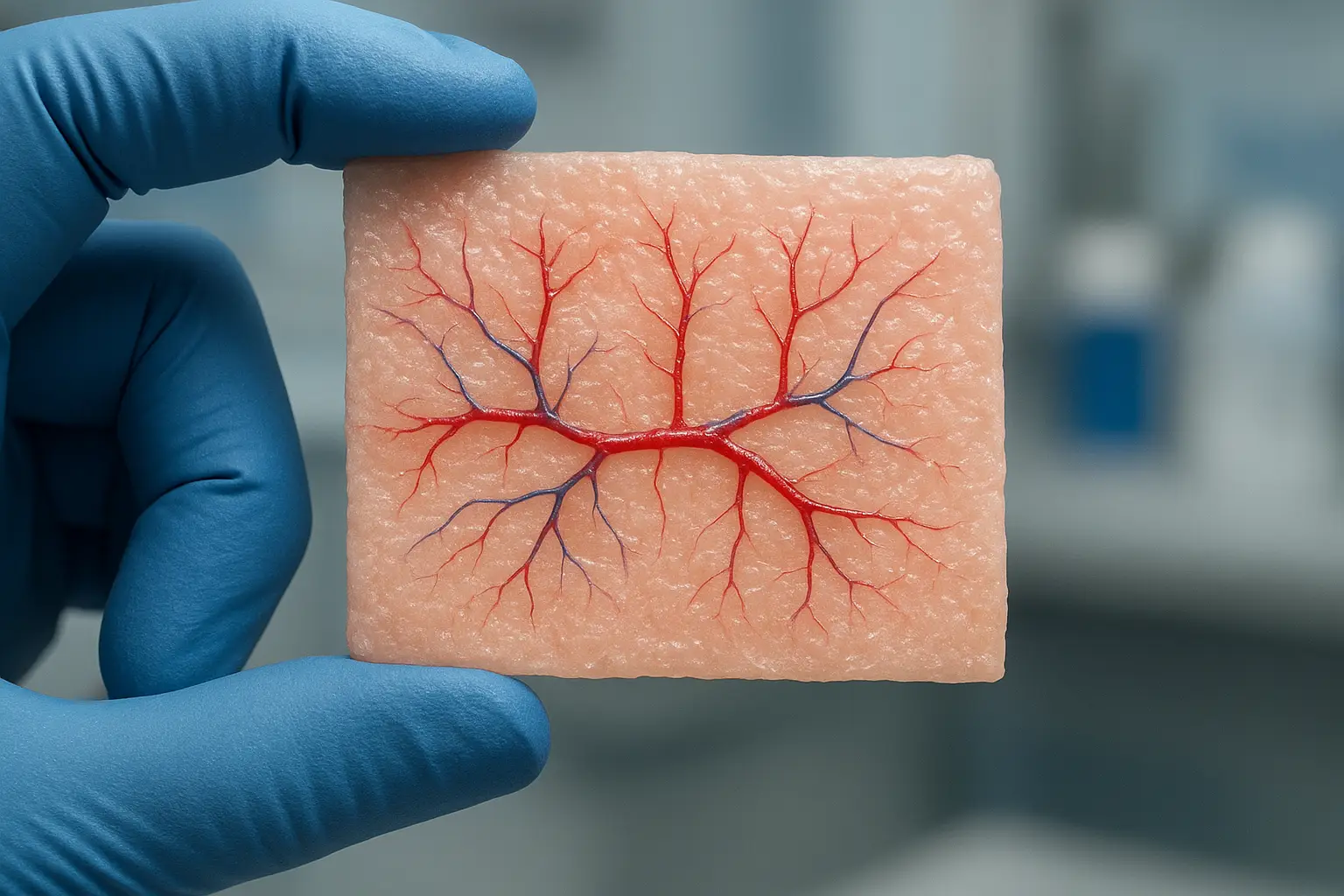
- In a world-first breakthrough, researchers at the University of Queensland’s Frazer Institute have successfully grown fully functional human skin in a laboratory, complete with blood vessels, nerves, immune cells, and hair follicles. The pioneering achievement could revolutionize treatments for burns, skin diseases, and genetic conditions.
Led by Dr. Abbas Shafiee and Professor Kiarash Khosrotehrani, the team spent six years developing the advanced skin model, which mimics natural human skin more closely than any previous attempts. Unlike earlier artificial models, this lab-grown skin contains complex vascular networks, allowing it to function and heal in ways much like real human tissue.
“This is the most life-like skin model ever created,” said Dr. Shafiee. “It gives us the ability to study skin diseases and test treatments with unprecedented accuracy.”
How It Was Made
The scientists reprogrammed ordinary human skin cells into induced pluripotent stem cells (iPSCs), which can transform into multiple cell types. Using these stem cells, they created 3D “organoids”—miniature versions of human skin that developed their layers and structures.
A key breakthrough came when the researchers integrated capillaries and blood vessels, enabling nutrients and oxygen to circulate within the tissue. This allowed the organoids to survive longer and behave like living skin.
The engineered skin also features hair follicles, sweat glands, and sensory nerves, making it the closest replica of natural skin to date.
Why It Matters
Skin diseases such as psoriasis, eczema, scleroderma, and rare genetic disorders affect millions worldwide. Until now, treatments were tested on simplified lab models or animal skin, which often failed to predict how human skin would respond.
“This model gives us a much more accurate tool for understanding complex skin conditions,” explained Prof. Khosrotehrani. “It has the potential to transform how we test therapies and design personalized treatments.”
Beyond dermatology, the development could greatly improve skin grafts for burn victims. Current grafts often lack blood vessels, limiting their effectiveness. With vascularized lab-grown skin, doctors may one day be able to graft tissue that integrates more naturally into the body, reducing rejection and speeding recovery.
Global Impact
The breakthrough has been hailed internationally as a turning point for regenerative medicine. According to Australian media reports, the innovation could particularly benefit regions like Queensland, where skin cancer rates are among the highest in the world.
Moreover, the model provides a safer, more ethical alternative to animal testing, aligning with global efforts to reduce reliance on animal models in medical research.
While clinical applications are still several years away, researchers believe the technology could eventually enable doctors to grow patient-specific skin on demand for use in surgery, transplantation, and cosmetic reconstruction.




