



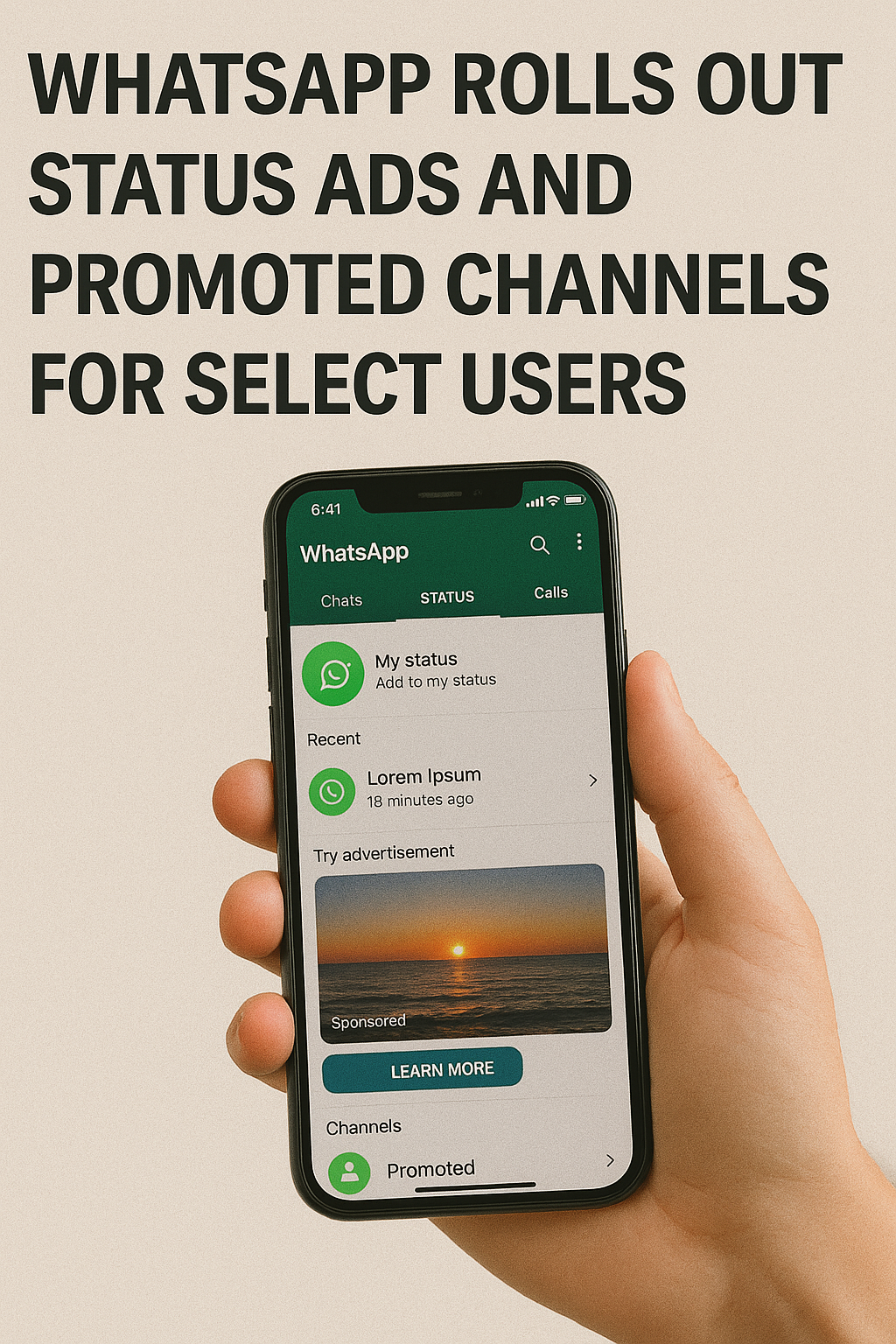
WhatsApp, the globally popular messaging platform owned by Meta, has begun rolling out ads in Status updates and promoted channels to a limited group of users. This marks a significant shift for the platform, which has long remained ad-free despite its massive user base of over 2 billion people.
According to reports from India Today, NDTV, News18, and Business Standard, the new advertising features are part of a beta rollout and are currently available to select users in India and a few other markets.
What’s Changing?
The two major monetization features being introduced include:
- Status Ads: Much like Instagram Stories or Facebook Stories, users will now begin seeing ads in between WhatsApp Status updates. These ads are short-form and appear between the status stories posted by personal contacts.
- Promoted Channels: WhatsApp has started promoting business and creator channels at the top of the Updates tab. These promoted channels are marked clearly and aim to increase visibility for brands and creators using WhatsApp Channels.
These changes come as part of Meta’s long-term monetization strategy for WhatsApp, which had previously relied heavily on WhatsApp Business API services for revenue rather than direct in-app ads.
Why It Matters
This marks the first time WhatsApp is showing direct advertisements within its main user interface. Meta has long resisted adding ads to WhatsApp since acquiring the app in 2014 for $19 billion, partly due to user sensitivity around privacy and simplicity.
However, with growing investor pressure and Meta’s broader push to monetize its suite of messaging apps, WhatsApp is now testing the waters with a minimal and controlled advertising rollout.
User Reactions & Market Strategy
While the features are still limited to beta testers, early user feedback has been mixed. Some welcome the convenience of discovering promoted channels, while others have expressed concern over privacy, distraction, and the intrusion of ads into a previously clean interface.
Meta has clarified that no private chats or messages will be affected, and ad targeting will be based on general usage behavior rather than the content of encrypted conversations.
Industry experts believe the move is a precursor to a broader ads-based monetization model, especially in emerging markets like India, where WhatsApp dominates mobile communication and commerce.
If the test rollout proves successful, WhatsApp may begin a wider rollout of ads in Status and promoted channels globally in the coming months. However, Meta is expected to move cautiously to avoid alienating its user base.
WhatsApp has not officially confirmed a global release timeline but has stated that feedback from current testers will shape the next phases of deployment.




