



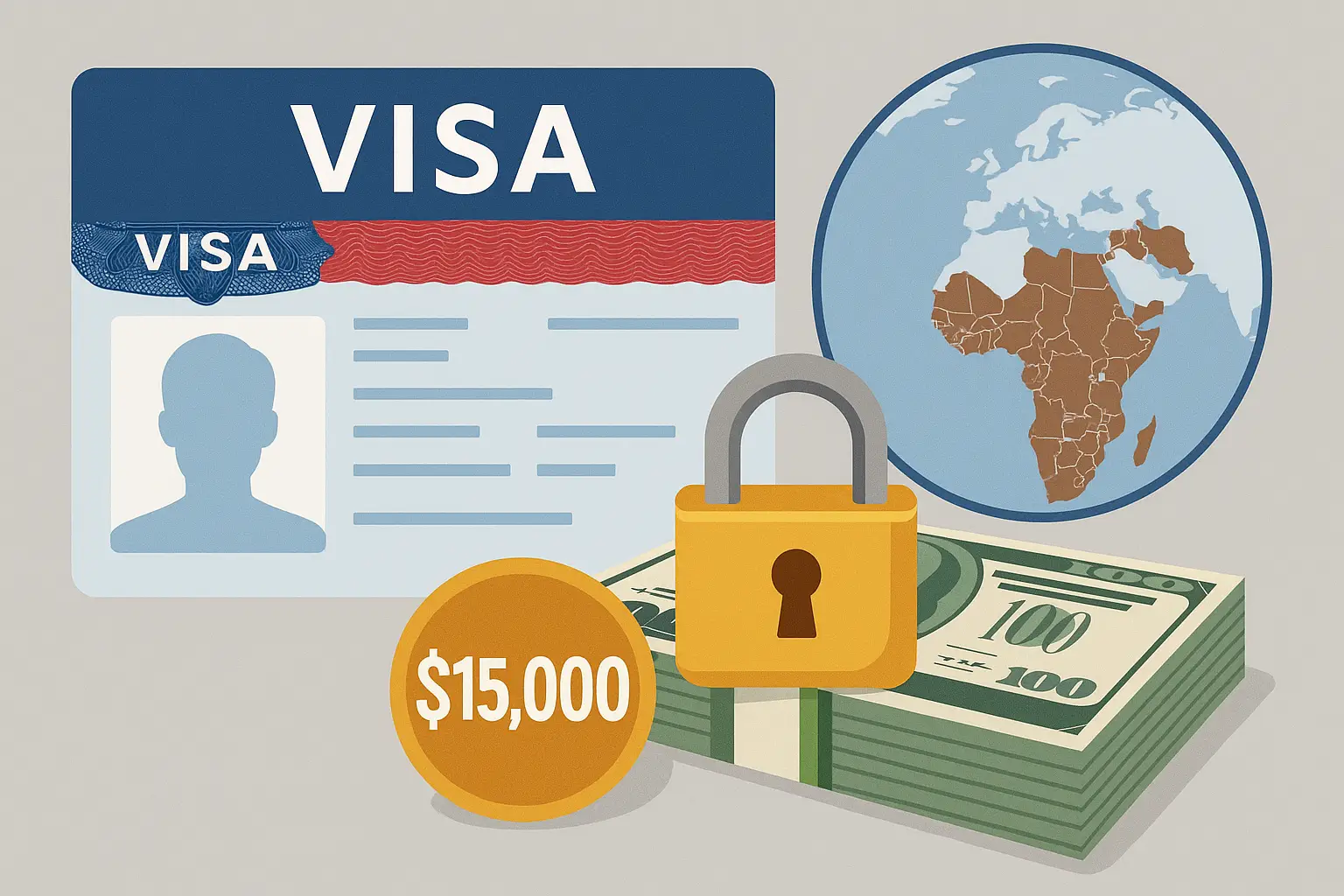
The United States has introduced a new visa regulation that will require certain travelers to post a bond of up to $15,000 before entering the country. The move is aimed at reducing visa overstays, a long-standing concern for U.S. immigration authorities.
The Department of Homeland Security (DHS) and the State Department confirmed that the policy will initially target visitors from countries with high overstay rates for temporary tourist and business visas. The measure is expected to impact a limited number of applicants but has sparked global debate on its fairness and feasibility.
Who Will Be Affected
According to early reports, the bond requirement will apply primarily to:
- Tourists and short-term visitors from countries with high visa overstay rates.
- Applicants for B-1/B-2 visitor visas who do not have strong financial or family ties to their home country.
- Travelers flagged for previous immigration violations or extended stays.
The U.S. government has not yet published the full list of countries affected, but immigration experts expect it to include nations in South Asia, Africa, and parts of Latin America, where overstay rates are historically higher.
The bonds are expected to range from $5,000 to $15,000, depending on risk assessment, and will be refunded once the visitor departs the U.S. within the permitted stay period.
How the Rule Works
Under the new policy:
- Applicants will be notified during their visa interview if a bond is required.
- The bond amount must be paid before the visa can be issued.
- The bond will be forfeited if the visitor overstays or violates visa terms.
- If the traveler leaves on time, the bond is fully refundable.
A senior DHS official explained that the bond system is a pilot program designed to encourage compliance and deter habitual overstays, which contribute to immigration backlogs.
Global Reactions and Concerns
The policy has drawn mixed reactions from immigration advocates, travel industry groups, and foreign governments.
Critics argue that the hefty bond could discourage tourism and penalize low-income travelers, effectively creating a two-tier system for U.S. entry. Travel associations have warned that the rule could impact international travel demand, particularly from countries that contribute significantly to the U.S. tourism economy.
Supporters, however, claim that the bond will reduce illegal overstays and strengthen immigration enforcement without resorting to blanket travel bans.




