



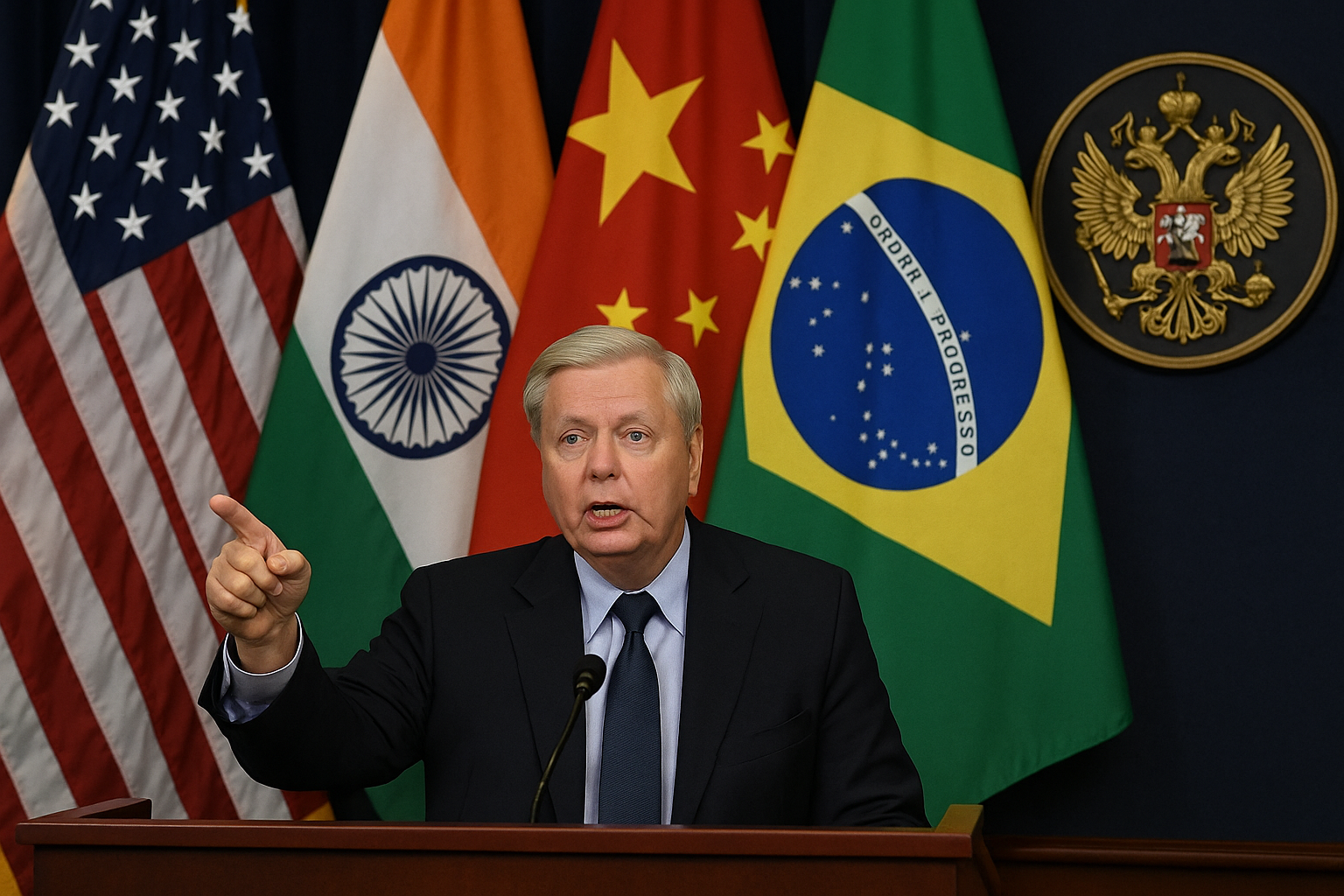
US Senator Lindsey Graham issued a stark warning to India, China, and Brazil, threatening to “crush your economy” if the nations continue to purchase cheap Russian oil, thereby indirectly supporting Russia’s war efforts in Ukraine.
In an interview that has sparked diplomatic ripples, the Republican Senator said he would “tariff the hell out of” countries that keep buying discounted Russian crude, arguing that such purchases undermine global sanctions and fuel Moscow’s military campaign.
“If you keep helping Putin by buying his oil on the cheap, you’re going to pay a price,” Graham said, vowing severe economic consequences.
Targeting Russian Revenue
Graham accused India, China, and Brazil of exploiting the global sanctions loophole, allowing them to benefit economically while Western allies bear the brunt of supporting Ukraine. He emphasized the need for unified economic pressure on Russia, calling the oil trade a “lifeline for Putin’s war machine.”
The US has already imposed a price cap on Russian oil under the G7-led sanctions. Still, enforcement has been challenging, especially as countries like India and China have significantly increased their imports since 2022.
India’s Stand
India has defended its energy purchases, citing the need to secure affordable fuel for a developing economy and maintain strategic autonomy in foreign policy. Indian officials have repeatedly stated that they are not violating international law and continue to buy from multiple global suppliers.
Global Fallout?
Graham’s remarks signal a potentially tougher US stance ahead, including:
- Tariffs on oil-linked products or partner economies.
- Diplomatic pressure to align with Western sanctions.
- Legislative proposals to curb third-party trade benefiting Russia.
Analysts warn that such rhetoric could lead to economic and geopolitical tensions, especially given that India and Brazil are key partners in the BRICS alliance and the US has significant trade relationships.
It remains unclear whether Graham’s position reflects broader Congressional sentiment or future Biden administration policy. However, with the 2024 election cycle over and the global order shifting, energy diplomacy is once again at the center of US foreign strategy.




