



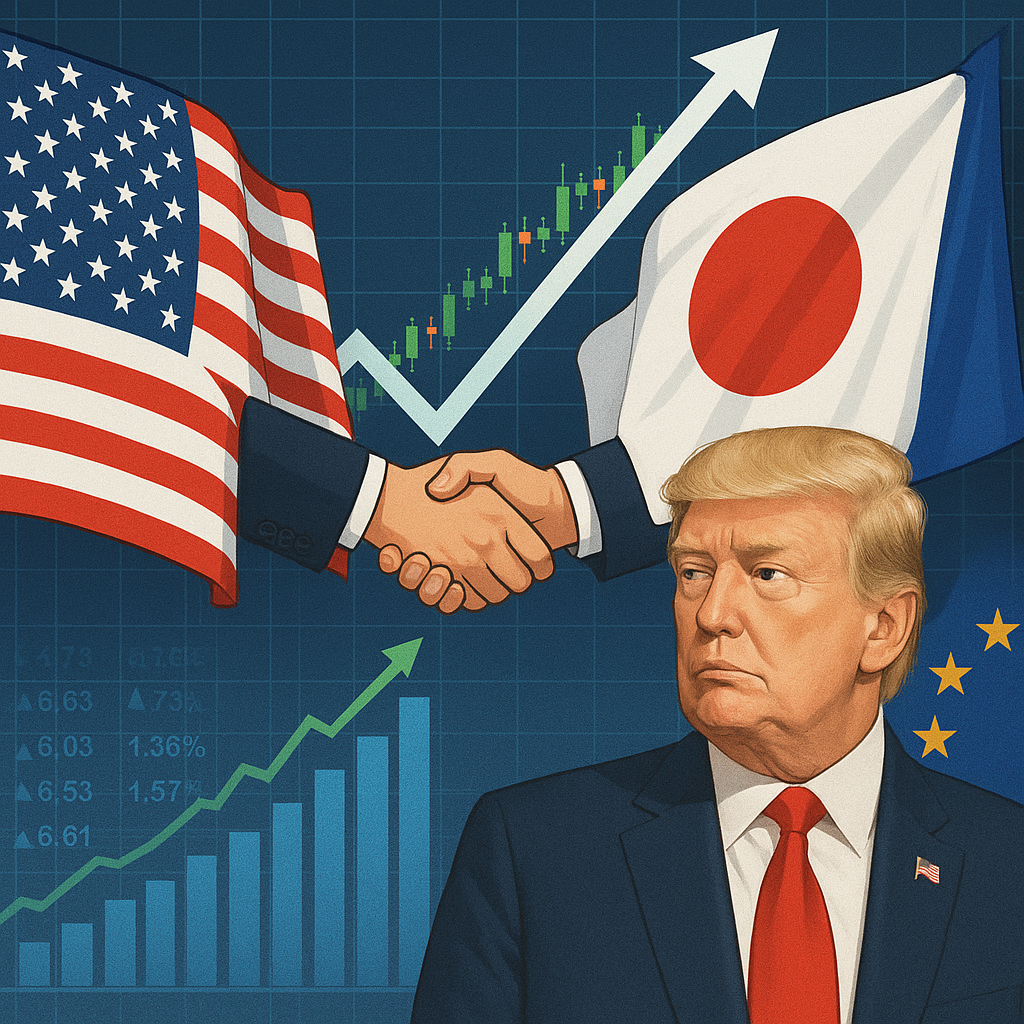
In a significant geopolitical and economic move, the United States and Japan have reached a landmark trade agreement, fueling optimism across global markets. The deal, which focuses heavily on the auto sector and agricultural imports, sent Japan’s Nikkei index soaring, while also strengthening the yen and boosting investor confidence in the region.
Following the announcement, former U.S. President Donald Trump, who played a key role in negotiating the deal, has signaled that his administration’s next major focus will be on reaching a similar agreement with the European Union.
Auto Stocks Lead the Nikkei Rally
Japanese auto stocks saw a sharp surge after details of the US-Japan agreement were made public. The deal includes relaxed tariffs on certain automotive components. It aims to streamline supply chains between the two nations, a move that could significantly benefit Japanese carmakers exporting to the U.S.
The Nikkei 225 jumped over 1.3% in intraday trading on Wednesday, with Toyota, Honda, and Mazda among the top gainers. Analysts noted that the trade deal eases long-standing tensions and alleviates some uncertainty that had been weighing on the sector.
“The agreement signals a clear intention to deepen economic ties while avoiding a tariff war,” said Takashi Arai, a Tokyo-based market analyst. “For Japan, especially it’s auto industry, this is a big win.”
Yen Strengthens, Gold Slips
Alongside the equity market rally, the Japanese yen appreciated against the U.S. dollar, buoyed by rising investor confidence in Japan’s economic stability and trade outlook. Meanwhile, gold prices slightly declined following Trump’s announcement, as risk sentiment shifted toward equities and away from traditional safe-haven assets.
Market sentiment also improved in the U.S. and European indices, driven by hopes of broader global trade stability.
Agriculture: Still a Sticking Point for India
While the U.S. and Japan celebrated the trade deal, India’s agricultural policy remains a challenge in wider international negotiations. Reports suggest that U.S. trade representatives have voiced concerns about India’s grain stockpiling and export policies, which could potentially distort global prices. The India-U.S. agriculture standoff continues even as other trade relationships show signs of improvement.
Trade analysts argue that the Japan deal could put pressure on India to offer more transparency and flexibility in its agricultural negotiations with the U.S.
Trump Targets EU Next
Shortly after finalizing the Japan deal, Donald Trump indicated a renewed push to engage the European Union in trade talks. His focus reportedly includes digital taxes, autos, and agricultural goods — areas that have long been contentious between Washington and Brussels.
“We’ve made progress with Japan, and now it’s time to do the same with Europe,” Trump said at a press briefing. “The goal is fair, reciprocal trade that benefits American workers and industries.”
While EU officials have yet to respond formally, insiders say there’s growing concern in Brussels over Trump’s renewed assertiveness on trade, particularly if it involves threats of tariffs or unilateral action.




