



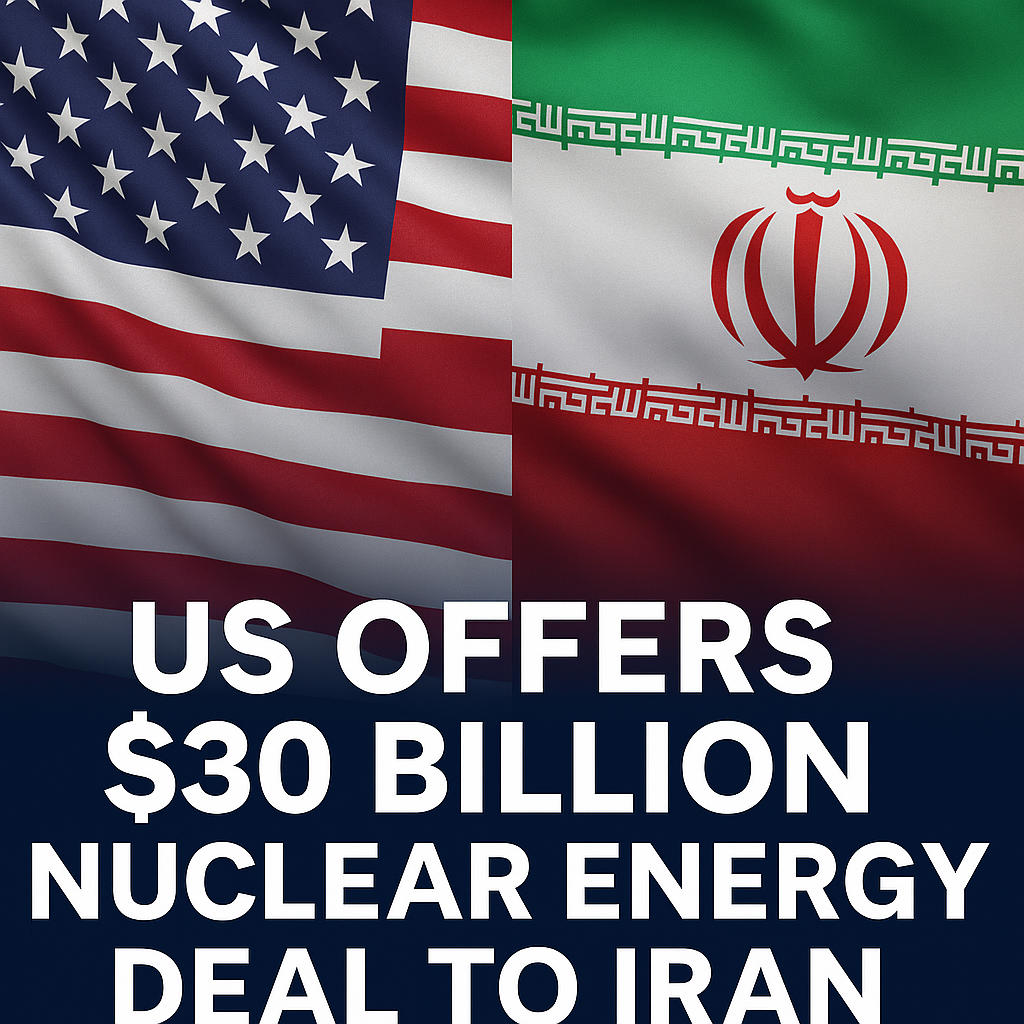
In a dramatic shift from military rhetoric to diplomatic overtures, the United States has proposed a $30 billion nuclear energy deal to Iran. The proposal aims to curb Iran’s uranium enrichment activities in exchange for significant financial and technological investments in the country’s civilian nuclear energy sector.
The offer comes at a volatile time, as the Middle East remains on edge due to the escalating conflict between Israel and Iran. Following weeks of military strikes, international concern has intensified over the potential for broader regional destabilization. The U.S., while publicly backing Israel, has reportedly reached out to Tehran through European intermediaries to revive dialogue and avoid a full-scale war.
According to reports, the Biden administration is offering to unfreeze up to $10 billion in Iranian assets held abroad and facilitate an additional $20 billion in infrastructure and technology investments. These would support Iran’s transition toward a peaceful, monitored nuclear program aimed strictly at civilian energy use.
The deal would reportedly involve cooperation with international nuclear watchdogs, including the International Atomic Energy Agency (IAEA), to ensure transparency and compliance. The U.S. hopes this package will encourage Iran to halt its uranium enrichment beyond civilian thresholds and to return to compliance with the 2015 Joint Comprehensive Plan of Action (JCPOA), which collapsed after the U.S. withdrew in 2018.
A senior U.S. official, speaking anonymously to the media, stated, “This is a real opportunity to prevent a nuclear crisis and stabilize a region that’s on the brink.”
Iran, however, has not officially responded to the proposal. Sources close to Tehran suggest internal debates are ongoing, with hardliners questioning the sincerity of U.S. intentions amid continued military threats and sanctions. The Iranian government has maintained that its nuclear program is for peaceful purposes, but has also repeatedly stated that it will not negotiate “under pressure.”
Israel, meanwhile, has not commented directly on the U.S. initiative, but insiders suggest Tel Aviv remains skeptical. Analysts believe Israeli officials fear the proposal may legitimize Iran’s nuclear infrastructure without eliminating the perceived threat.
Experts see the offer as part of a broader strategic pivot by Washington, designed to manage both the Iran-Israel crisis and the global fallout from spiking oil prices and disrupted trade routes. The Strait of Hormuz, a critical chokepoint for global energy supplies, has become a flashpoint in the ongoing hostilities.
While the outcome remains uncertain, the proposal signals a potential opening for renewed diplomacy after years of tension. Whether Iran will accept the offer—or view it as another stalling tactic—could shape the region’s future for years to come.




