



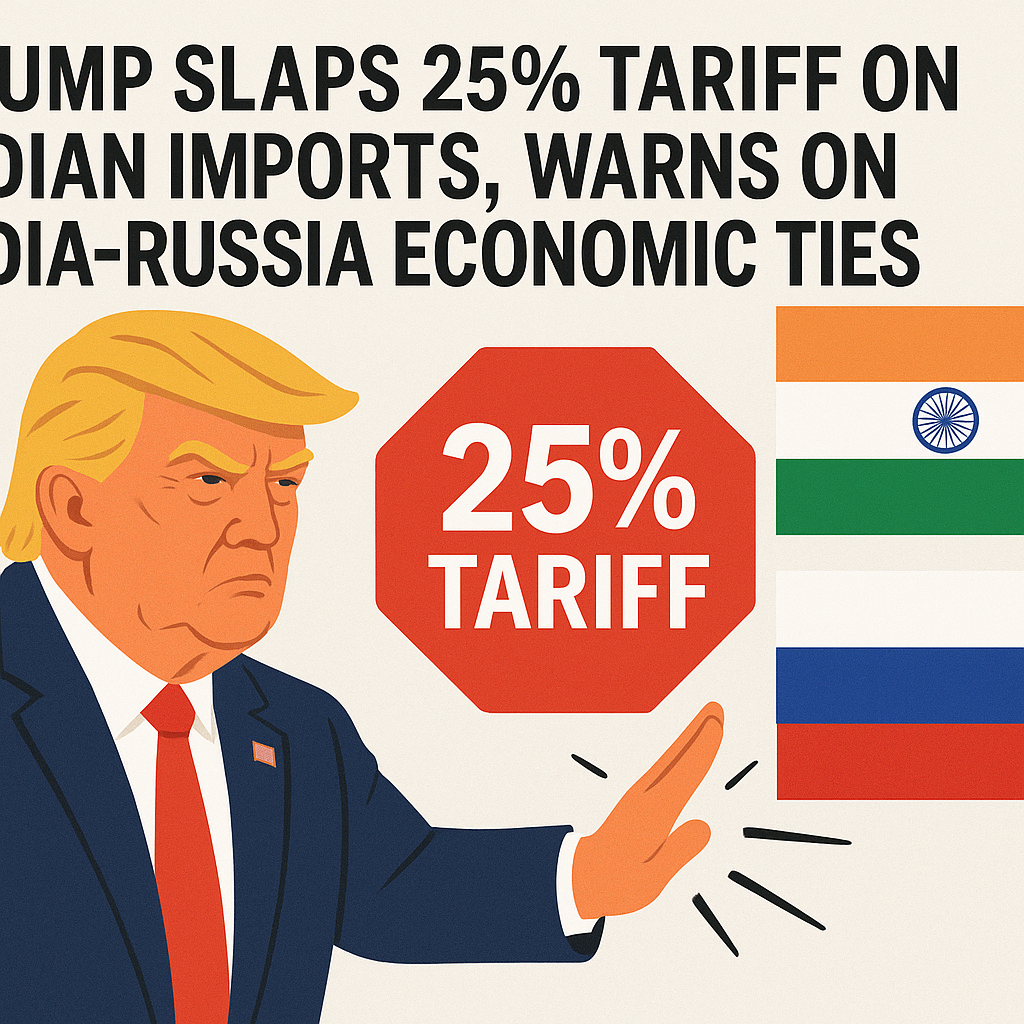
US President Donald Trump has reignited global trade tensions with a new wave of tariffs targeting a wide range of countries, including key US allies and major trading partners.
The announcement comes amid ongoing disputes with India, China, and the European Union, as the Trump administration continues its “America First” trade policy, aimed at reshaping global supply chains and reducing US trade deficits.
Key Tariff Measures
According to the White House and trade officials:
- New Global Tariff List
- Tariffs ranging from 10% to 25% have been imposed on imports from multiple countries, covering electronics, automobiles, steel, and agricultural products.
- Nations affected include India, China, the European Union, Mexico, and South Korea.
- Tariffs ranging from 10% to 25% have been imposed on imports from multiple countries, covering electronics, automobiles, steel, and agricultural products.
- Focus on “Unfair Trade Practices”
- Trump accused several countries of currency manipulation, market dumping, and reliance on US markets without reciprocity.
- In a press briefing, he said:
“The US will no longer tolerate countries that take advantage of American workers and industry.”
- Trump accused several countries of currency manipulation, market dumping, and reliance on US markets without reciprocity.
- Potential for Expansion
- Officials hinted that further tariffs could follow if negotiations with affected countries do not lead to “fair trade agreements.”
- Officials hinted that further tariffs could follow if negotiations with affected countries do not lead to “fair trade agreements.”
Global Reactions and Market Impact
The sweeping tariffs have triggered concerns among global markets, with stocks falling in early trading:
- European Union officials called the move “economic aggression” and said retaliatory measures are under consideration.
- China accused the US of escalating a global trade war, while signaling its own tariff countermeasures.
- India and Mexico are reviewing legal and diplomatic responses through the World Trade Organization (WTO).
Financial analysts warn that the decision could disrupt supply chains and raise inflationary pressures in the US, particularly in consumer goods and auto sectors.
Trade Experts Warn of Fallout
Global trade experts fear that these tariffs could trigger a wave of retaliatory actions, similar to the 2018 trade conflicts that slowed global economic growth.
Professor Laura Cheng, an international trade analyst, said:
“With tariffs targeting both allies and rivals, we could see a fragmentation of global trade systems and an increase in protectionism worldwide.”
The International Monetary Fund (IMF) has already revised its global growth forecast, citing rising uncertainty over trade policies.




