



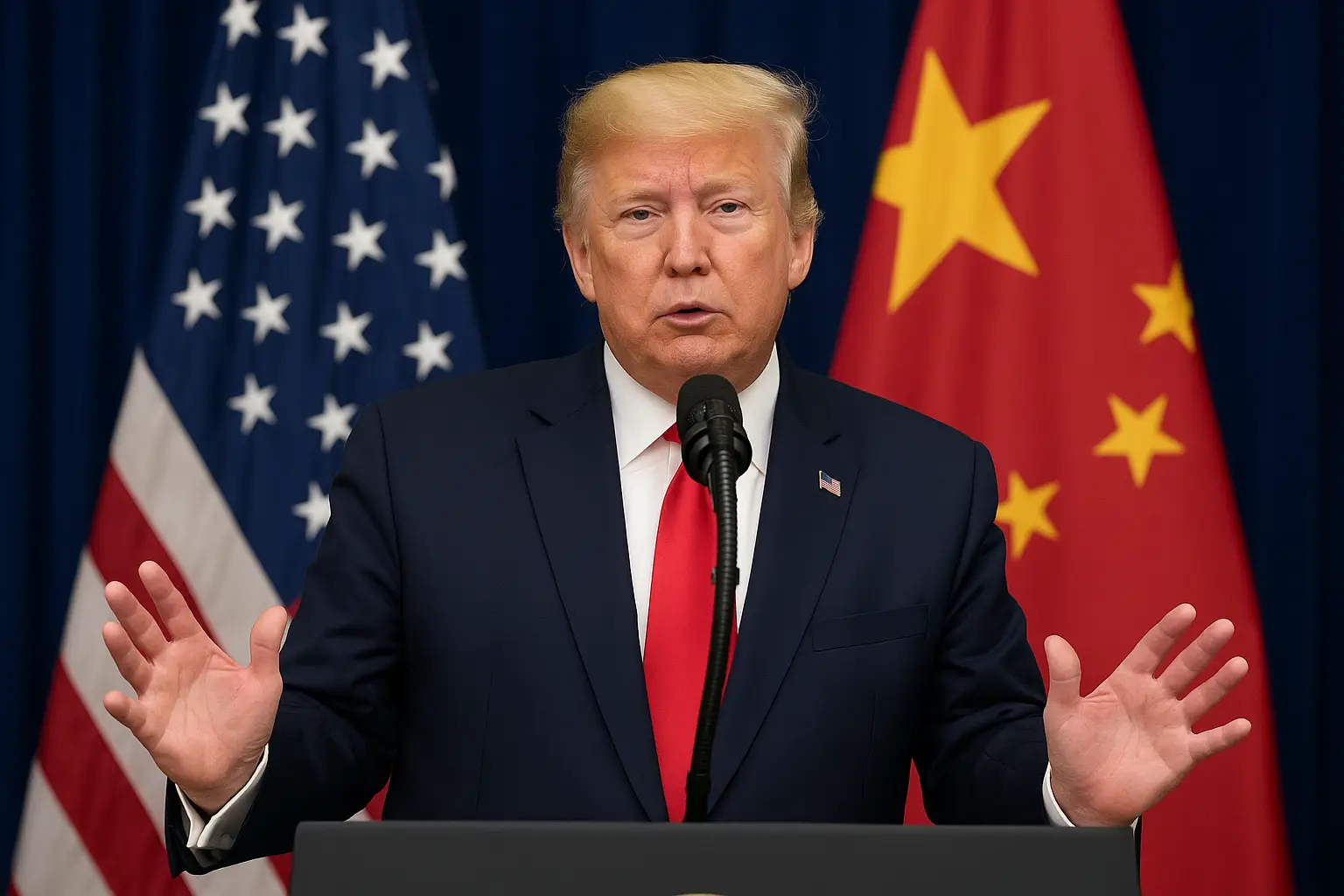
In a move signaling both caution and continued pressure, U.S. President Donald Trump has signed an executive order extending the deadline for additional tariffs on Chinese imports by 90 days. The decision, announced on Monday, comes as trade negotiators from both countries push forward in discussions aimed at resolving long-standing economic disputes.
Balancing Pressure with Diplomacy
The extension effectively delays the implementation of planned tariff hikes that had been set to take effect soon. According to White House officials, the move is intended to give negotiators more breathing room to finalize agreements on contentious issues, including intellectual property rights, market access, and technology transfers.
“We are making progress, but there is still work to be done,” a senior administration official told reporters. “This extension is not a retreat—it is an opportunity for China to come to the table with concrete solutions.”
The 125% Tariff Context
The tariff pause follows a series of tit-for-tat trade measures between the U.S. and China over the past year, including the imposition of tariffs as high as 125% on select goods. The trade dispute has spanned multiple sectors, from consumer electronics and steel to agricultural products, affecting billions of dollars in bilateral trade.
Despite the pause, President Trump made it clear that his administration’s stance remains firm. “If we don’t get a fair deal, the tariffs will go forward,” he stated, emphasizing that the U.S. will continue to defend its economic interests.
A Contrast with India Policy
Interestingly, the announcement came shortly after Trump criticized India over trade practices, underscoring his broader “America First” trade policy. In recent remarks, the president accused India of unfair tariffs on U.S. goods and hinted at potential retaliatory measures. The contrast—offering China a temporary reprieve while taking aim at India—has sparked debate among trade analysts.
Some experts view the China extension as a strategic maneuver rather than a softening of the administration’s position. “This is about leverage,” said Michael Harrington, a trade policy analyst. “Trump is giving China a window to make concessions, while signaling to other nations, including India, that the U.S. won’t hesitate to act when necessary.”
Market Reactions and Economic Stakes
Financial markets responded positively to the news, with major U.S. stock indices closing higher amid optimism that prolonged negotiations could avert an immediate escalation in the trade war. Analysts note that reducing uncertainty, even temporarily, can boost investor confidence and stabilize global supply chains.
However, business groups remain cautious. The U.S. Chamber of Commerce welcomed the pause but urged both sides to work swiftly toward a comprehensive agreement. “Prolonged uncertainty is costly,” the chamber said in a statement. “We need clear, enforceable rules that allow for fair competition.”
Looking Ahead
The next 90 days will be critical in determining whether the world’s two largest economies can find common ground. Trade representatives are expected to meet multiple times in the coming weeks, with a focus on resolving structural issues rather than just addressing the trade deficit.
For now, the extension offers a temporary reprieve from escalating tensions, but the underlying disputes remain unresolved. As Trump himself put it, “We’re giving them a chance. What happens next is up to them.”




