



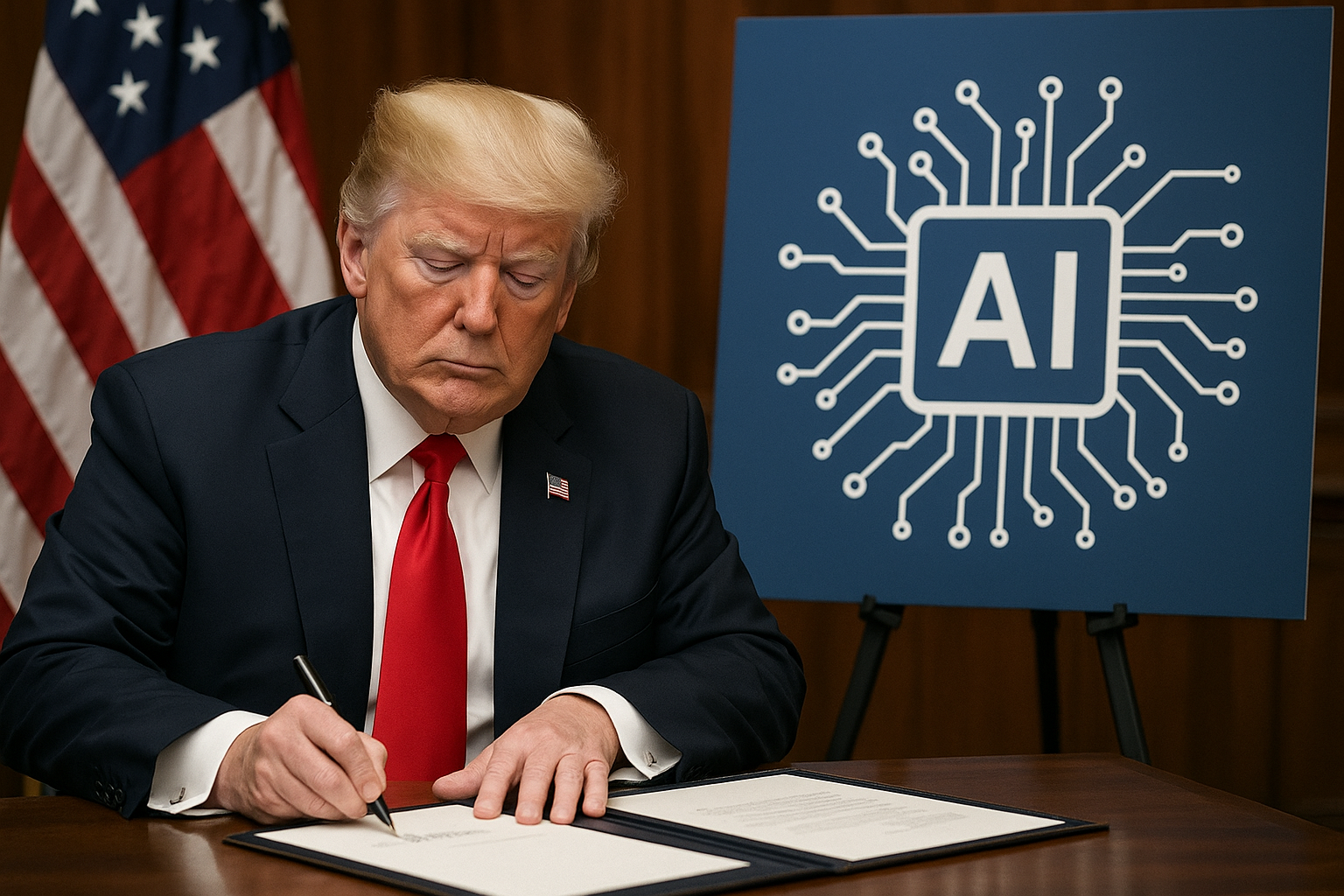
Former U.S. President Donald Trump has signed a series of executive orders aimed at reshaping America’s approach to artificial intelligence, with a strong focus on eliminating political bias, particularly what he calls “woke AI.” The new directives are part of Trump’s broader vision to establish American dominance in the global AI race.
A Push for ‘Woke-Free’ AI
The centerpiece of the action plan is a clear mandate: prevent AI systems used by the federal government from incorporating political or ideological bias. Trump’s executive orders instruct all federal agencies to ensure that the algorithms and large language models they use or fund do not favor progressive or identity-based viewpoints.
In a press release from the White House, the policy was described as a step toward “neutral, safe, and fair” AI systems that reflect American values, not partisan agendas.
The orders also include a requirement that federal AI developers disclose data sources and model parameters to verify neutrality, a move that could set a precedent for transparency in public-sector AI development.
A Broader National AI Strategy
The executive actions are part of Trump’s evolving AI policy plan, which he says will position the U.S. as a global leader in AI research, ethics, and defense.
The plan includes:
- Funding increases for American AI innovation and infrastructure
- Restrictions on Chinese AI investment in critical U.S. sectors
- A national database of approved AI models for federal use
- A “Freedom from Algorithmic Discrimination” clause to protect users from biased outcomes
Trump emphasized the importance of AI in both economic growth and national security, stating, “Artificial intelligence must work for the American people, not against them.”
Tech Industry Response: Cautious Optimism
Major U.S. tech companies, including OpenAI, Microsoft, and Palantir, cautiously welcomed the focus on AI leadership. While many agree on the importance of American competitiveness, some expressed concern over the ambiguity around what constitutes “woke” content or “ideological neutrality.”
Several AI ethics researchers warn that enforcing political neutrality in machine learning could be extremely complex. Bias in AI, they argue, is often systemic and may reflect broader societal inequalities, not intentional partisanship.
Nevertheless, many executives applauded the clarity on regulatory expectations and the funding boost for American AI infrastructure.
Political Reactions Split
As expected, the new executive orders sparked mixed reactions. Conservative lawmakers praised the move as overdue, arguing that AI models have become vehicles for progressive social agendas. Democrats and civil rights advocates, on the other hand, criticized the plan as politically motivated and potentially suppressive of inclusion-focused technology.
Senator Alexandria Ocasio-Cortez stated, “You can’t code fairness by silencing diversity. This is censorship disguised as neutrality.”




