



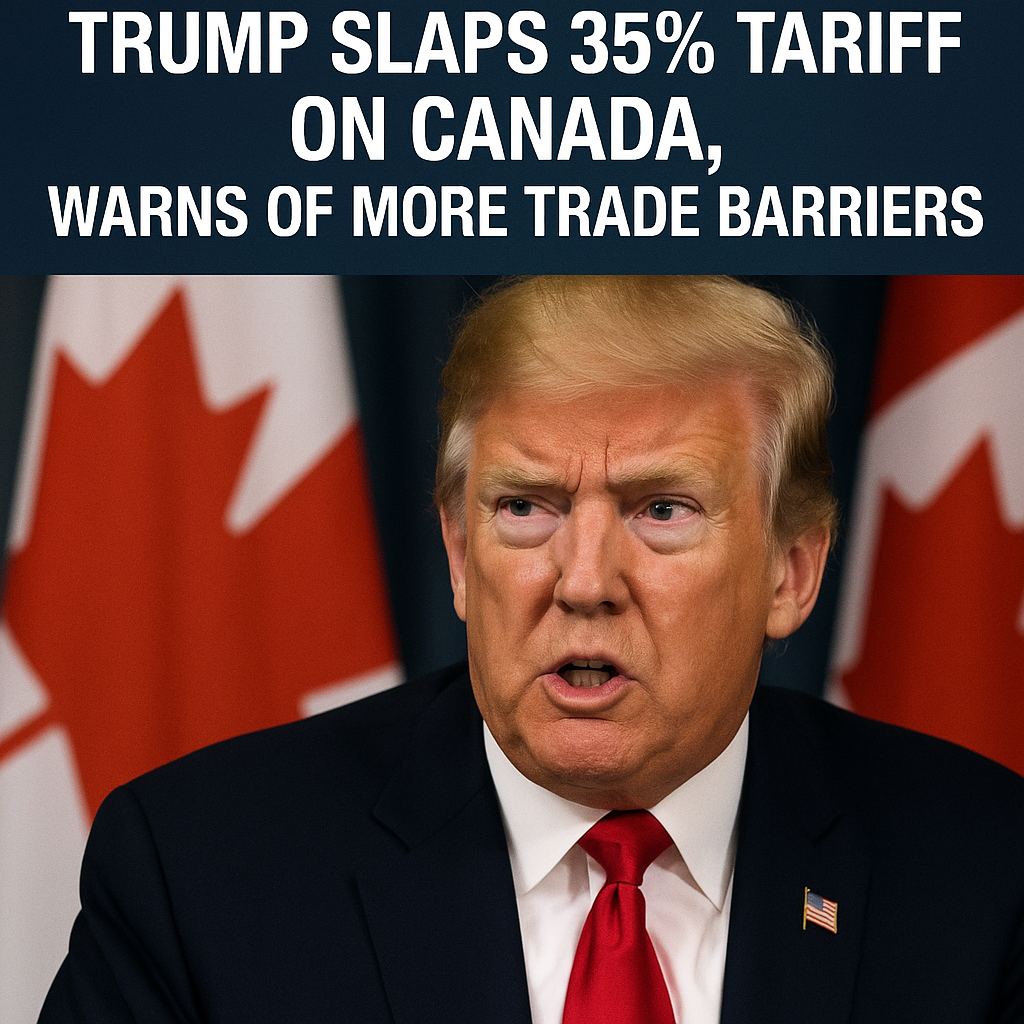
Former U.S. President Donald Trump has reignited trade tensions by announcing a 35% tariff on imports from Canada, effective August 1, citing what he calls retaliatory measures by Ottawa and broader economic concerns. He also hinted at expanding duties on imports from other nations, sparking fresh fears of a global trade war.
Canada in the Crosshairs
The new tariff will affect a wide range of Canadian goods, excluding a few categories, such as energy and fertilizer, that are protected under the USMCA (United States–Mexico–Canada Agreement). Trump accused Canada of exploiting trade loopholes and blamed it for what he termed a “failure to cooperate” on issues like drug control, particularly the distribution of fentanyl.
“Canada has not played fair,” Trump said at a campaign rally in Michigan. “Starting August 1, we are levelling the field.”
Tariff Threats Extend Worldwide
Trump didn’t stop at Canada. He warned of 15–20% blanket tariffs on other countries and floated the idea of a 50% import duty on copper, targeting nations that he believes undercut U.S. industries.
Reports suggest that “individual letters” were sent to other countries laying out possible tariff structures, though Trump stated that “friendly nations” may be exempt.
Canada Pushes Back
Canadian Prime Minister Mark Carney responded swiftly, stating that his government will “stand firm” and take countermeasures if needed. “We will not be intimidated,” Carney said. Canadian officials are reportedly considering reciprocal tariffs and seeking WTO consultation.
This escalation risks further straining cross-border trade ties just as both economies face global inflationary pressures and supply chain vulnerabilities.
Market Reaction
- US Dollar rose as investors bet on a more protectionist U.S. trade stance.
- Canadian Dollar fell sharply, and European equities dipped nearly 1% in early trade.
- Gold and Bitcoin both climbed, reflecting increased demand for safe-haven assets.
- Copper prices surged in anticipation of supply disruptions.
Financial analysts warn that these sudden tariff hikes could hurt manufacturing, disrupt retail pricing, and derail recovery in sectors like autos, electronics, and agriculture.
What’s Next?
- August 1: The 35% Canadian tariff is set to take effect.
- Diplomatic talks between U.S. allies and Washington are expected in the coming days.
- Further tariff notices may follow as Trump’s team signals more aggressive economic measures ahead of the 2026 election campaign.
Donald Trump’s sweeping tariff move against Canada marks a sharp return to his “America First” economic playbook. With global supply chains still fragile and inflation lingering, these actions could have significant ripple effects—not just for Canada–U.S. relations, but for international trade at large. All eyes now turn to August 1, when the tariff hammer officially drops.




