



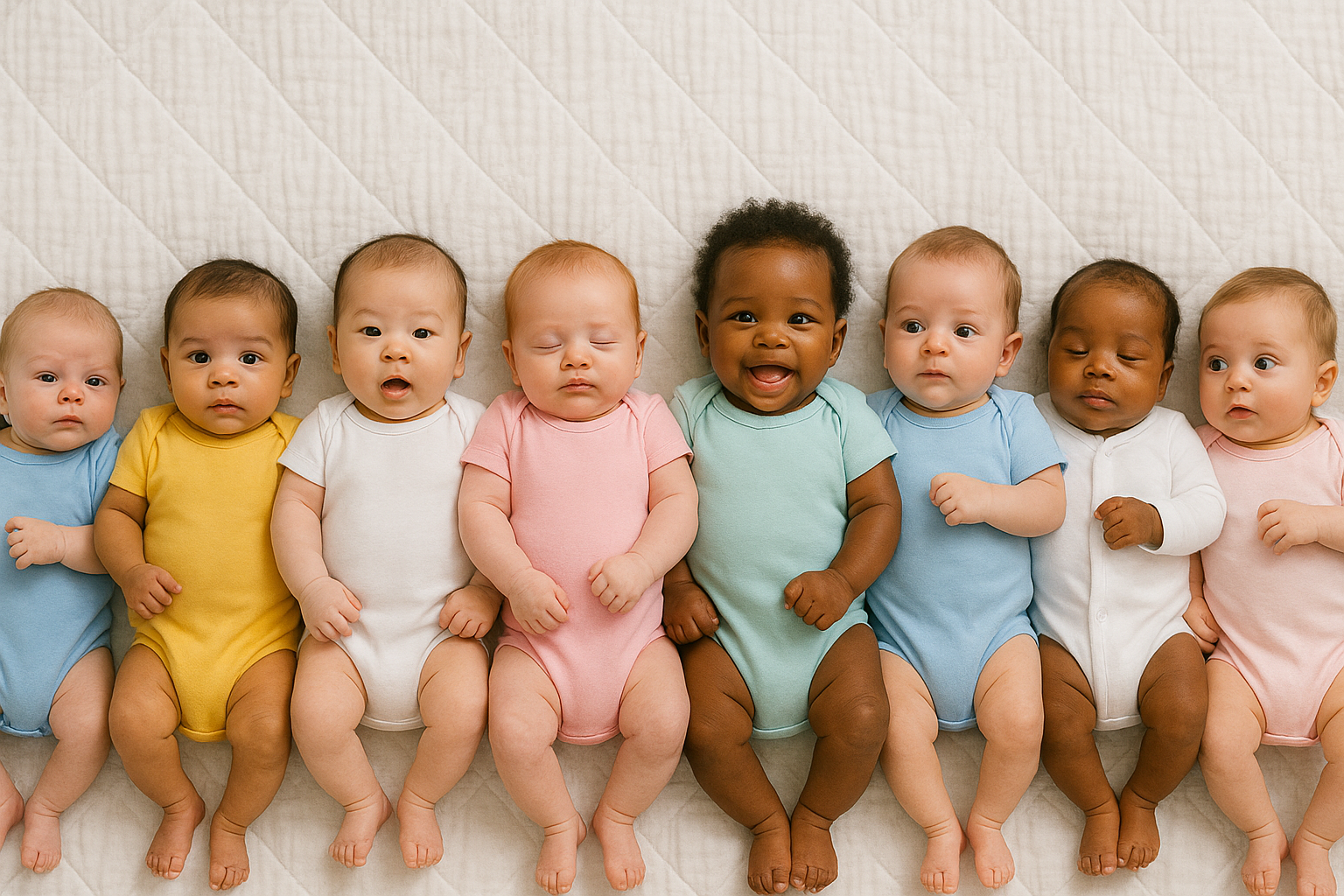
In a groundbreaking medical achievement, eight healthy babies have been born in the United Kingdom using DNA from three individuals, marking a major step forward in the prevention of hereditary mitochondrial diseases.
The births, reported by UK regulatory authorities and confirmed by several media outlets including The Guardian and BBC, were the result of a pioneering fertility technique known as mitochondrial donation treatment (MDT), commonly referred to as “three-parent IVF.”
This advanced method involves using the nuclear DNA from two parents (the mother and father), while mitochondrial DNA — which provides energy to the cell — is donated by a third individual, typically a healthy female donor. The goal is to prevent the transmission of debilitating and often fatal mitochondrial disorders from mother to child.
Mitochondrial diseases affect around 1 in 5,000 people globally and can result in severe muscle weakness, heart failure, neurological disorders, and in some cases, death. Because mitochondria are passed solely through maternal DNA, women carrying faulty mitochondria face the risk of passing them on to their offspring. This new technique offers an opportunity to break that cycle.
The Newcastle Fertility Centre, which spearheaded much of the UK’s research into MDT, played a key role in the process. The births were carried out under strict regulation and oversight by the UK’s Human Fertilisation and Embryology Authority (HFEA), which had granted approval for the procedure under exceptional medical circumstances.
“The successful births are a testament to years of rigorous scientific research and careful ethical review,” said a spokesperson for the HFEA. “This treatment offers hope to families affected by serious mitochondrial conditions.”
While the identities of the babies and families have not been made public, officials confirmed all eight children are healthy and developing normally. The UK had previously allowed mitochondrial donation on a case-by-case basis since 2015, but these are among the first confirmed successful outcomes.
Dr. Mary Herbert, a leading reproductive biologist at Newcastle University, emphasized the significance of the milestone. “This is not just a technical success, but a profound step forward for reproductive medicine. For families with devastating mitochondrial diseases, this gives real hope.”
Ethical debates have surrounded the technique due to its genetic complexity. While the term “three-parent baby” has caught public attention, experts stress that more than 99.8% of the child’s DNA still comes from the mother and father. Only a small fraction — less than 0.2% — is inherited from the donor and relates specifically to mitochondrial function.
Despite the promising outcomes, scientists continue to monitor the children closely for long-term health effects, and further studies are being conducted to assess the safety and efficacy of the procedure across a broader population.
The UK remains the only country where such births are legally permitted and regulated, although research is ongoing globally, including in the United States, where similar procedures have been performed under clinical trials.
As more data emerges, experts believe mitochondrial donation could become a mainstream solution for families carrying these rare but serious genetic risks, potentially reshaping the future of fertility treatments.




