



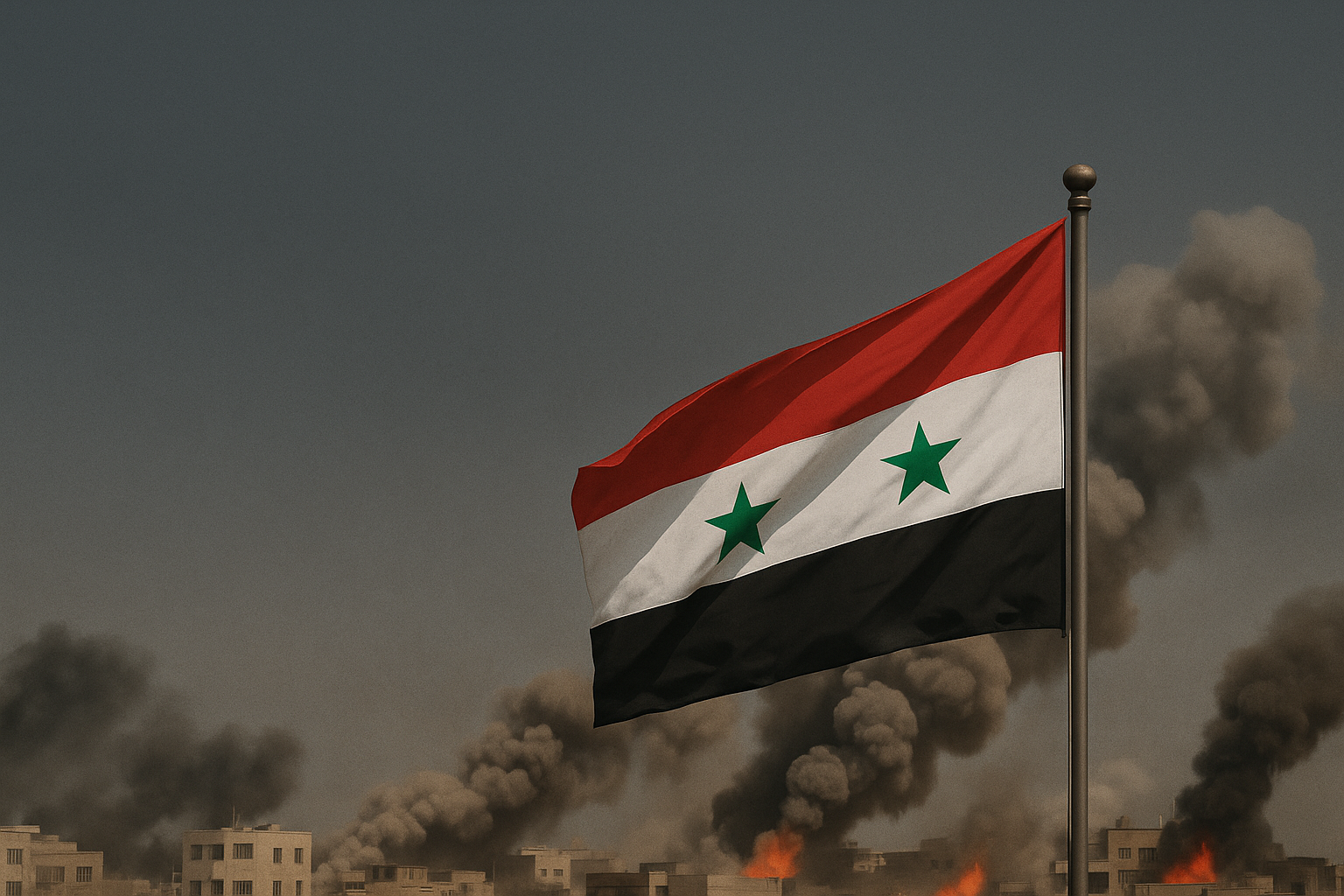
Syria has vowed justice following intensified Israeli airstrikes on Damascus and growing unrest in the Druze-majority region of Sweida. Syrian officials, including former vice president Farouk al-Sharaa, have condemned what they called “wide-scale targeting of civilians” by Israel, asserting they are “not afraid of war”.
Meanwhile, Druze leaders have announced a fragile ceasefire after days of violent clashes between government forces and armed factions in Sweida, raising hopes for de-escalation even as Israel continues its military operations.
What’s Happening in Syria?
- Israeli Airstrikes Escalate:
In recent days, Israel has intensified strikes across Damascus and southern Syria, targeting what it claims are Iranian-backed groups and weapons depots. Explosions rocked several neighborhoods in the capital. - Civilian Casualties and Infrastructure Damage:
Syrian officials report damage to civilian infrastructure and rising casualties, although exact numbers remain unclear. - Sweida Clashes and Druze Ceasefire:
The province of Sweida, home to Syria’s Druze minority, has witnessed armed confrontations between locals and regime-aligned forces. On Tuesday, Druze elders announced a temporary ceasefire aimed at calming tensions. - Syria’s Strong Rebuke:
Al-Sharaa made a rare public statement, condemning Israeli attacks and vowing justice for the Druze population. He emphasized that Syria is prepared to defend itself against what he described as a “systematic campaign of aggression.” - Ceasefire Terms Remain Unclear:
Local sources say the ceasefire was brokered through tribal channels. However, its longevity remains uncertain, especially as Israel shows no signs of halting operations.
Syria’s Message to the World
In a televised address, Syrian officials accused Israel of exploiting the regional chaos and warned of regional repercussions if civilian areas continue to be targeted. Al-Sharaa stated:
“The blood of the Druze people will not go unanswered. Syria is not afraid of war and will not abandon its duty to protect its people.”
Israel’s Stance
Israel has not officially commented on recent strikes but maintains its long-standing policy of targeting Iran-linked military assets inside Syria to prevent weapons transfers to Hezbollah and other proxies.
Israeli sources claim the recent strikes were aimed at preventing the entrenchment of hostile actors near the Golan Heights.
Humanitarian Concerns Rise
The UN and international observers have expressed concern over the escalating violence, particularly the impact on civilians in Sweida and southern Damascus. Access to aid in some areas has reportedly been cut off due to ongoing military operations.




