



-
-
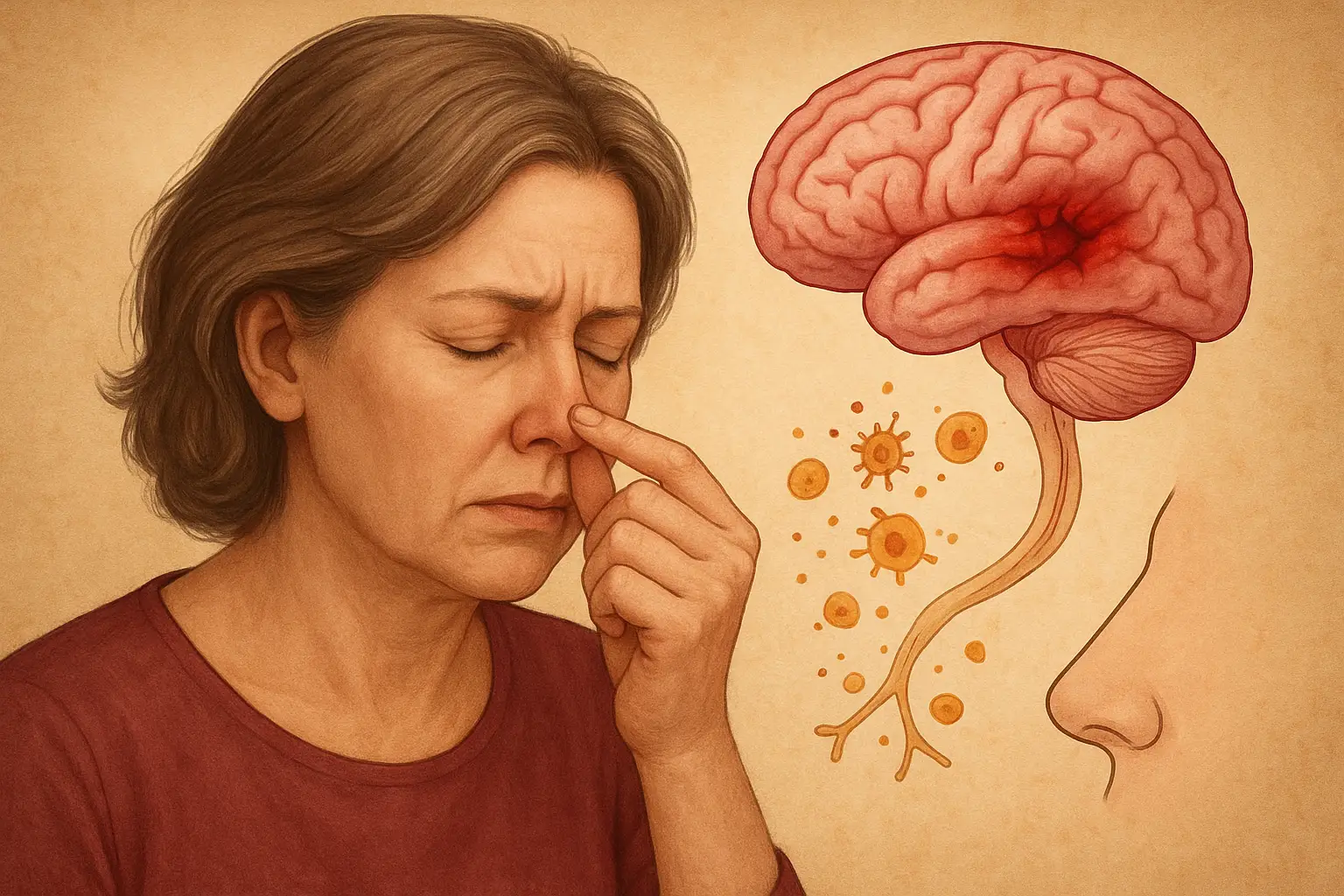
- Recent research from Germany points to loss of smell as a key early symptom of Alzheimer’s—long before traditional signs like memory lapses appear. Scientists from DZNE and LMU Munich have identified a specific immune mechanism that damages neural pathways critical for scent detection.
How the Brain’s Immune Cells Spark Smell Decline
The study explains that microglia—the brain’s immune defense cells—misidentify nerve fibers connecting the locus coeruleus to the olfactory bulb as “eat-me” cues, leading to their breakdown. This immunological misstep disrupts the neural network responsible for processing smells.
Validated through a mix of animal models, post-mortem brain tissue, and PET scans, the findings suggest that smell loss can precede cognitive symptoms of Alzheimer’s by years.
Smell as a Diagnostic Marker: What Research Shows
Prior studies have also linked declining olfaction with Alzheimer’s progression. Some clinics use brief odor identification tests—asking individuals to recognize scents like banana or smoke—as preliminary indicators prompting further assessment.
Other findings have used smell loss to predict faster brain atrophy and cognitive decline, reinforcing its value as an early warning sign.
Moreover, genetic research shows individuals carrying the APOE ε4 gene—known for increasing Alzheimer’s risk—often experience earlier and more significant declines in smell ability, suggesting genetic predispositions at play.
Global Context and Healthcare Implications
Dementia affects over 55 million people worldwide in 2025, with the number expected to nearly double by 2045. Early detection and prevention strategies are vital to limit this growing burden.
The identification of smell loss as an early indicator could change how high-risk individuals are screened—enabling interventions while therapies are most effective.
Simple smell tests are inexpensive, non-invasive, and scalable—ideal for screening in community health drives or clinical setups. With continued validation, they may complement cognitive evaluations in broader dementia screening protocols.
What You Can Do Next
- Talk to your doctor if you notice a declining sense of smell—especially if gradual or unexplained.
- Consider regular cognitive checkups if you carry risk factors such as the APOE ε4 gene or a family history of dementia.
- Support further research and awareness campaigns aimed at early detection and prevention of dementia.
- Talk to your doctor if you notice a declining sense of smell—especially if gradual or unexplained.
- Recent research from Germany points to loss of smell as a key early symptom of Alzheimer’s—long before traditional signs like memory lapses appear. Scientists from DZNE and LMU Munich have identified a specific immune mechanism that damages neural pathways critical for scent detection.
-




