



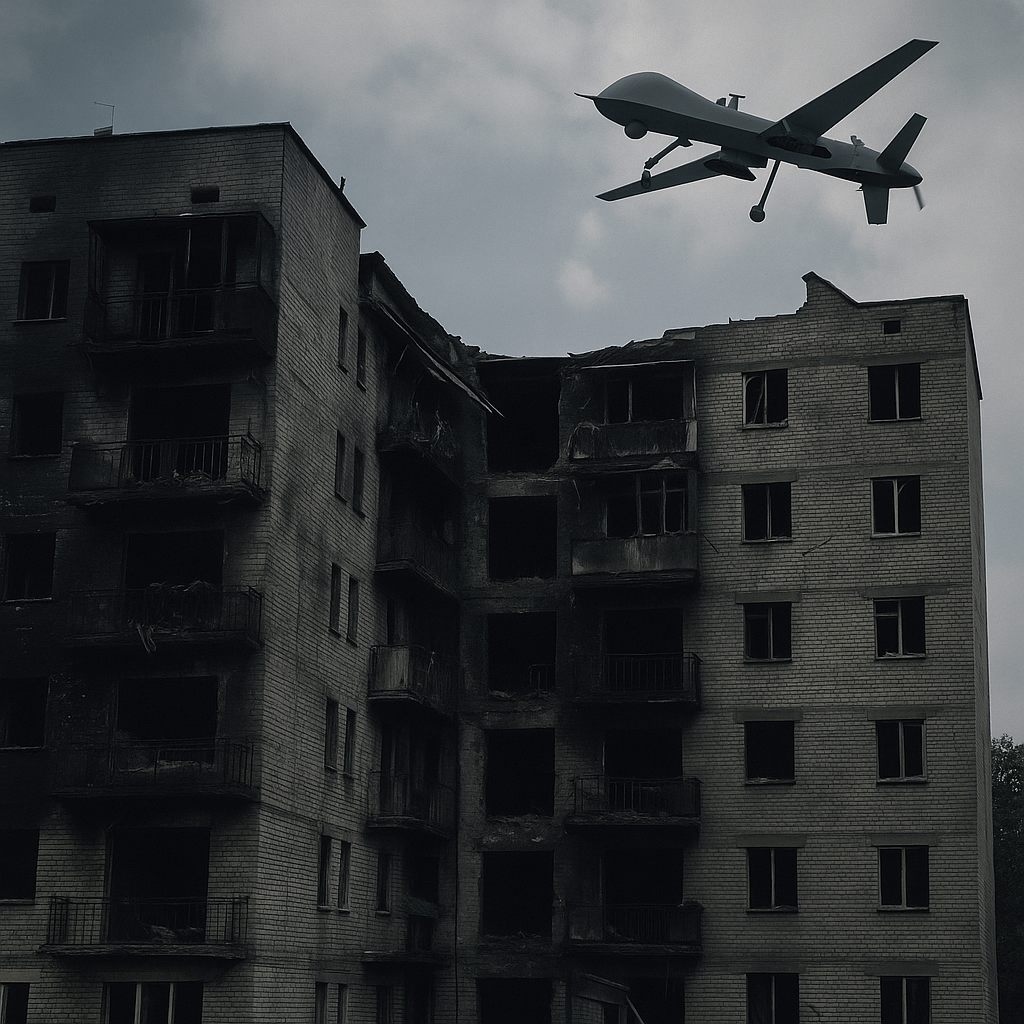
In a dramatic escalation of the war, Russia launched a staggering 728 drones accompanied by 13 missiles in an overnight assault targeting Ukraine’s air defences and strategic infrastructure. This marks the highest single-wave drone attack of the entire conflict.
Air Defence Response & Damage
Ukraine’s robust air defences intercepted the vast majority of the incoming assaults: 718 drones and seven missiles were shot down, according to Ukrainian military sources. However, some hypersonic missiles breached the defences, inflicting limited but notable damage to unspecified targets. Fortunately, no immediate civilian casualties were reported.
The northwest city of Lutsk, located near the Polish border, bore the brunt of the attack. Local authorities confirmed fires in storage and commercial buildings, although no injuries or fatalities were announced. The scale and proximity of the strike triggered NATO scramble responses from neighbouring allied air forces.
Political Fallout & Sanctions Push
The strike followed U.S. President Donald Trump’s recent commitment to increase military aid to Ukraine, including advanced defensive weapon systems, and his strong criticism of Russian President Vladimir Putin. President Trump is also reportedly considering imposing steep “500% tariffs” on nations importing Russian energy and goods.
Ukrainian President Volodymyr Zelenskiy used the attack as leverage, calling for stricter “biting” sanctions not only against Russia’s primary economy but also targeting secondary countries that support its war efforts through energy purchases.
German Chancellor Friedrich Merz, commenting on the strike, said that diplomatic solutions appear to be exhausted, yet Germany remains steadfast in its support for Kyiv.
Tactical Implications
Military analysts say the scale of the drone wave is consistent with Russia’s increasing reliance on unmanned vehicles. Recent sightings of Russian Unmanned Systems Forces, established in early 2025 and potentially backed by new drone factories, such as the Yelabuga loitering-munitions plant, have significantly enhanced Moscow’s UAV capabilities.
Ukraine, meanwhile, has bolstered its air defence infrastructure, deploying interceptor drones and mobile fire groups, allowing it to counter increasingly complex Russian waves.
War in Fourth Year: Stalemate or Shift?
In the backdrop of warring drone surges, neither diplomatic efforts nor ceasefire discussions have gained traction. Russian officials have dismissed a recent ceasefire proposal, while initial U.S.-facilitated talks have stalled.
The latest attack compounds weeks of intensified air strikes, including high-profile assaults on Ukrainian draft offices and logistics hubs, signalling a multipronged Russian campaign aimed at weakening both civilian morale and Ukraine’s warfighting capacity.
What It All Means
- Ukraine’s defences are tested, but still hold—foreshadowing even greater drone swarms in future waves.
- Sanctions are intensifying: Ukraine and Western allies are ratcheting pressure, tying economic punishment to military support.
- Normalisation of drone warfare: Both sides are deepening their investment in aerial drones and counter-UAV systems.
- Diplomacy remains elusive: With negotiations stagnant, the battlefield is becoming even more central to the conflict’s outcome.
As this marks a record-setting attack in the war’s fourth year, analysts warn air defence capabilities on both sides will be pivotal in the upcoming months, perhaps defining whether the war’s next chapter favours defence or dominance.




