



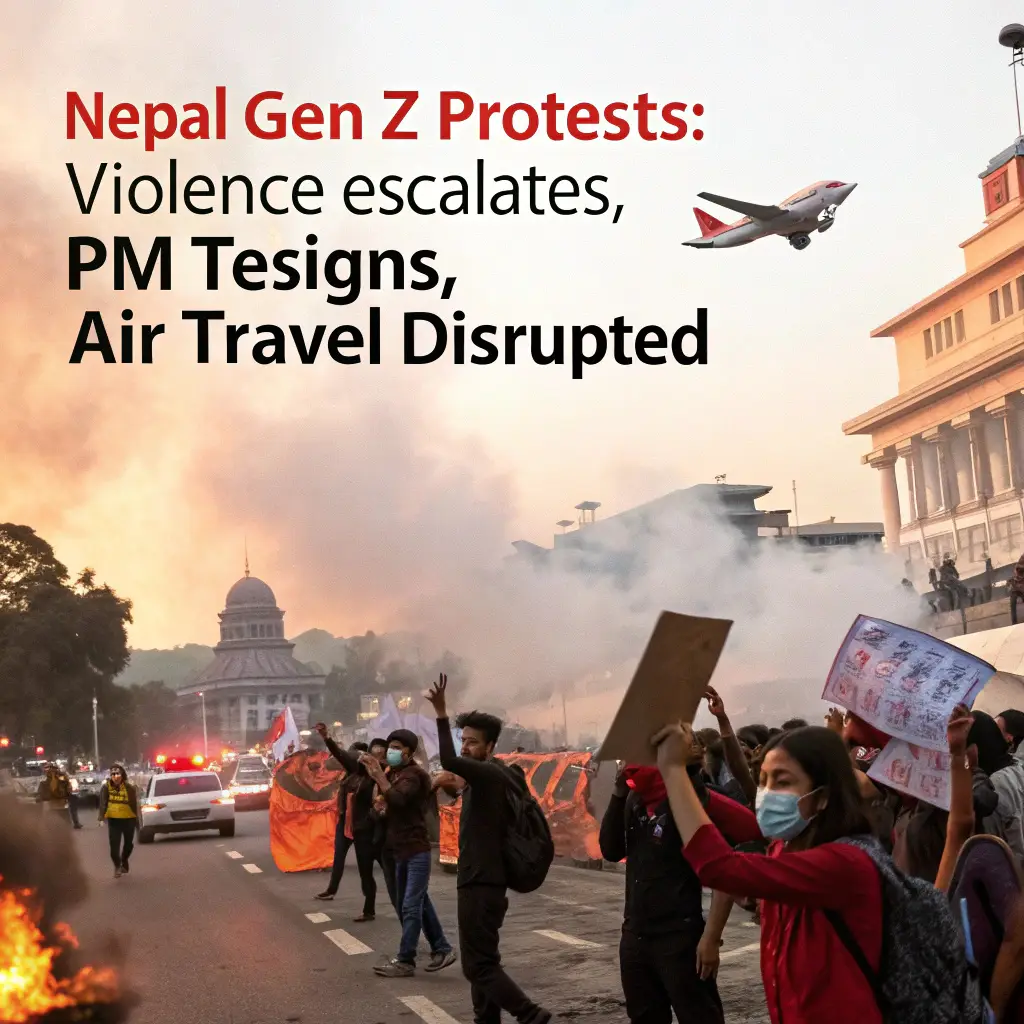
A government ban on 26 social media platforms—including Facebook, X, Instagram, WhatsApp, and YouTube—triggered a sweeping Gen Z uprising in Nepal. Frustrated youths, already agitated over pervasive corruption and economic stagnation, seized the moment to voice their defiance. Protesters stormed key government locations, including the parliament, leading to a mounting death toll amid violent clashes with security forces.
Buildings Torched, Officials Attacked
The unrest turned grimly violent. Protesters set fire to the parliament building, Singha Durbar, and several politicians’ homes, including those of former PMs and ministers. Among the casualties was Rajyalaxmi Chitrakar—the wife of ex-PM Jhalanath Khanal—who tragically perished when her home was torched. Former Prime Minister Sher Bahadur Deuba and his wife, Foreign Minister Arzu Deuba, sustained injuries. Finance Minister Bishnu Prasad Paudel was also physically assaulted. Security forces employed live ammunition, fogging grenade shells, tear gas, and water cannons to disperse crowds, resulting in at least 19 to 22 fatalities and hundreds of injuries.
PM Oli Resigns as Army Steps In
Amid the chaos, Prime Minister K.P. Sharma Oli resigned—citing the need for political resolution and safety. The army was deployed at critical sites, including the parliament and Tribhuvan International Airport, instituting curfews and safeguarding vital infrastructure. Authorities are gearing up for dialogue with protest leaders, while former Supreme Court judge Balaram K.C. called for fresh elections under a caretaker setup.
Airport Shutdown Sparks Travel Crisis
With the airport closed amid escalating unrest, flights were suspended. IndiGo, Air India, and SpiceJet halted operations, and several flights bound for Kathmandu were diverted to Indian cities like Lucknow and Delhi, leaving travelers stranded. The Indian External Affairs Ministry issued advisories urging its citizens to avoid travel to Nepal.
Protest Goals & Broader Implications
The movement—largely leaderless and led by the younger generation—demands far-reaching change: governmental dissolution, constitutional reforms, anti-corruption probes, and empowerment for youth voices in governance. It has become a watershed moment, reminiscent of previous uprisings, but driven by digital-age frustrations and activist impulse.




