



As monsoon showers bring relief from the sweltering heat, they also create the perfect breeding ground for waterborne and viral infections. Experts and health authorities across India are urging people to prioritize regular health checkups and adopt preventive dietary habits to safeguard against seasonal illnesses.
The Hidden Dangers of the Rainy Season
According to healthcare professionals, the monsoon season heightens the risk of gastrointestinal disorders, respiratory infections, and skin diseases. The combination of high humidity and stagnant water fosters the spread of viruses, bacteria, and mosquitoes. Routine health checkups can help in the early detection of infections and underlying issues, especially for those with chronic illnesses or weakened immune systems.
Dr. Anita Kapoor, a general physician, explains, “Many patients only seek help once symptoms worsen. Regular checkups allow us to catch infections early and reduce complications. This is particularly important for the elderly, children, and those with pre-existing conditions.”
Foods to Avoid During the Monsoon
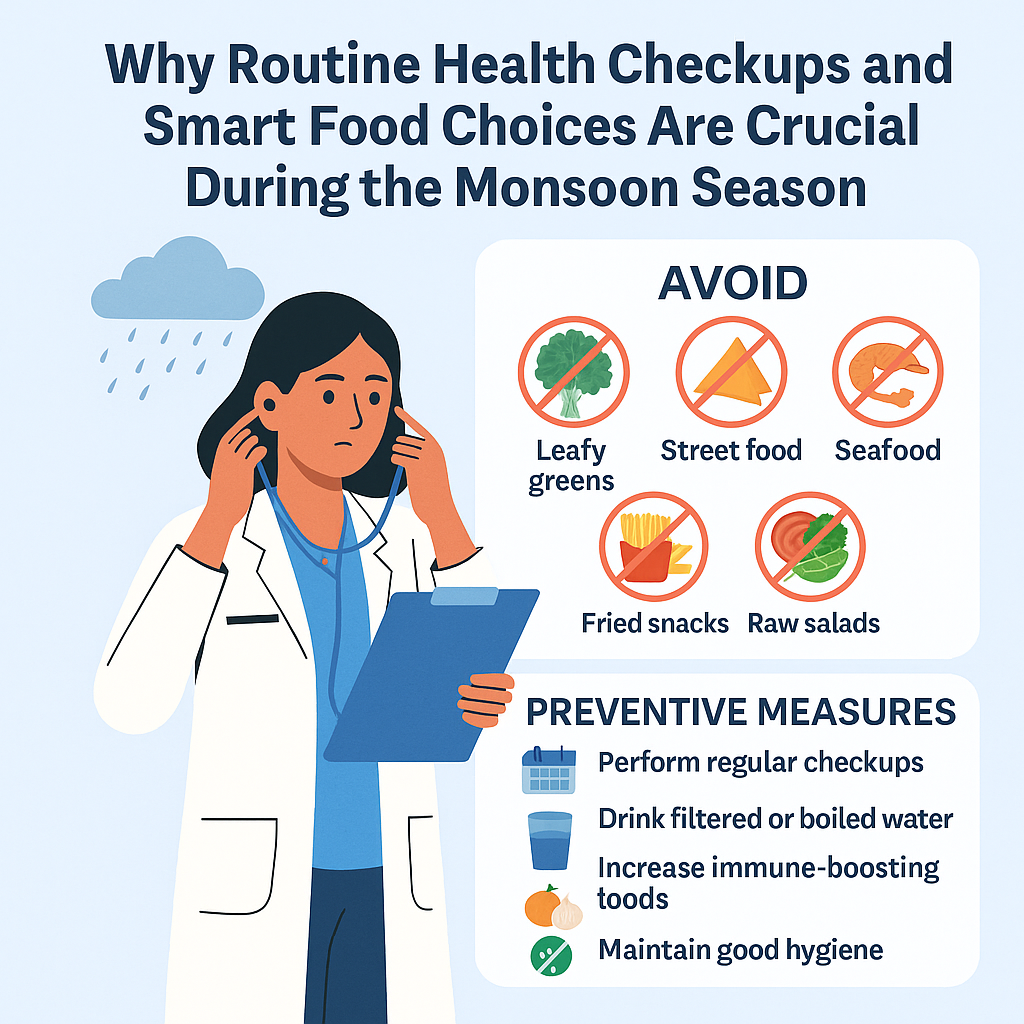
Nutritionists recommend steering clear of certain foods that can increase the likelihood of digestive issues during the rainy season:
- Leafy Greens: While nutritious, they often carry dirt and bacteria due to the wet soil and are harder to clean thoroughly.
- Street Food: Items like chaat, golgappa, and samosas are often prepared in unsanitary conditions and can cause stomach infections.
- Seafood: The rainy season is a breeding time for many aquatic creatures, increasing the risk of contamination.
- Fried Snacks: These can slow digestion and increase the chance of acidity and bloating.
- Raw Salads: Unless thoroughly washed, they can carry pathogens due to water contamination.
Everyday Habits That Could Harm Your Health
Experts also warn against these common habits during the monsoon:
- Skipping Hand Hygiene: Wet conditions make it easier for germs to transfer.
- Walking Barefoot: Increases the risk of fungal infections and leptospirosis.
- Drinking Unfiltered Water: Can lead to waterborne diseases like typhoid and cholera.
- Wearing Damp Clothes: Encourages fungal growth.
- Ignoring Minor Symptoms: What starts as a simple cough can escalate quickly.
Preventive Measures
- Schedule a health checkup, especially if you feel fatigued, have a persistent cough, or experience digestive issues.
- Drink only boiled or filtered water.
- Increase your intake of immune-boosting foods like turmeric, ginger, and citrus fruits.
- Keep your surroundings clean and dry to prevent mold and mosquito breeding.




