



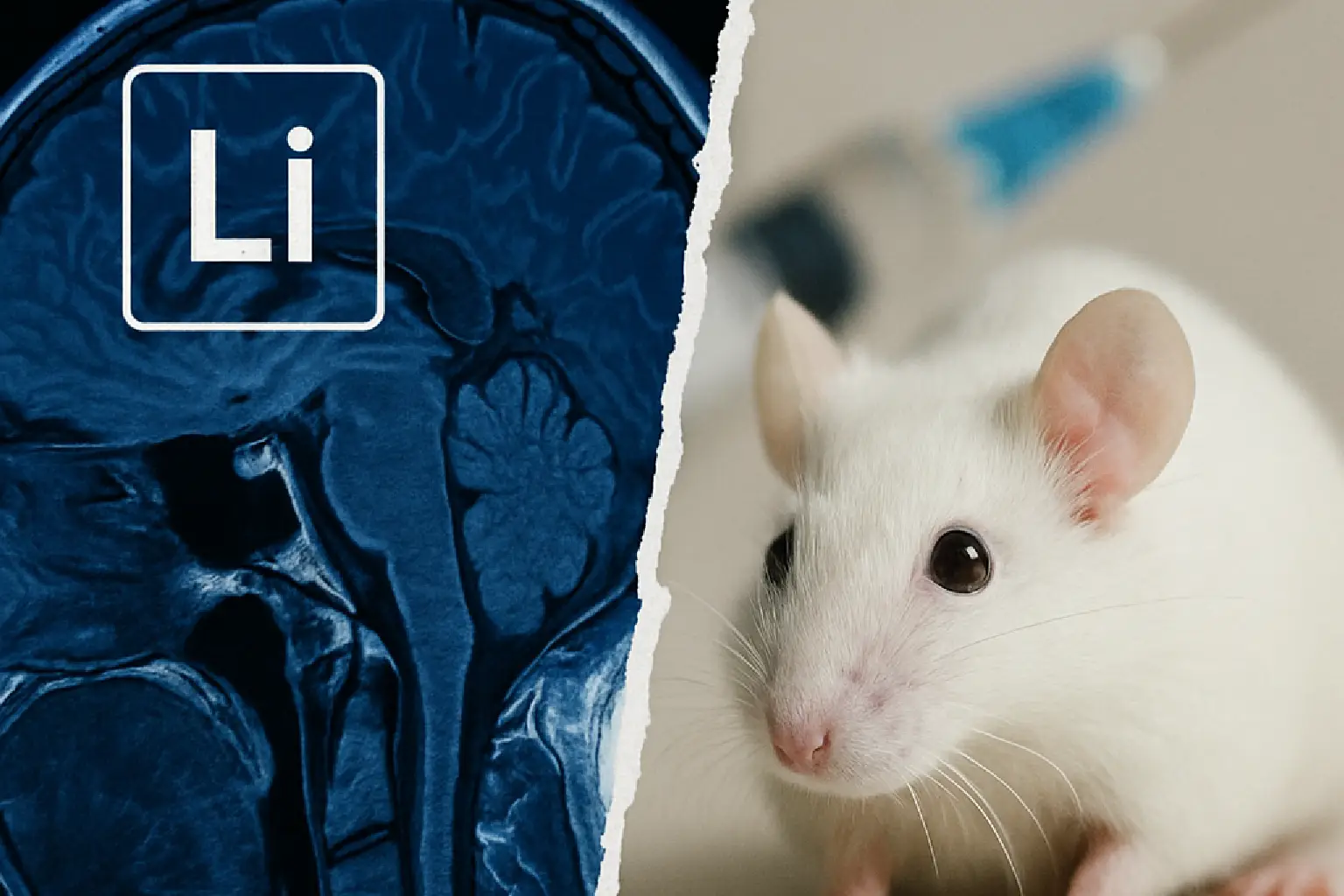
In a major scientific breakthrough, researchers from Harvard Medical School have uncovered a surprising connection between lithium—a common element used in psychiatric medication—and Alzheimer’s disease. Their study, published in Nature on August 7, reveals that a loss of lithium in the brain may contribute to Alzheimer’s development, and that restoring it in small doses could potentially reverse memory loss.
Natural Lithium Deficiency Found in Alzheimer’s Brains
The team analyzed human brain tissue from both healthy individuals and those with Alzheimer’s or mild cognitive impairment. Among 27 metals studied, only lithium levels were significantly reduced in Alzheimer’s-affected regions, especially the prefrontal cortex, which controls memory and decision-making.
Shockingly, the researchers also discovered that amyloid plaques—the toxic protein clumps linked to Alzheimer’s—sequester lithium, effectively depleting the brain’s natural supply.
“This suggests that lithium plays a fundamental role in brain health,” said senior study author Dr. Bruce Yankner. “Its depletion may be more than a symptom—it could be a cause.”
Lithium Orotate Restores Brain Function in Mice
To test the effects of lithium deficiency, the scientists induced Alzheimer’s-like symptoms in mice by feeding them a low-lithium diet. These mice developed classic signs of the disease: amyloid plaques, tau tangles, inflammation, and memory loss.
However, when the mice were treated with lithium orotate—a low-dose, over-the-counter form of lithium that bypasses plaque buildup—their brain function returned to normal. Memory improved, inflammation subsided, and both plaque and tangle formation decreased. Remarkably, no toxicity or side effects were observed at the doses used.
A Multi-Targeted Alzheimer’s Treatment?
Most current Alzheimer’s drugs focus on removing amyloid plaques but offer limited cognitive improvement. In contrast, lithium appeared to target multiple disease mechanisms at once—plaque buildup, tau tangles, inflammation, and neural damage.
“This is one of the few interventions we’ve seen that hits all the major features of Alzheimer’s,” Dr. Yankner noted.
Experts in the field are cautiously optimistic. While lithium is already FDA-approved for mood disorders, lithium orotate has not been tested in humans for Alzheimer’s, and researchers stress that much more study is needed before clinical use.
Next Steps: Human Trials
The findings raise important questions: Could low-dose lithium supplements delay or prevent Alzheimer’s? Could brain lithium levels serve as an early diagnostic tool? The answers will depend on upcoming human trials, which researchers are now planning.
Despite the need for caution, the results have sparked hope.
“This may open a completely new pathway for treating and even preventing Alzheimer’s,” said Dr. Susan Lee, a neuroscientist not involved in the study. “And it comes from a substance we’ve been using for decades.”




