



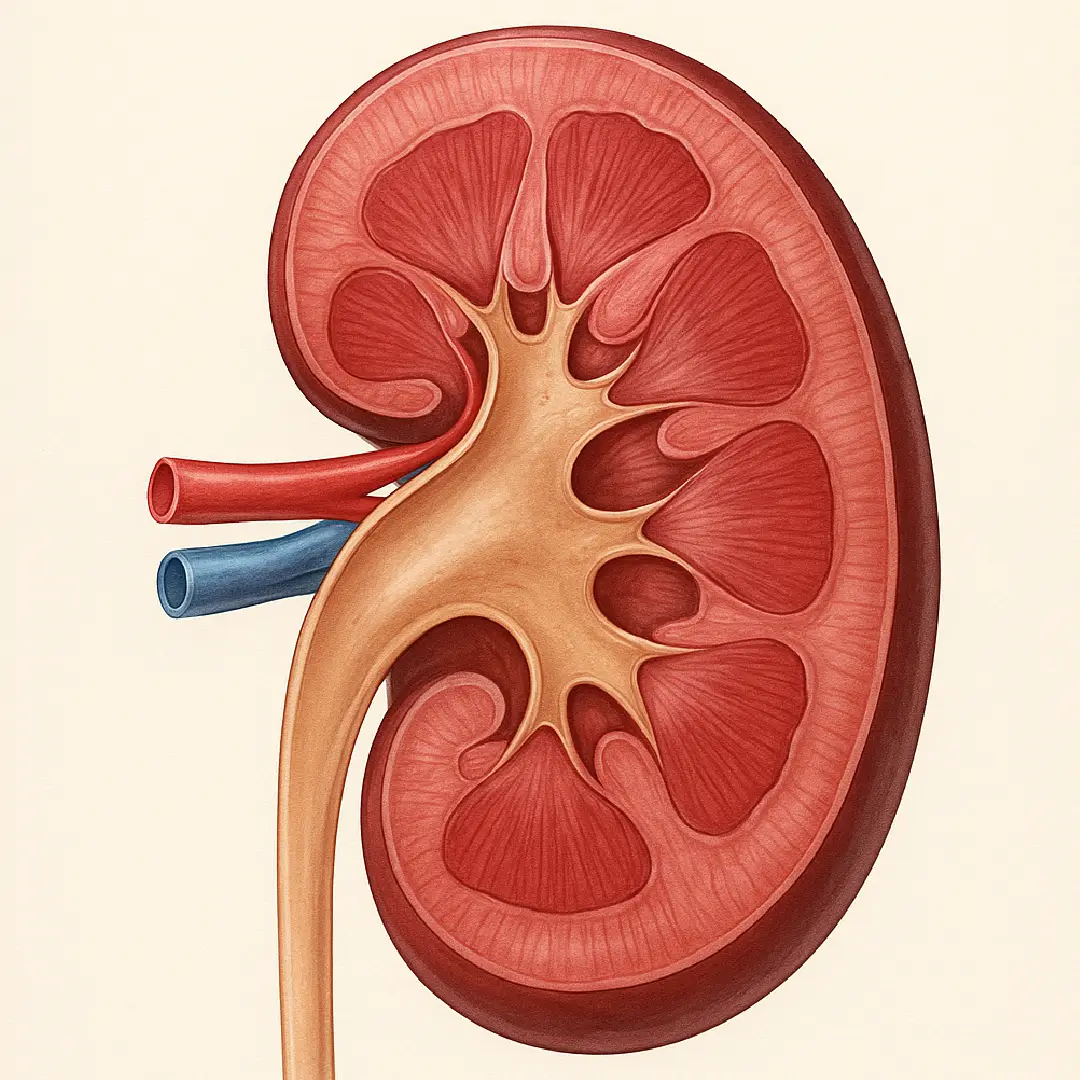
- In a landmark advancement for regenerative medicine, researchers at Sheba Medical Center and Tel Aviv University have successfully grown human kidney organoids that remained stable for 34 weeks—far exceeding the lifespan of prior models, which typically disintegrated within four weeks.
A Leap Forward in Organoid Longevity and Purity
These organoids were cultured using kidney tissue stem cells, a departure from the more commonly used pluripotent stem cells. The latter tend to produce mixed cell types and often don’t survive long, whereas the tissue-specific stem cells enabled sustained maturation and maintained structural stability for over eight months.
Throughout the extended aggregation period, the organoids developed key kidney structures—including blood filters and urinary ducts—mirroring developmental stages up to the 34th week of pregnancy.
Unlocking New Paths in Disease Research & Treatment
With this breakthrough, scientists can now observe kidney development in real time, examining how specific signaling pathways influence organ formation—blocking particular pathways induced birth defects in the organoids, offering a real-world parallel to congenital kidney disorders.
Moreover, these organoids serve as powerful tools for testing drug toxicity during pregnancy, offering a human-relevant model and potentially reducing reliance on animal testing.
Toward Regenerative and Translational Medicine
While the organoids do not yet constitute transplant-ready kidneys, researchers emphasize another promising trajectory: harnessing biomolecules secreted by these lab-grown organoids to help repair damaged kidneys.
The longevity and fidelity of these models present the possibility of an inexhaustible source of varied kidney cells, which could one day pave the way for novel treatments and even transplantation.
Backed by Top Research, Poised for Clinical Trials
The findings—detailed in The EMBO Journal—are spearheaded by Prof. Benjamin Dekel, head of pediatric nephrology at Sheba Medical Center and director of the Sagol Center for Regenerative Medicine at Tel Aviv University. His team, including Dr. Michael Namestannikov and Dr. Osnat Cohen-Sontag, achieved this breakthrough using a kidney-tissue-specific approach, offering unmatched specificity and clarity in the development of organoids.
Given the magnitude of this advance, Sheba Medical Centre is now seeking collaborations—including from biotech partners in China—to propel the research into clinical trial phases.




