



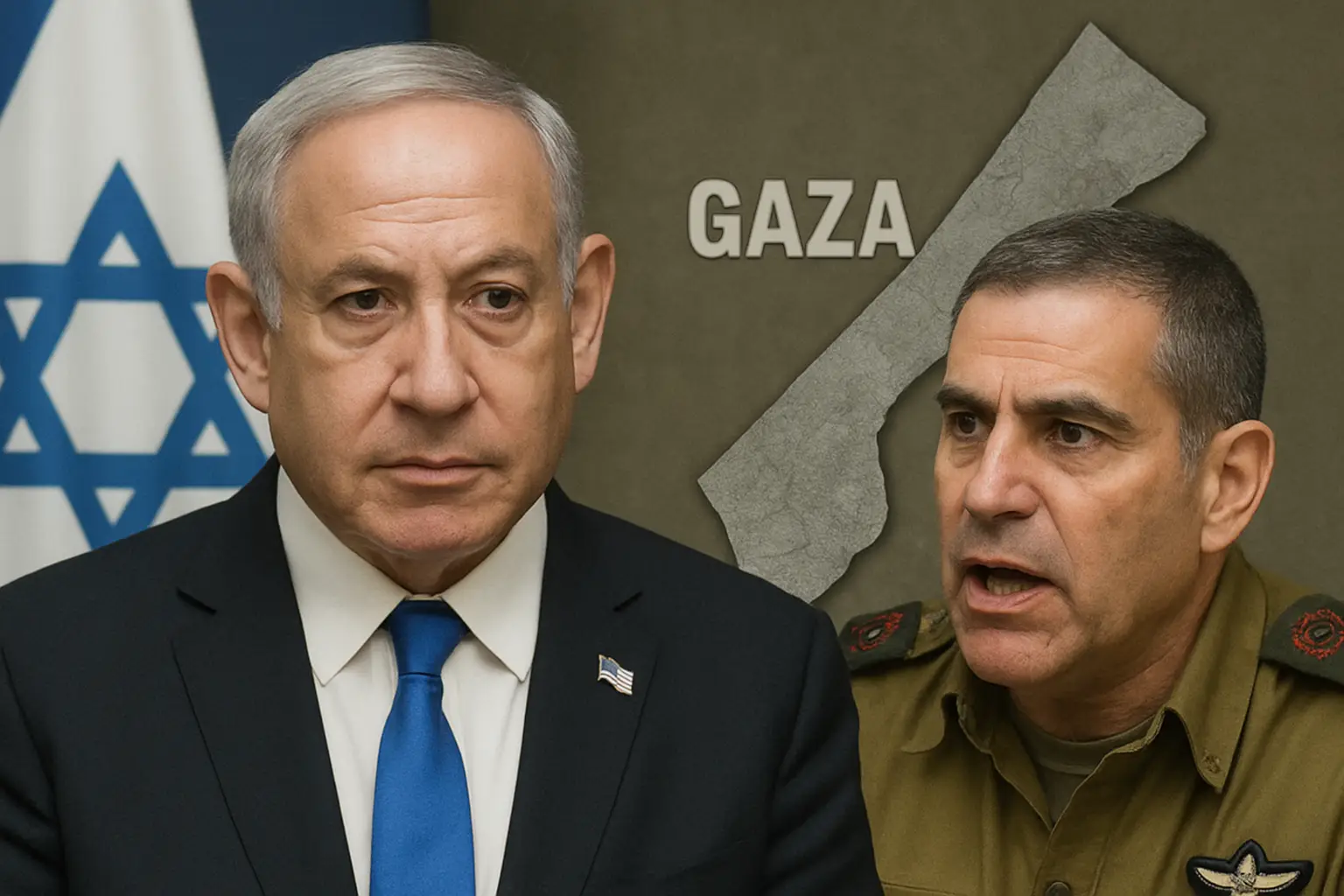
Deepening internal turmoil has emerged within Israel’s leadership, as IDF Chief of Staff Lt. Gen. Eyal Zamir openly opposed Prime Minister Benjamin Netanyahu’s plan to fully occupy the Gaza Strip.
During a high-level security meeting, Zamir warned that occupation would be a strategic trap, jeopardizing Israeli hostages and further weakening Israel’s military effectiveness.
Military vs Political Leadership
Zamir accused Netanyahu’s son of smearing him online. Yair Netanyahu, who holds no government post, publicly accused Zamir of instigating a “military coup”—a remark Zamir denounced during the meeting.
Netanyahu reportedly responded by threatening to sideline Zamir if he refused to support the government’s strategy. The IDF chief retorted that occupation plans—previously submitted—needed robust revision before implementation.
Escalating Gaza Strategy Deliberations
Reports indicate that plans for Israel’s full takeover of Gaza are anchored in Netanyahu’s belief that military victory is the only path to secure the release of 50 remaining Israeli hostages held by Hamas. Netanyahu has reportedly instructed Zamir to refine the occupation strategy for cabinet presentation.
More than 600 former Israeli military and intelligence officials—including ex-Mossad head Tamir Pardo and ex-PM Ehud Barak—have warned that the war has become counterproductive and Israel is on the “precipice of defeat”.
Worsening Humanitarian Crisis Amid Planning
Humanitarian conditions in Gaza are deteriorating rapidly. More than 61,000 Palestinians have died; nearly 190 are reported to have starved to death, including 94 children. Aid efforts are obstructed by looting, restrictions, and chaotic distribution.
International bodies, including the UN, have voiced alarm at the potential consequences of escalation, warning that a full occupation could trigger Israel’s bloodiest phase of the conflict, further isolating the nation diplomatically.
Political Fallout and Public Dissent
The security cabinet meeting originally scheduled for Tuesday was postponed until Thursday amid rising dissent from both military figures and ministers aligned against unilateral decisions.
Supporters of Netanyahu—including Far-Right minister Itamar Ben-Gvir—have demanded public allegiance from Zamir. Opposition figures like Yair Lapid have backed the military chief, arguing that attacking Zamir undermines national unity during wartime




