



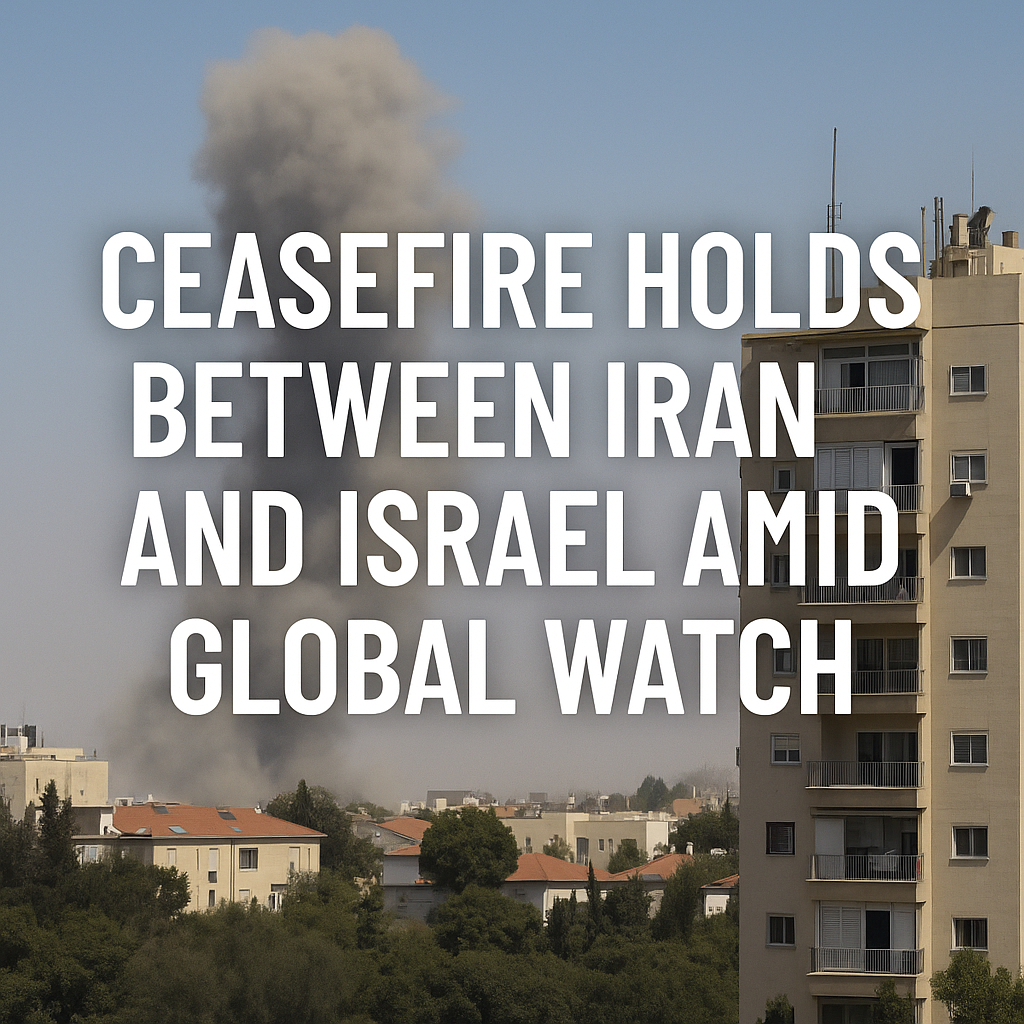
A fragile ceasefire brokered by former U.S. President Donald Trump between Iran and Israel appears to be holding, following nearly two weeks of intense missile exchanges and U.S.-led strikes on Iranian nuclear facilities. While the violence has temporarily subsided, political rhetoric, regional distrust, and lingering security concerns signal a volatile calm.
Ceasefire Holds After Trump-Led Mediation
The ceasefire agreement, initiated over the weekend, was confirmed by both Tehran and Tel Aviv under U.S. pressure. Trump declared a “complete and total ceasefire” on June 23 and urged both sides to hold fire. He later expressed frustration when both Iran and Israel appeared to test the limits of the truce within hours of its announcement.
Iran launched a series of missiles toward southern Israel, while Israel retaliated with airstrikes over Tehran’s military targets. However, since then, both countries have scaled back offensive operations, and no new large-scale attacks were reported on June 25.
Ceasefire Holds, But Unease Remains
- Iran’s Supreme Leader, Ayatollah Khamene’i has criticized the U.S. for “interference,” though state media confirms Iran will honor the ceasefire as long as Israel refrains from further strikes.
- Israeli Prime Minister Yair Lapid issued a reserved statement saying Israel “reserves the right to respond to any aggression,” while confirming current military orders are focused on restraint.
Oil and Market Reaction
Global energy markets, rattled by fears of disruption to Middle East oil flows, responded positively to the ceasefire:
- Brent crude settled near $68 per barrel, slightly down from its five-month peak during the peak of hostilities.
- WTI crude hovered around $65.20, as traders anticipated resuming stability in the Strait of Hormuz.
- Gold prices steadied at $3,326/oz, suggesting cautious optimism but ongoing risk-hedging by investors.
Stock markets in the Gulf and Europe also showed gains, with Saudi and Dubai indices closing slightly higher. The STOXX 600 in Europe rose 0.2%, boosted by easing geopolitical concerns.
Key Issues to Watch
While the ceasefire holds, analysts warn that the situation could deteriorate quickly if provoked. Concerns include:
- Strait of Hormuz Stability: Any disruption here could reignite global oil supply fears.
- Iran’s Nuclear Program: Trump claimed U.S. strikes “crippled” Iranian nuclear sites, but Iran disputes this, raising fears of renewed enrichment activities.
- Lack of Trust: Mutual accusations of ceasefire violations continue to cloud diplomatic efforts.
For now, the region appears to be in a tentative pause, with diplomats from the U.S., EU, and Gulf nations pushing for a longer-term agreement. While markets have calmed and violence has slowed, the situation remains delicate, and one provocation could reset the conflict.
The international community is watching closely as the next 72 hours may determine whether this ceasefire becomes the first step toward de-escalation or simply an intermission.




