



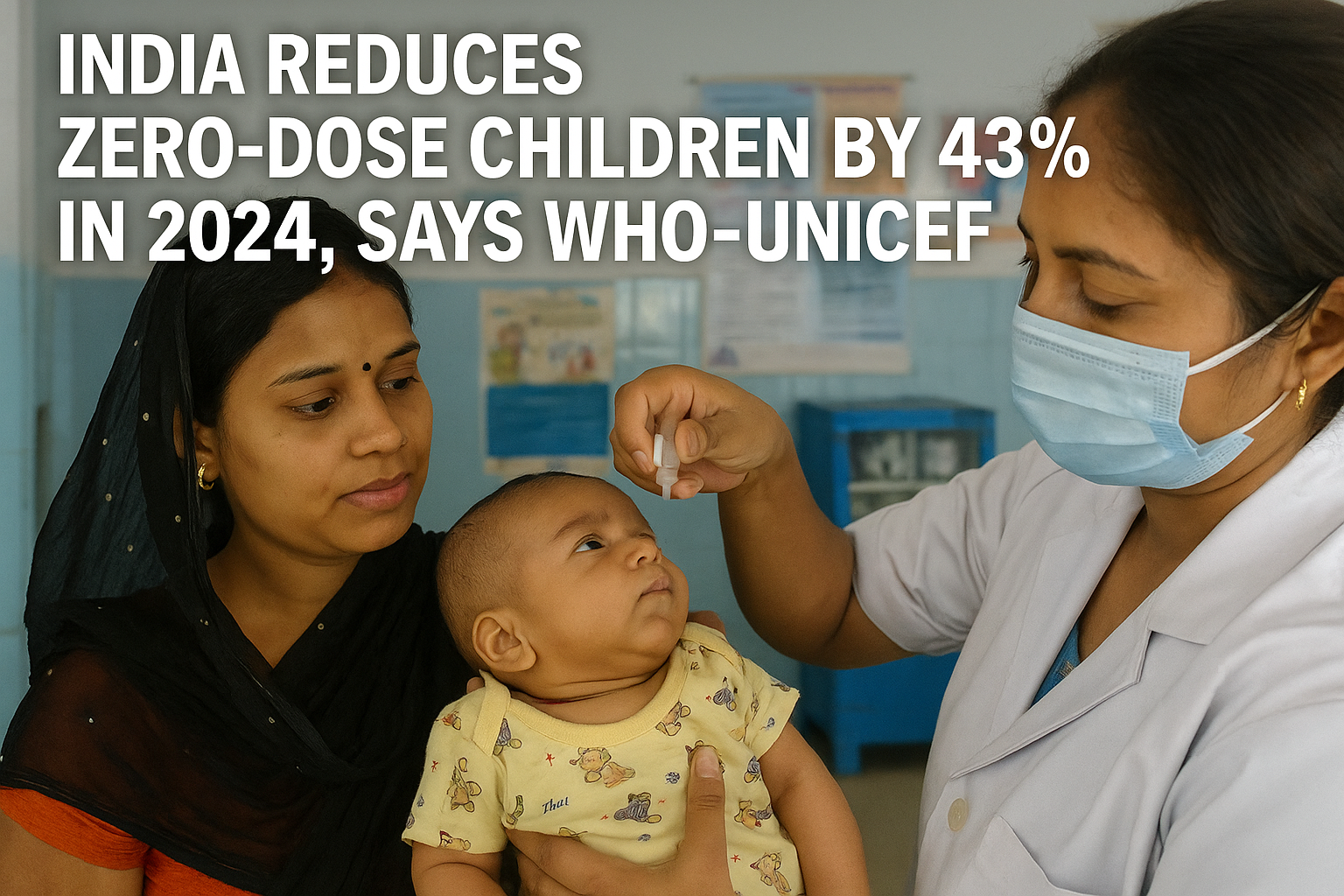
In a major public health milestone, India has reduced the number of zero-dose children—infants who haven’t received even a single vaccine—by 43% in 2024, according to newly released data from the World Health Organization (WHO) and UNICEF.
This sharp decline reflects significant progress in India’s immunization coverage, driven by targeted national campaigns and strengthened primary healthcare delivery across underserved regions.
Global Context: 14 Million Still Unvaccinated
Despite India’s success, the global picture remains concerning. WHO and UNICEF’s joint report revealed that 14 million infants worldwide did not receive a single dose of any routine vaccine in 2024. This includes vaccines for deadly but preventable diseases such as diphtheria, tetanus, and pertussis (DTP).
Most of these children live in low- and middle-income countries, with conflicts, vaccine misinformation, and healthcare access gaps cited as primary reasons.
“While global childhood vaccination rates are holding steady, millions are still falling through the cracks,” said Catherine Russell, Executive Director of UNICEF.
India’s Immunization Push Pays Off
India’s 43% reduction in zero-dose children was attributed to several government initiatives, including:
- Mission Indradhanush 5.0: A nationwide intensified immunization drive
- Expanded outreach in tribal and remote rural areas
- Greater community engagement, including awareness campaigns against vaccine hesitancy
- Digital monitoring tools to track unvaccinated children
“India’s achievement highlights what is possible when immunization is prioritized at every level—from policy to the frontline,” noted WHO’s regional director for South-East Asia.
Vaccination Resilience Post-Pandemic
The report also assessed global recovery from the COVID-19 pandemic’s disruption to vaccination programs. Many countries, including India, have not only restored but surpassed pre-pandemic immunization levels.
However, the resurgence of vaccine-preventable diseases in several nations remains a pressing concern. Recent measles outbreaks in the U.S. and Africa are clear indicators of the fragility of global vaccine coverage.
What Are Zero-Dose Children?
“Zero-dose” children are those who do not receive even the first dose of the DTP vaccine by their first birthday. These children are most vulnerable to outbreaks of preventable diseases and often live in marginalized communities, including slums, conflict zones, or areas with limited healthcare access.
India’s sharp reduction in zero-dose children marks a critical victory for public health and sets an example for other nations. Yet, with 14 million children still left unprotected worldwide, the global vaccination effort remains a race against time and inequality.




