



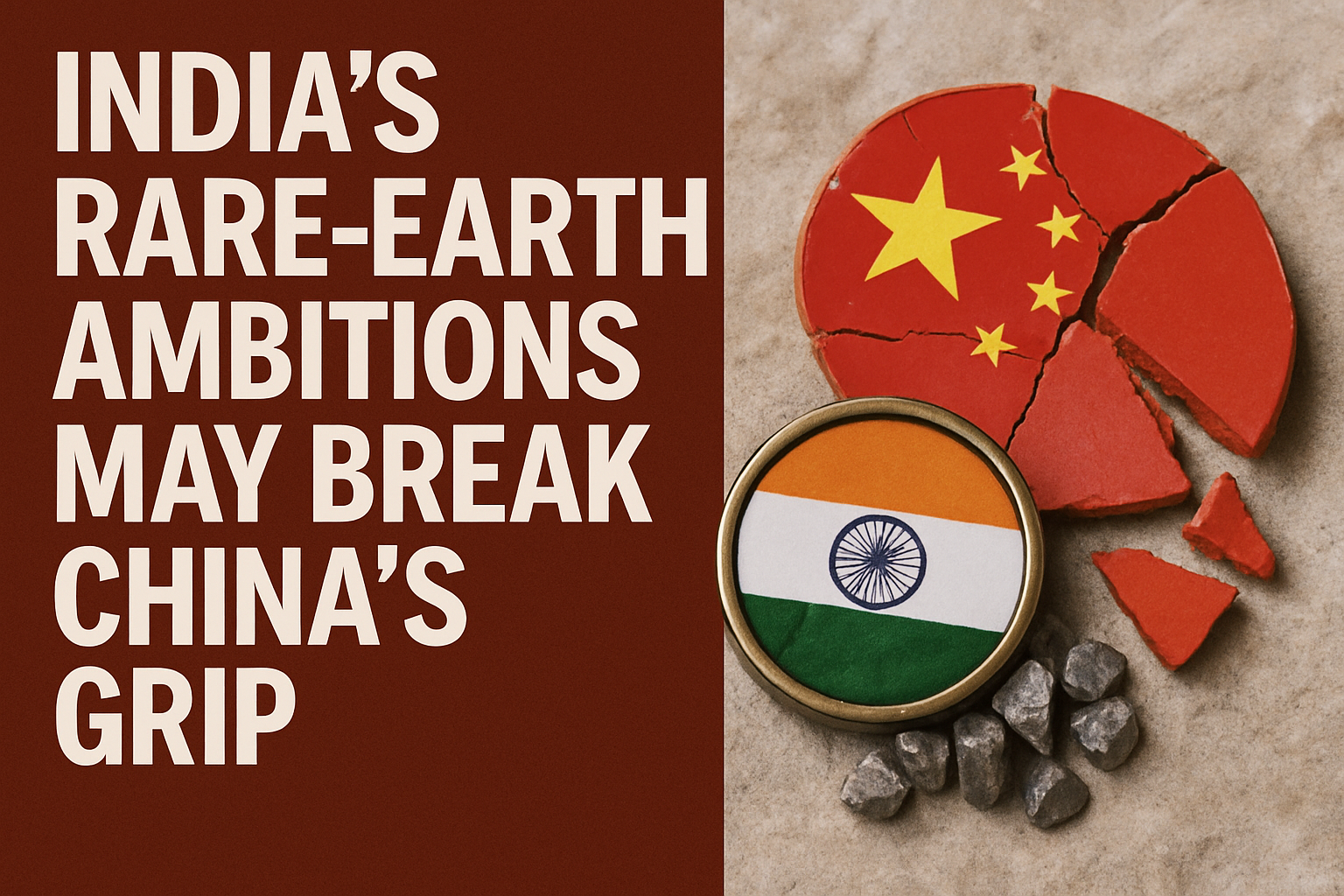
India is stepping up its campaign to reduce dependency on Chinese rare‑earth imports by rolling out a ₹25,000 crore (~$290 million) incentive scheme aimed at boosting domestic magnet production, critical for electric vehicles (EVs), wind turbines, and high‑tech goods.
Big Push: Incentives & Domestic Plans
Under the proposed plan, the government will subsidize magnet-manufacturing capacity, offering up to ₹600 crore per thousand tons annually. Industry giants, including Vedanta, JSW Group, and Sona BLW, have already expressed interest in setting up plants. The immediate goal is to produce some 4,000 tons of rare‑earth magnets over a 7‑year timeframe, trimming exposure to China’s export controls.
However, building mines and processing units takes time. Experts caution that although this strategy accelerates India’s industrialisation, it won’t yield short‑term relief.
Industry Pressures & Supply Risks
The backdrop to the initiative is a global squeeze on rare‑earth supplies, recently reinforced by China’s export caps. India, which imported over 53,000 tonnes of magnets in fiscal 2024–25, relied heavily on Chinese supply—90% of global magnet refining is controlled by China.
India’s auto component industry has sounded alarms about EV production delays, with calls for a national strategy to secure critical materials and avoid disruptions.
Strategic Diversification & Global Partnerships
Beyond domestic subsidies, New Delhi is exploring international alliances, including talks with Australia and Japan. These cover rare‑earth sourcing and battery-tech partnerships and aim to reduce China’s monopoly in upstream supply.
Challenges Ahead
- Time Lags: Mining, refining, and magnet‑manufacturing setups typically require years before reaching scale.
- Mid‑stream Tech Gap: India needs more capacity in refining, a traditionally weak link compared to China’s integrated processing ecosystem.
- Global Market Volatility: Conflicts in Myanmar affecting heavy‑rare‑earth exports, and China’s strategic export restrictions underscore supply fragility.
Longer‑Term Vision
This initiative reflects India’s ambition not just for industrial autonomy but also geopolitical resilience. As global players like the U.S. and G7 nations diversify away from China, India seeks a stronger role in critical mineral supply chains.
National bodies like IREL (India) Limited, with an existing rare‑earth magnet plant in Visakhapatnam, will be central to scaling local capacity.
India’s ₹25k cr incentive program is a strategic leap toward atmanirbharta (self‑reliance) in critical minerals. While immediate outcomes are limited, the blend of domestic stimulus, industry engagement, and international collaboration lays a foundation for long-term supply security. It’s a bold move in the race for EVs, clean energy, and tech independence—even as China remains firmly entrenched in the rare‑earth ecosystem.




