



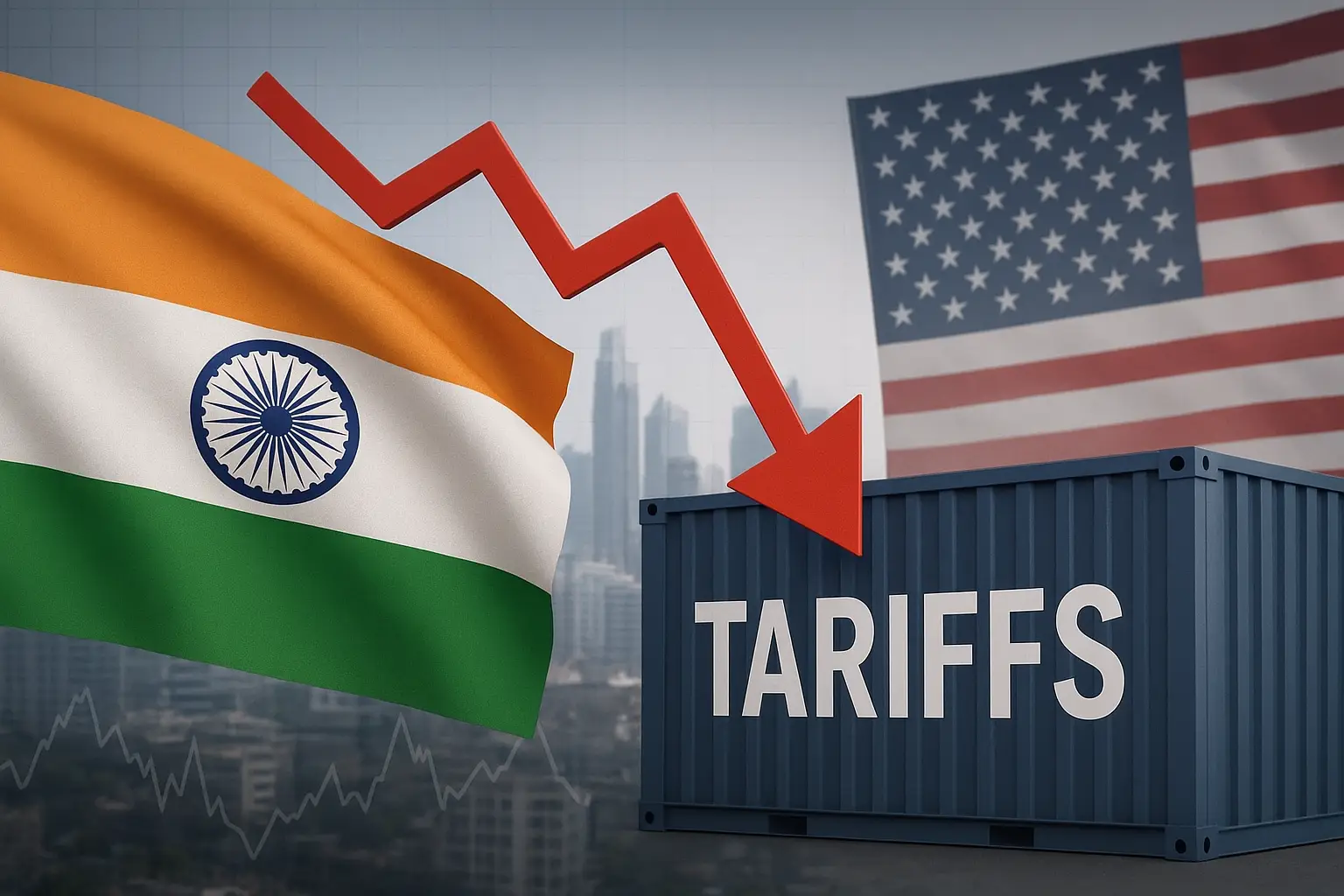
- India’s economic growth projections are under pressure as the Reserve Bank of India (RBI) acknowledges the impact of new U.S. tariffs on Indian exports. The U.S. has announced a 50% tariff on Indian goods, effective August 27, following India’s continued purchase of Russian oil. This move threatens to reduce India’s export competitiveness and could dampen growth prospects.
RBI’s Response to Economic Pressures
At its August 2025 meeting, the RBI’s Monetary Policy Committee (MPC) decided to maintain the key repo rate at 5.50%, adopting a neutral stance. Governor Sanjay Malhotra emphasized the need for flexibility in policy decisions due to both domestic and global uncertainties. While the MPC projects a resilient 6.5% growth rate for the fiscal year, the newly imposed U.S. tariffs pose a significant risk to external demand and economic growth.
Inflation Outlook Remains Benign
Despite global headwinds, the inflation outlook is seen as benign. Retail inflation dropped to an eight-year low in July, driven by falling food prices. However, core inflation remains sticky and above the 4% target. Deputy Governor Poonam Gupta cautioned that inflation moderation is not broad-based, and other members highlighted areas of sustained growth, such as construction and services, while acknowledging uncertainties in inflation and investment.
Market Reactions and Investor Sentiment
The announcement of U.S. tariffs has led to significant foreign investor outflows from Indian equities. Over $13 billion has been offloaded this year, with $2.4 billion in early August alone. Analysts suggest that the Nifty 50 index will rise merely 3.9% to 25,834 by year-end, with a new record high now delayed until 2026. Despite India’s 6.4% GDP growth forecast—the fastest among major economies—corporate earnings have seen only single-digit gains for five consecutive quarters, indicating subdued investor confidence.
Government’s Efforts to Stimulate Domestic Consumption
In response to external challenges, Prime Minister Narendra Modi has launched a $20 billion economic reform aimed at boosting domestic consumption. The plan includes a significant overhaul of the Goods and Services Tax (GST), simplifying the current four-rate structure to two, with reductions on daily-use goods to 5% and a few hikes on others, like cigarettes, to 40%. The move aims to enhance private consumption, which makes up 60% of India’s nearly $4 trillion GDP.
Outlook and Future Considerations
The RBI has indicated that it will monitor risks closely and revisit policy decisions in October. The government’s focus on stimulating domestic demand through tax reforms is a strategic move to counteract the adverse effects of external trade tensions. However, the full impact of the U.S. tariffs on India’s export sector remains to be seen, and the economy’s resilience will be tested in the coming months.




