



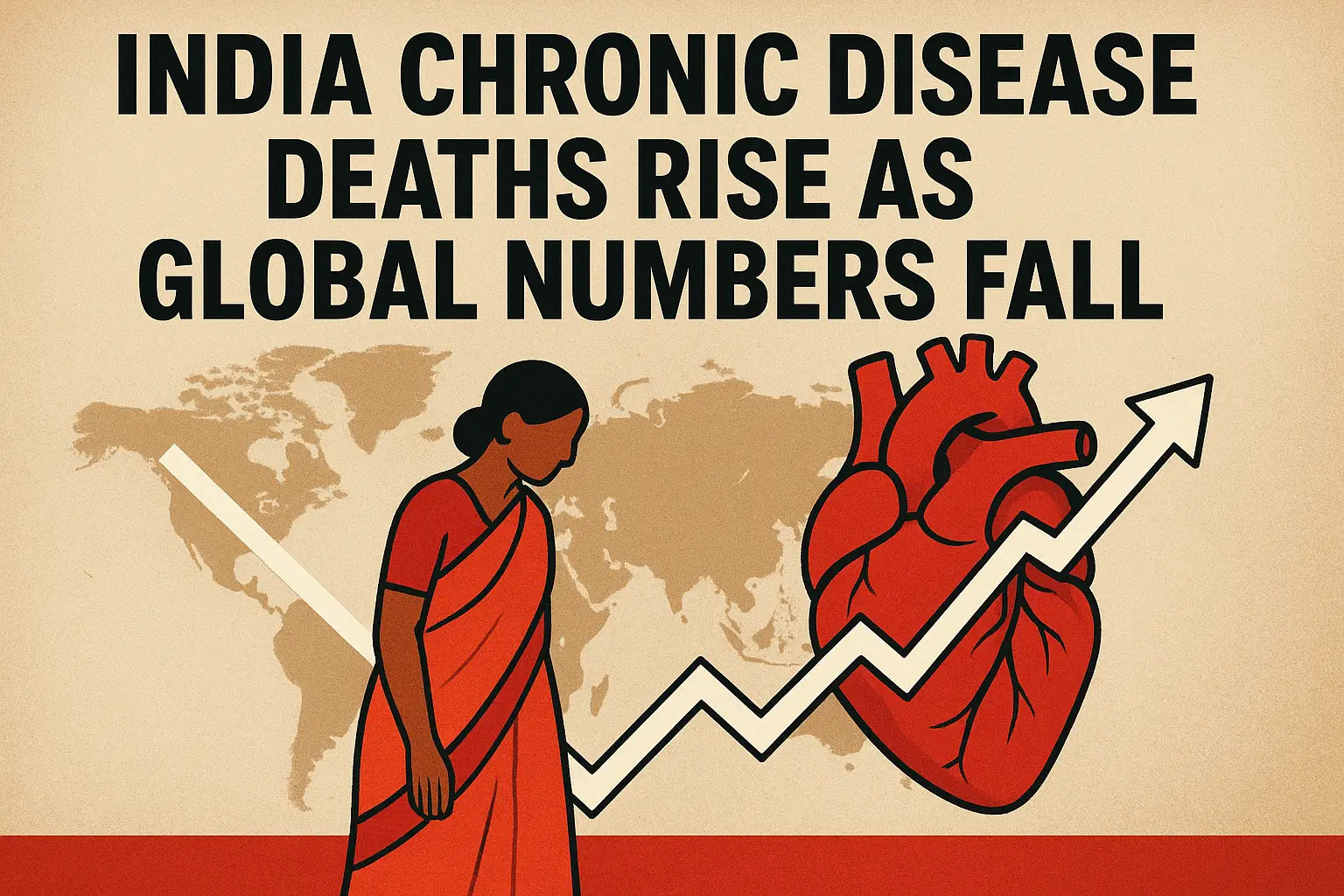
- A recent Lancet study reveals that deaths from chronic non-communicable diseases (NCDs) like heart disease, cancer, stroke, and diabetes are falling globally. However, India stands out as a concerning exception. Instead of seeing declines, the country has experienced increasing mortality from these conditions.
What the Report Highlights
- India has witnessed a growing share of deaths due to NCDs over recent years. Diseases that used to be secondary to infectious or communicable ailments are now leading causes of mortality.
- Heart disease, diabetes, stroke, and various cancers are particularly worrisome. The report points to rising risk factors, including changes in lifestyle, diet, levels of physical activity, and increasing urbanisation.
- Among these diseases, women are showing sharper increases in risk after age 40, while men see steeper increases starting around age 55.
Why India Is Slipping Behind
Several factors contribute to the rise of chronic disease deaths in India:
- Lifestyle shifts: More sedentary jobs, less physical activity, greater consumption of processed and unhealthier foods.
- Urbanisation: As more people move to cities, risk factors like air pollution, stress, and diet changes intensify.
- Healthcare access & awareness gaps: Many cases remain undiagnosed or untreated early. Screening and preventive measures are not uniformly available.
How India’s Figures Compare Globally
- While India shows an upward trend in NCD deaths, most countries in the Lancet study have managed to sustain, or accelerate, declines.
- India is among a minority of nations where the risk of death from chronic diseases has increased among both men and women.
- The age at which these risks accelerate is also earlier than many might assume, particularly for women.
What This Means for Public Health Policy
The findings carry urgent implications for India’s healthcare system:
- Prevention & early detection must become higher priorities. Regular screening for diabetes, hypertension, and cancer detection could save many lives.
- Policy interventions should address lifestyle risk factors: promoting physical activity, reducing processed food consumption, controlling air pollution, and tobacco usage.
- Healthcare infrastructure—especially in rural and underserved areas—needs strengthening so preventive care and treatment are accessible.
Why the Shift Matters
- A rise in NCD deaths shifts the burden on India’s healthcare system and economy, increasing costs for chronic care.
- It changes how public health priorities must be set: not only fighting infectious diseases but also managing long-term conditions.
- Younger populations are increasingly at risk, meaning these trends may worsen unless preventive measures are scaled up.
- India has witnessed a growing share of deaths due to NCDs over recent years. Diseases that used to be secondary to infectious or communicable ailments are now leading causes of mortality.




