



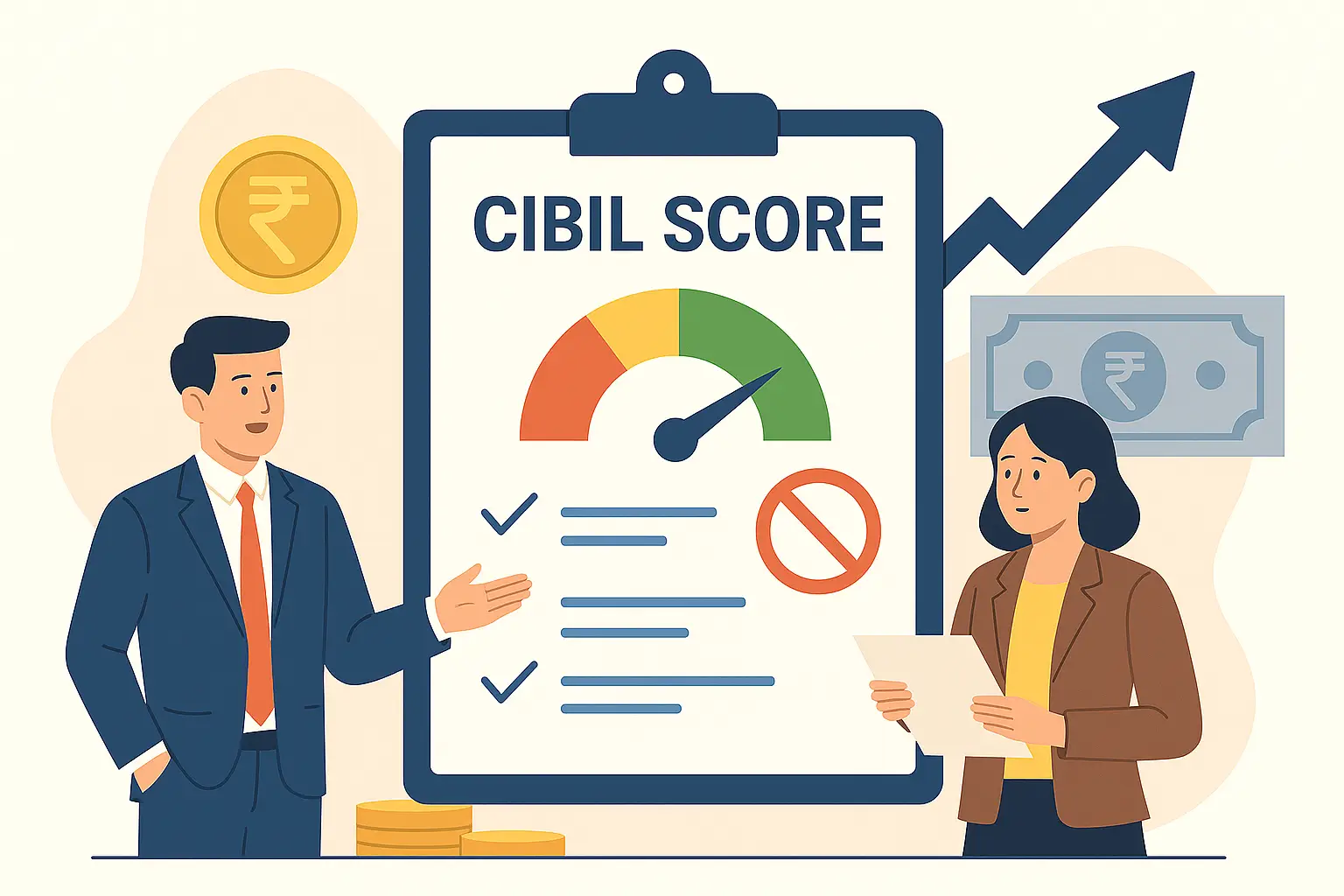
- The Finance Ministry has issued a significant clarification regarding the role of CIBIL scores in loan approvals, affirming that first-time borrowers cannot be denied loans simply due to a low or non-existent credit score.
In parliamentary responses earlier this week, Minister of State for Finance Pankaj Chaudhary reiterated that the Reserve Bank of India (RBI) has not prescribed any minimum credit score requirement for loan applications. Importantly, lenders should not reject first-time loan applicants solely because they lack any credit history, including a CIBIL score.
This directive aligns with RBI’s Master Direction dated January 6, 2025, which advises credit institutions against rejecting loan applications from first-time borrowers due to the absence of a credit history.
Though banks traditionally lean heavily on CIBIL scores—often treating scores above 700 as a threshold for favorable lending terms and quicker approvals —this clarification emphasizes a more inclusive, case-by-case assessment.
The Ministry highlighted that lenders should consider other criteria, such as income stability, repayment capacity, and financial behavior, when evaluating loan eligibility for new customers.
Implications: Toward Greater Financial Inclusion
This clarification by the Finance Ministry marks a progressive step toward increasing financial access. By acknowledging that not all borrowers have established credit histories, especially younger individuals or those entering formal financial systems for the first time, policymakers are fostering a more equitable lending environment.
While CIBIL scores remain valuable indicators of creditworthiness—strong scores help secure loans at lower interest rates and with better terms—this guidance ensures they are not the only determinant. Lenders must adopt a broader evaluation framework for first-time borrowers.
CIBIL Score: What You Should Know
- The CIBIL score ranges between 300 and 900. A score above 700 is generally considered “good,” and 750–900 is viewed as “excellent,” offering borrowers faster approvals, higher loan amounts, and lower interest rates.
- Scores are derived from repayment history, credit utilization, account age, credit mix, and recent credit inquiries.
- New borrowers with no credit history often have no score or a “thin file,” making it difficult for lenders relying solely on numerical creditworthiness.
What Borrowers Can Do
While first-time borrowers are safeguarded from outright rejection due to a lack of a CIBIL score, building credit remains vital for better loan terms in the future. Key steps include:
- Making all EMI and credit card payments promptly
- Monitoring and correcting any errors in credit reports
- Maintaining low credit utilization
- Avoiding multiple credit applications in a short period




