



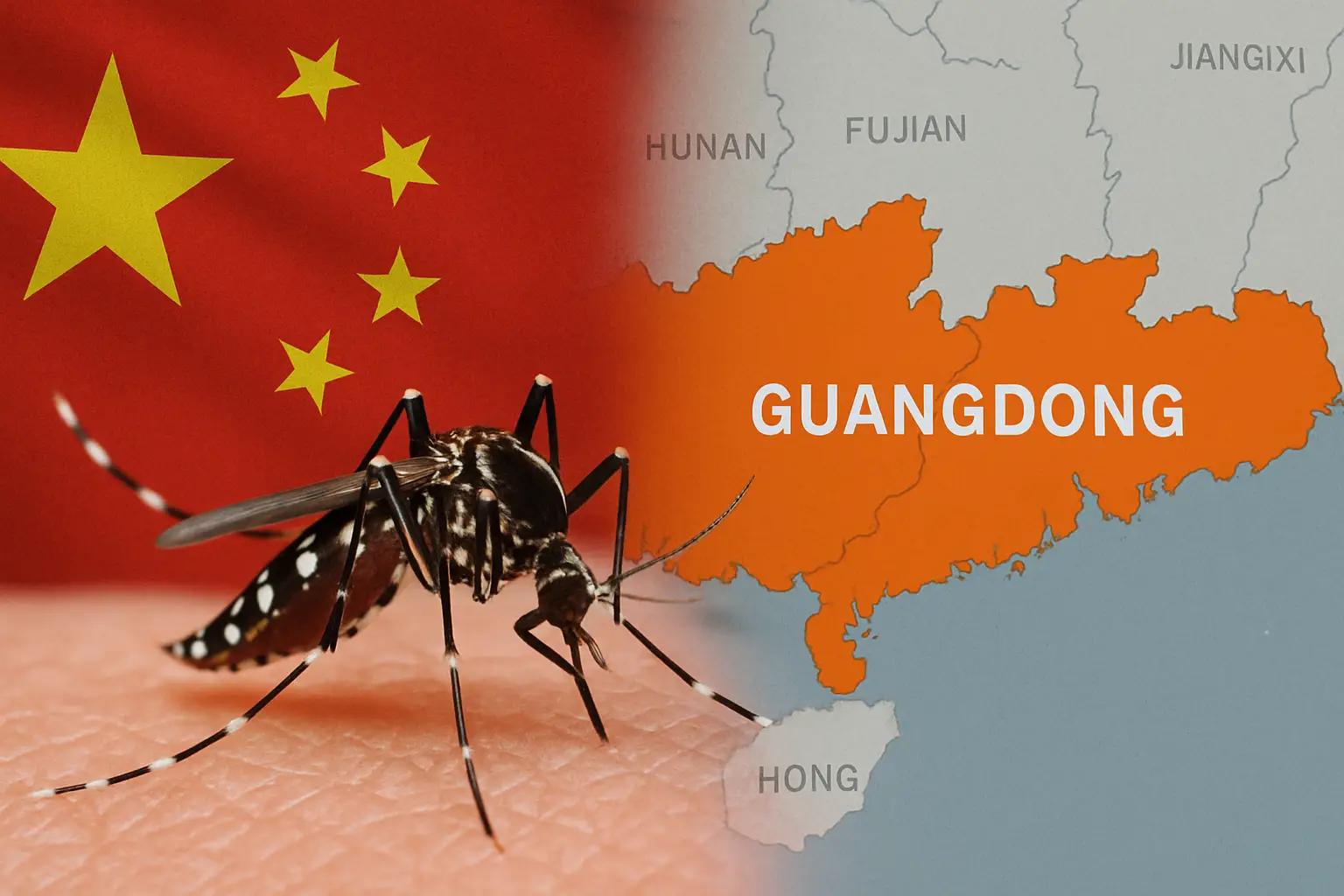
Beijing, August 5, 2025 — China is facing a major chikungunya outbreak in Guangdong province, with over 7,000 confirmed infections, prompting authorities to reintroduce COVID-style health measures and triggering global health alerts.
Local health officials confirmed that the mosquito-borne viral disease has rapidly spread across Guangzhou, Shenzhen, and nearby cities, raising public concern and impacting travel plans.
Rapid Spread and Public Concerns
According to the Times of India, the outbreak is one of the largest chikungunya flare-ups in China in recent years. The virus, primarily transmitted by Aedes mosquitoes, causes fever, rash, and severe joint pain that can last for weeks or even months.
Authorities have responded by:
- Intensifying mosquito-control measures
- Restricting large public gatherings
- Screening travelers in affected regions
Local residents told the BBC that some neighborhoods have returned to COVID-era protocols, including temperature checks and mandatory health declarations for public spaces.
CDC Issues Travel Warning
The U.S. Centers for Disease Control and Prevention (CDC) has issued a travel advisory for China, urging visitors to take precautions against mosquito bites.
Symptoms of chikungunya include:
- Sudden high fever
- Severe joint and muscle pain
- Rashes and headaches
- Fatigue and nausea
While the disease is rarely fatal, it can cause debilitating pain and, in some cases, long-term joint issues.
“Travelers to Guangdong should use mosquito repellents, wear long-sleeved clothing, and avoid stagnant water areas,” the CDC said in its notice.
Global Health Implications
The Hindustan Times reports that the outbreak is raising fears of regional spread, as international flights continue from Guangdong to major Asian hubs. Neighboring countries, including Vietnam and the Philippines, are stepping up airport health screenings.
Chinese health experts have urged calm, stating that aggressive vector control and early detection measures could bring the outbreak under control in the coming weeks.
“We are treating this as a public health priority, with enhanced mosquito surveillance and community-level awareness campaigns,” Guangdong’s health bureau said in a statement.
Previous Outbreaks and Lessons Learned
Chikungunya is not new to Asia, but China has largely avoided major outbreaks in recent years. The last significant chikungunya spread in the region was linked to Southeast Asia in the early 2010s, before COVID-19-era sanitation efforts reduced mosquito breeding sites.
The current outbreak highlights the ongoing vulnerability to mosquito-borne illnesses, especially with climate change extending breeding seasons and urban density aiding transmission.




