



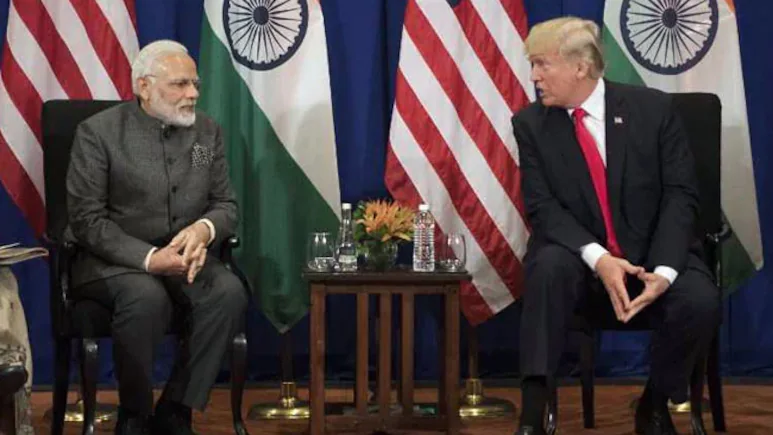
In a high-stakes diplomatic exchange, Prime Minister Narendra Modi corrected U.S. President Donald Trump, making it clear that the recent India–Pakistan ceasefire was the result of direct military communication, not U.S. mediation. In the same 35‑minute phone call, Modi declined Trump’s invitation for a stopover in the U.S. due to prior commitments and extended an invitation for the next Quad summit in India instead.
No U.S. Mediation in Ceasefire
Trump had previously claimed that U.S. intervention helped end India–Pakistan hostilities in May. Modi firmly refuted this, emphasizing the ceasefire occurred through existing military channels based on a request from Pakistan, without U.S. facilitation.
Foreign Secretary Vikram Misri reiterated the stance: “India has never, does not, and will never accept third-party mediation” on matters involving Pakistan.
Declines U.S. Stopover, Invites Trump to India
Despite Trump extending a personal invitation for Modi to visit the U.S. post-G7, Modi cited pre-existing plans and politely declined the offer. Instead, Modi invited Trump to attend the upcoming Quad leaders’ summit in India, a proposal Trump reportedly accepted.
Operation Sindoor, Terrorism, and Trade
The call also touched on Operation Sindoor, India’s military response to the April 22 Pahalgam terror attack that killed 26 tourists. Modi described the action as “measured and precise,” and warned against conflating acts of terrorism with regular diplomatic.
Modi further noted that no discussions occurred regarding an India–U.S. trade deal during this conflict, underscoring India’s position on sovereignty and independent decision-making.
Why This Matters
- Reaffirming Bilateralism: Modi’s firm message reinforces India’s longstanding policy—anchored in the 1972 Simla Agreement—that disputes with Pakistan must be resolved directly, without external mediation.
- Diplomatic Signals: Declining a U.S. stopover while extending a Quad invite highlights India’s multi-aligned yet autonomous foreign policy stance.
- Strategic Solidarity: Trump’s understanding—accepting the Quad invite and backing India’s anti-terror actions—signals closer India–U.S. alignment on security issues.
What’s Next
- Quad Summit: Trump’s acceptance means a high-profile U.S.–India–Australia–Japan meeting is likely later this year.
- U.S.–Pakistan Dynamics: With Trump meeting Pakistan’s army chief during the same period, the U.S. may seek to balance its South Asian engagement.
- Military Endurance: As both India and Pakistan reportedly reduce border troop levels post-conflict, India underscores its preference for bilateral crisis resolution in the future.
Prime Minister Modi’s conversation with Trump has clarified India’s unwavering policy: India will not entertain third-party mediation, especially on security issues. By diplomatically sidelining the U.S. stopover while extending a Quad summit invitation, Modi signals India’s growing diplomatic confidence and commitment to managing regional affairs on its terms.




