



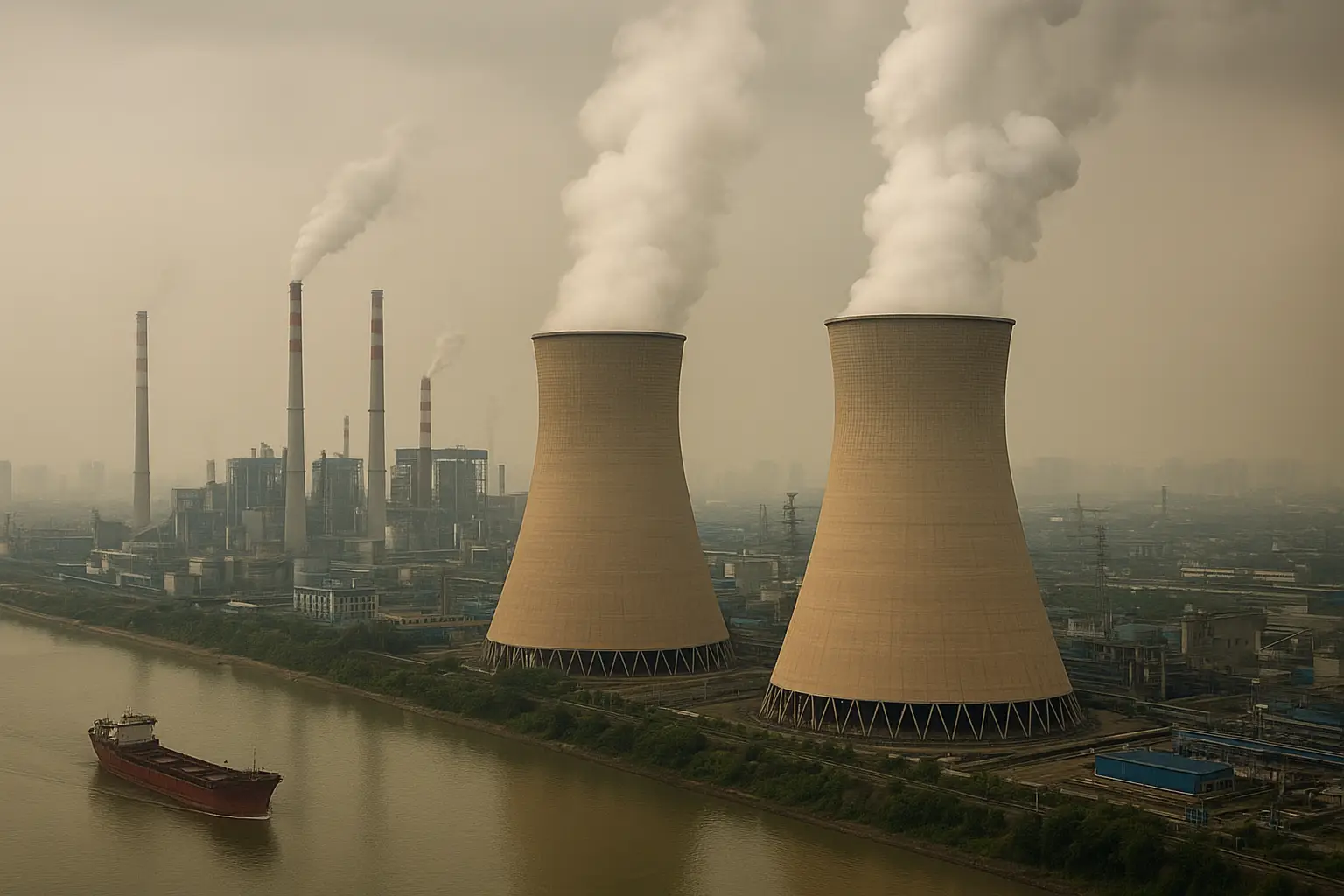
- At a United Nations climate summit, Chinese President Xi Jinping announced a national target to reduce economy-wide greenhouse gas emissions by 7–10% by 2035, relative to their peak levels.
He also pledged to expand China’s installed capacity of wind and solar power to more than six times 2020 levels and to raise the share of non-fossil fuels to over 30% of total energy consumption by 2035.
What It Intends to Do
- Signal a transition away from coal dependence and toward cleaner energy sources
- Align China’s climate goals with international expectations ahead of the COP30 summit
- Position China as a leader in renewable deployment and climate diplomacy
- Encourage investment in renewables, zero-emission vehicles, and grid upgrades
Xi also called on developed nations to take stronger roles, implicitly criticizing countries that have lagged in climate commitments.
Expert Reactions & Criticism
While the announcement is notable, climate observers argue the target falls short of what’s needed to limit global warming:
- Many experts say a 30% emissions reduction by 2035 would be more aligned with common pathways to 1.5 °C, making China’s 7–10% goal relatively conservative.
- Critics warn that China’s continued investment in coal power and slow retirements of existing plants undermine the ambition.
- Some speculate China is “underpromising”—setting modest targets publicly but executing more ambitious action on the ground.
Strengths & Limitations of the Pledge
Strengths:
- The targets are more concrete than past vague pledges
- Scaling renewables aggressively can tip global markets and reduce technology costs
- If China overachieves, this could have an outsized positive impact given its share of global emissions (over 31%)
Limitations:
- The target’s baseline (peak emission year) is crucial; if China’s emissions haven’t peaked yet, “cut 7–10%” may still allow room for growth
- The window is relatively long—10 years to 2035—leaving room for interim increases
- No detailed roadmap yet for phasing out coal, managing stranded assets, or ensuring just transitions for coal-reliant regions
Why It Matters Globally
- China is the largest current emitter, so its pledges carry outsized influence on global climate trajectories
- Its commitment shapes expectations of other major emitters, especially in the lead-up to COP30
- Multilateral climate finance, tech collaboration, and global markets for clean energy will all be affected by whether China’s goals are credible and actionable
- Signal a transition away from coal dependence and toward cleaner energy sources




