



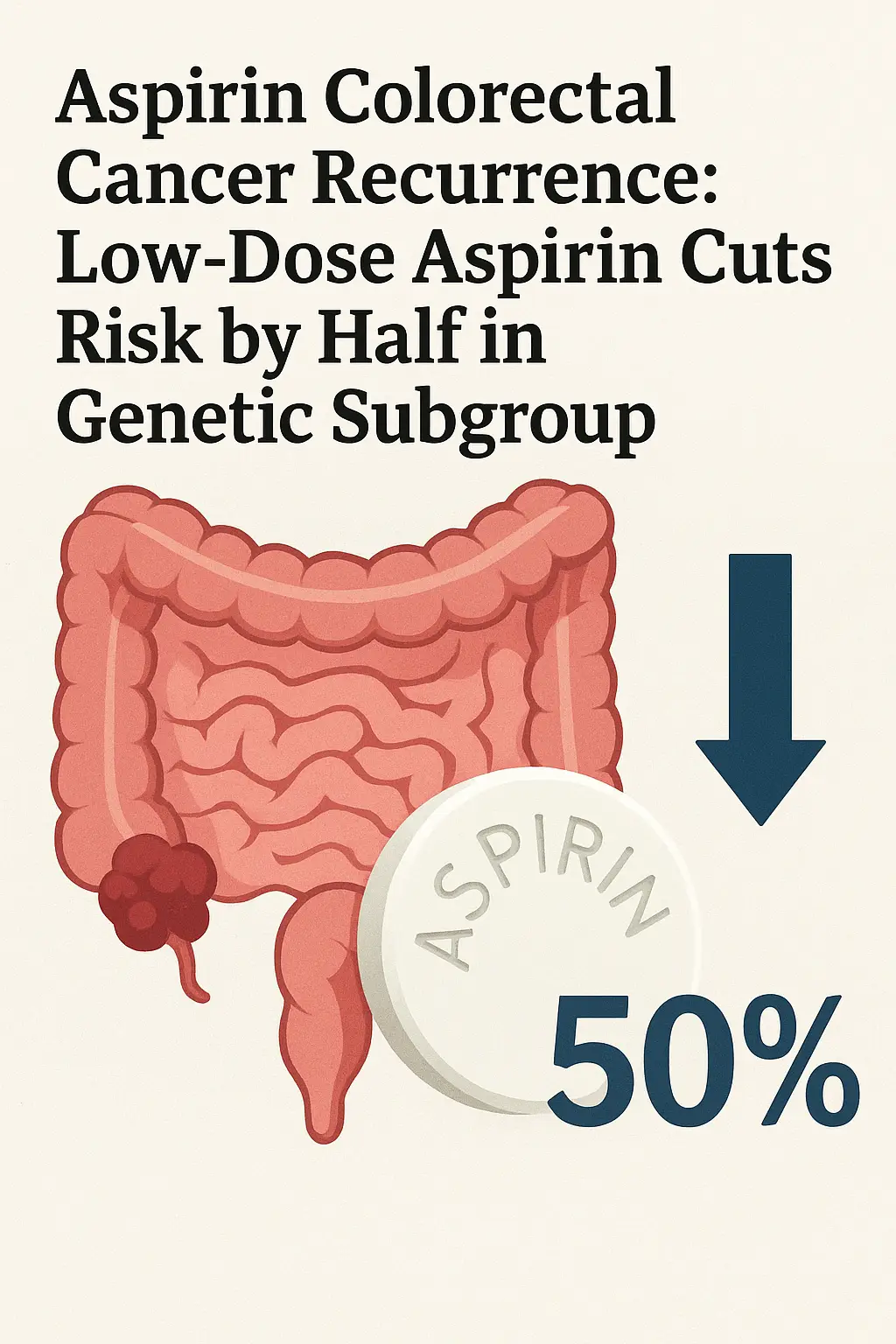
- A large, randomized clinical trial has shown that low-dose aspirin taken daily after surgery can reduce the risk of colorectal cancer recurrence by about 55% in patients whose tumors carry mutations in the PI3K signaling pathway. This “precision medicine” approach was tested in over 3,500 patients across Sweden, Norway, Denmark, and Finland. Patients with the relevant genetic mutation took 160 mg of aspirin each day for three years and had significantly lower rates of their cancer returning compared to those given a placebo.
Why It Matters
This is the first large clinical trial to demonstrate a strong benefit of aspirin in preventing cancer recurrence in a genetically defined subgroup of colorectal cancer patients. Previous evidence came mostly from observational studies, which could not establish causation. The trial suggests that for patients with PI3K-pathway-altered tumors, aspirin may become an accessible and affordable addition to post-surgery care.
How Aspirin Works
Researchers believe aspirin’s effect comes from multiple mechanisms:
- Reducing inflammation, which can fuel cancer growth.
- Inhibiting platelet function; platelets sometimes protect circulating tumor cells, so hampering them may expose those cells to immune detection.
- Interfering with the PI3K pathway itself, which is involved in cell growth and survival. In tumors with mutations in PI3K (or related genes like PIK3CA, PIK3R1, PTEN), that pathway is overactive. Aspirin’s effect seems more pronounced in those cases.
Who Was Studied
- Patients were those who had had surgery for colon or rectal cancer and whose tumors were in stage I-III (colon) or stage II-III (rectal).
- Genetic testing revealed that about 37% of the cohort had PI3K pathway mutations.
- The trial compared 160 mg daily aspirin vs placebo over 3 years.
Risks & Caveats
Despite the strong results, aspirin is not without risks. The trial reported some serious adverse events, including gastrointestinal bleeding and possible brain bleeding in a few participants. Also, the study population excluded older patients (above a certain age threshold), so generalizing the findings to all colorectal cancer patients requires caution.
Moreover, the effect was seen only in patients with specific genetic mutations. Patients without PI3K pathway alterations did not show the same level of benefit. This means genetic testing is likely to be important in deciding whether aspirin could help an individual patient.
Implications & Next Steps
- Medical guidelines may be updated to recommend genetic screening for PI3K pathway mutations in colorectal cancer patients after surgery.
- Doctors may begin discussions with eligible patients about adding low-dose aspirin to their post-treatment plan, weighing benefits against bleeding risks.
- Further follow-up is needed to confirm long-term survival benefits and to see whether aspirin’s effectiveness varies by age, tumor stage, or other patient factors.
- Reducing inflammation, which can fuel cancer growth.




