



-
-
- India’s CO₂ emissions from the power sector dropped by about 1% in the first half (January-June) of 2025 compared with the same period in 2024. This marks only the second time in nearly 50 years that emissions from this sector have declined in a year-on-year comparison.
Over the past 12 months (through June 2025), emissions were down by about 0.2% compared with the previous 12-month span.What Drove the Decline
Several factors contributed to this unusual dip:
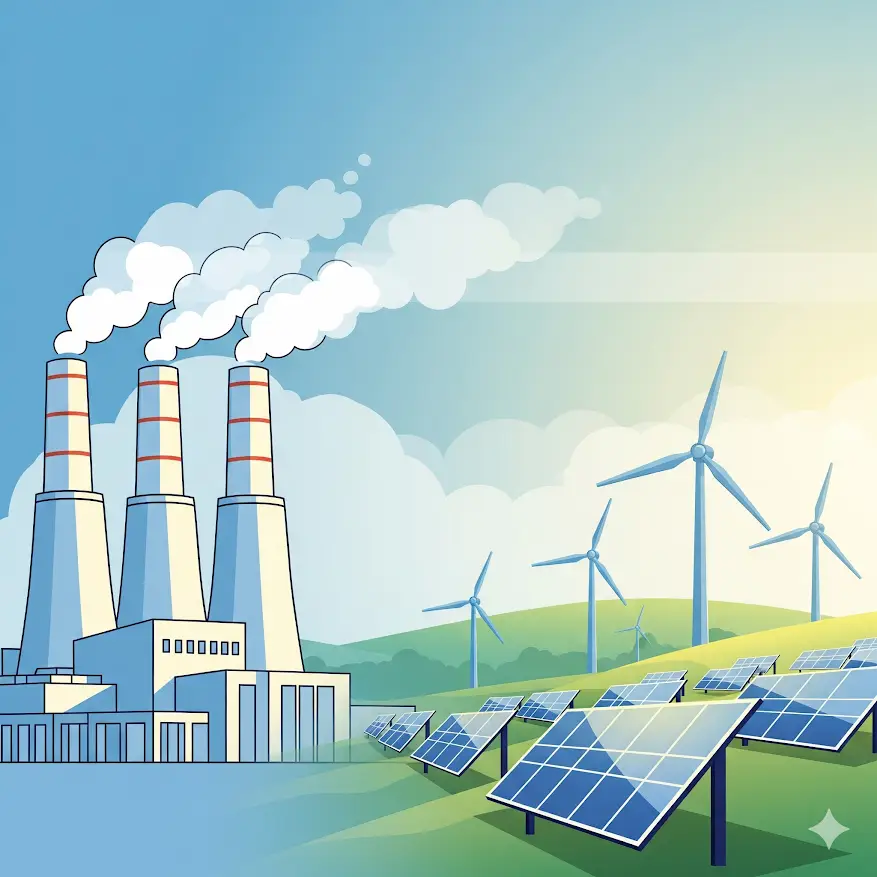
- Clean energy capacity additions surged. Non-fossil energy (solar, wind, hydro, nuclear) saw record growth, with over 25.1 gigawatts (GW) of new capacity added in H1 2025, about 69% more than in the same period last year. Those new plants are expected to generate nearly 50 terawatt-hours (TWh) of electricity annually.
- Milder weather and above-average rainfall reduced demand for cooling (air conditioners), which typically drives high electricity consumption during hot months.
- Hydropower output increased, thanks to good rains, helping reduce dependence on coal and fossil fuel generation.
- While total power generation rose, fossil fuel–based (coal, gas) generation dropped by about 29 TWh — clean energy growth and hydropower made up the difference.
Broader Context & Significance
- The power sector is by far India’s largest source of CO₂ emissions. Thus, even a modest drop here has a noticeable impact on national emissions totals.
- This decline coincides with a slower emission growth in other major sectors, like fossil fuels and cement — although those sectors still saw increases.
- Analysts believe that, if trends continue — clean energy expanding, demand growth kept in check, and better hydropower output — India’s power-sector emissions might peak before 2030.
Caveats & What’s Still Rising
- While the power sector emissions have fallen, emissions in steel and cement increased by 7-10% because of rising infrastructure and industrial activity.
- Demand growth remains volatile; heatwaves or weather extremes could reverse these gains.
- Coal still plays a large role in India’s energy mix. Even with rising renewables, coal generation capacity and use remain significant.
What This Means for India’s Climate Goals
This dip in emissions is more than just good news for one sector — it suggests India is edging closer to fulfilling its climate commitments. If clean energy deployment accelerates, and demand growth stays tempered by efficiency and policy measures, India could peak power sector emissions well ahead of many forecasts.
It also signals that policy interventions — renewable power auctions, grid integrations, incentives for clean energy — along with external factors like climate and rainfall, are converging to create a meaningful break in emissions trends.
- India’s CO₂ emissions from the power sector dropped by about 1% in the first half (January-June) of 2025 compared with the same period in 2024. This marks only the second time in nearly 50 years that emissions from this sector have declined in a year-on-year comparison.
-




