



-
-
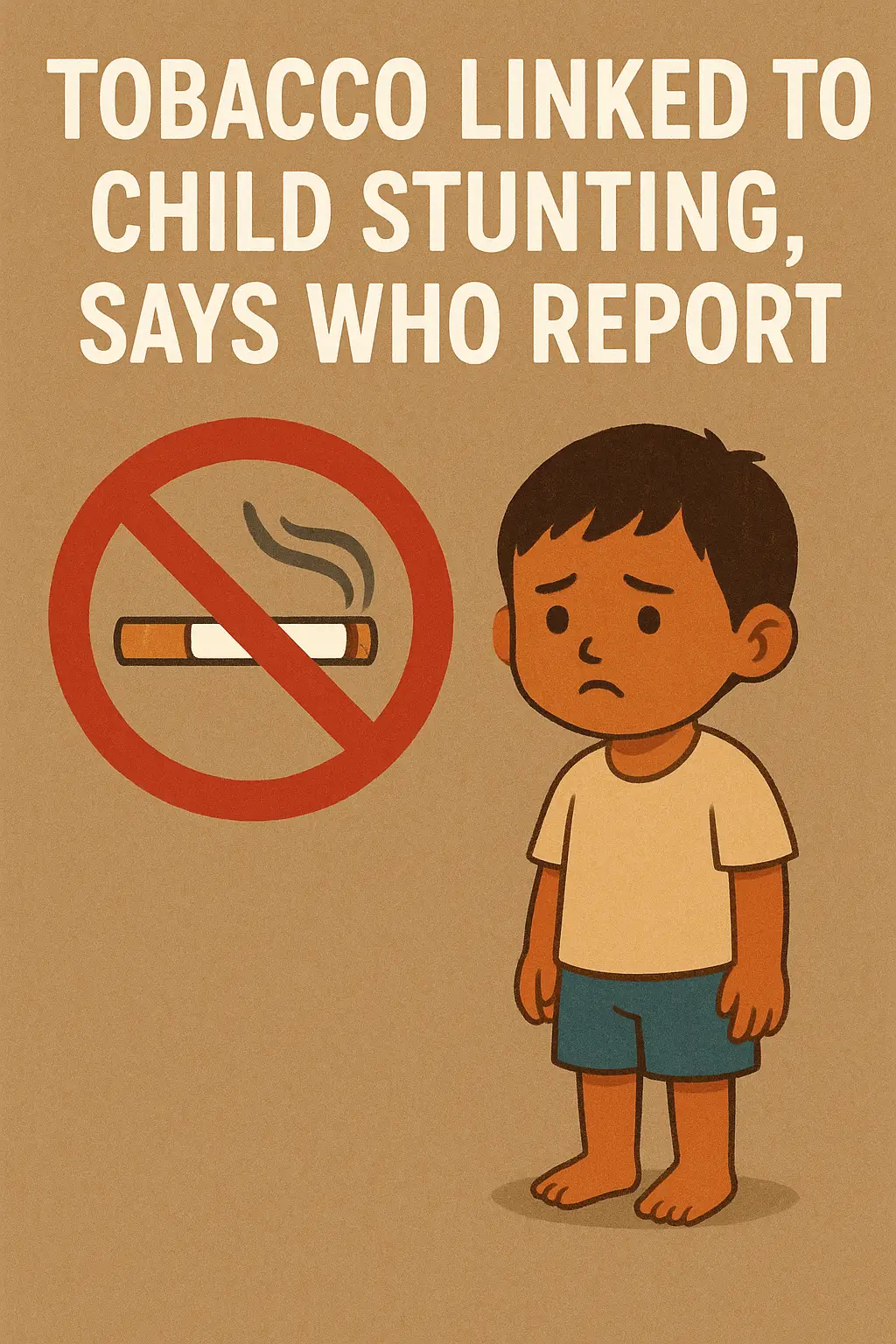
- The World Health Organization (WHO) has issued a warning: tobacco use by parents is a major but under-recognized driver of child stunting worldwide. Children whose parents smoke, especially mothers who smoke during pregnancy, are at significantly greater risk of growth impairment. Exposure to second-hand smoke after birth adds to these dangers.
Stunting affects nearly 150 million children globally and is defined as having height-for-age over two standard deviations below WHO’s child growth norms. Impacts include delayed physical and mental development, weaker immunity, a higher chance of illness, and increased risk of death.
How Tobacco Use Impacts Child Growth
Several pathways are identified in the report:
- Maternal smoking during pregnancy is strongly linked to low birth weight, restricted fetal growth, and preterm birth — all precursors of stunting by age two.
- Second-hand smoke exposure in early childhood worsens risk: it increases respiratory infections and can compromise nutrient absorption and immune response.
- Toxic chemicals in tobacco smoke interfere with normal development both before and after birth, including affecting metabolic and nutritional processes.
Who Is Most Affected
- Low- and middle-income countries, especially in Asia and Africa, bear the highest burden, given both higher rates of parental smoking and higher baseline rates of undernutrition.
- Children born to mothers who smoke, or exposed to smoke in utero, show a higher risk.
- Households where parents (both or either) smoke also face a financial strain, possibly diverting resources from nutrition to tobacco. This “crowding-out” effect can worsen food quality and quantity.
WHO’s Call to Action
To curb these risks, the WHO recommends governments adopt and enforce several key policy measures:
- Fully implement the WHO Framework Convention on Tobacco Control (FCTC) and related MPOWER measures.
- Protect pregnant women and children from second-hand smoke, including smoke-free indoor environments.
- Expand access to cessation services for expectant mothers and parents who smoke.
- Increase public awareness of tobacco’s damaging effects beyond cancer — to child growth, immunity, and long-term development.
- The World Health Organization (WHO) has issued a warning: tobacco use by parents is a major but under-recognized driver of child stunting worldwide. Children whose parents smoke, especially mothers who smoke during pregnancy, are at significantly greater risk of growth impairment. Exposure to second-hand smoke after birth adds to these dangers.
-




