



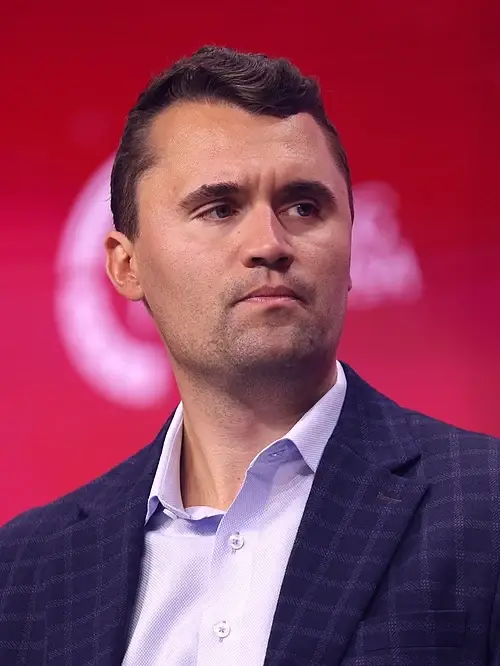
Charlie Kirk, a prominent conservative activist and close ally of President Donald Trump, was fatally shot in the neck on September 10, 2025, during a public event at Utah Valley University in Orem, Utah.
He was seated under a tent marked with slogans like “The American Comeback” and “Prove Me Wrong,” addressing a crowd of roughly 3,000 people when the gunshot rang out. Witnesses said he was speaking about gun control and debating political violence just moments before being struck.
Chaotic Aftermath and Investigation
Videos shared online show bystanders reacting in horror. Kirk appears to clutch his neck as blood flows before collapsing. Spectators’ screams can be heard, then a scramble to escape.
Law enforcement describes the attack as a “targeted assault,” believing the bullet was fired from the roof of a building toward the courtyard where the event was held. No suspect has been arrested yet. Two individuals were briefly detained; one, George Zinn, was later charged with obstruction but has not been linked to the shooting.
National Response and Reactions
President Trump confirmed Kirk’s death later the same day. He described Kirk as “loved and admired” and pledged that his administration would pursue those responsible as well as organizations that foster political violence.
Utah Governor Spencer Cox expressed condolences to Kirk’s family and declared state and federal cooperation to bring justice. Vice President Kamala Harris condemned the act too, saying, “political violence has no place in America.”
Context: Growing Concerns Over Political Violence
Analysts warn that the Charlie Kirk assassination may mark a dangerous escalation in political violence. Since early 2025, the U.S. has seen a sharp rise in politically motivated attacks, nearly double the number compared to prior years.
Some fear this incident could become a flashpoint, subtly influencing further unrest amid deeply polarized communities. The rhetoric around politics, extremism, and identity has already intensified debates nationwide.
Why This Matters Globally
While the shooting is a U.S. event, it reflects broader global trends—political polarization, public safety threats at political events, and how the media amplifies such incidents. Countries watching U.S. politics often view this through the lenses of democracy, free speech, and the responsibilities of public discourse.




