



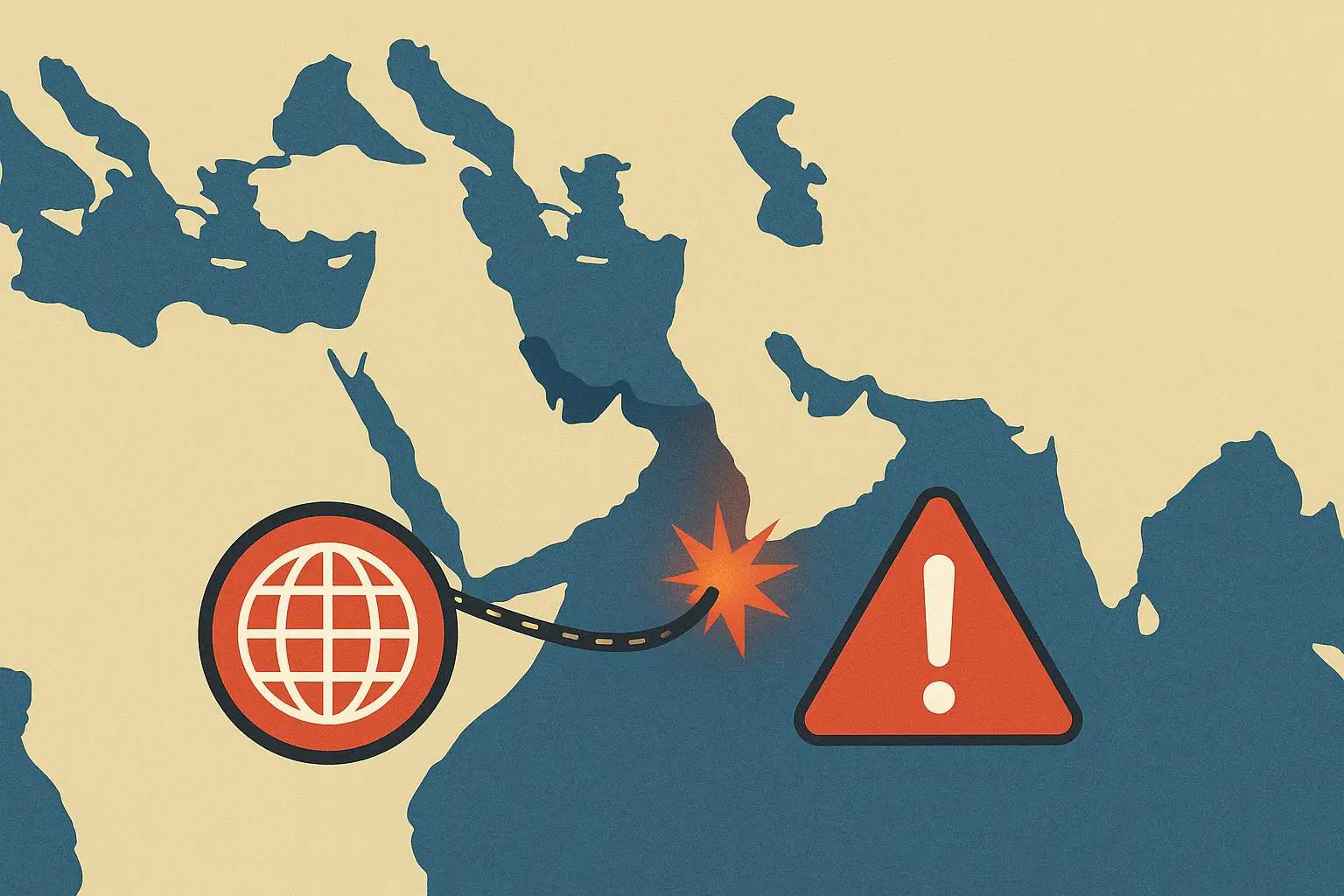
A serious internet disruption over the weekend affected users across India, Pakistan, the UAE, and broader Middle East regions due to undersea cable damage in the Red Sea. Experts now believe that a commercial ship dragging its anchor near the Bab el-Mandeb Strait likely severed multiple cables, including SMW4, IMEWE, FALCON GCX, and Europe-India Gateway. These lines carry massive volumes of international data.
The affected stretch is a major global communications bottleneck—home to over 90% of Europe–Asia intercontinental internet traffic.
Significant Global Impact with Temporary Fixes
The damage disrupted cloud services like Microsoft Azure, which reported higher latency, though no service was completely knocked offline. Traffic has since been rerouted through backup paths in regions like Africa and East Asia.
NetBlocks confirmed degraded connectivity in affected regions, with ISPs like Etisalat and Du receiving increased complaints from users.
Why the Red Sea is Geopolitically Vulnerable
This cable damage isn’t unprecedented. The Red Sea is a strategic undersea corridor, making it highly exposed to disruptions from maritime traffic or geopolitical incidents. In 2024, similar disruptions were linked to conflicts in the region.
Repairing such cables is complex, costly, and slow—often requiring specialist ships or divers. This makes resilience planning crucial.
The Red Sea cable damage incident underscores how a single maritime mishap can ripple through global internet ecosystems. It highlights the reliance on fragile undersea infrastructure and the importance of diversifying data routes, reinforcing cable protection, and expanding backup networks.
Let me know if you’d like to explore technical aspects of cable maintenance, alternative routing strategies, or regional connectivity consequences.




