



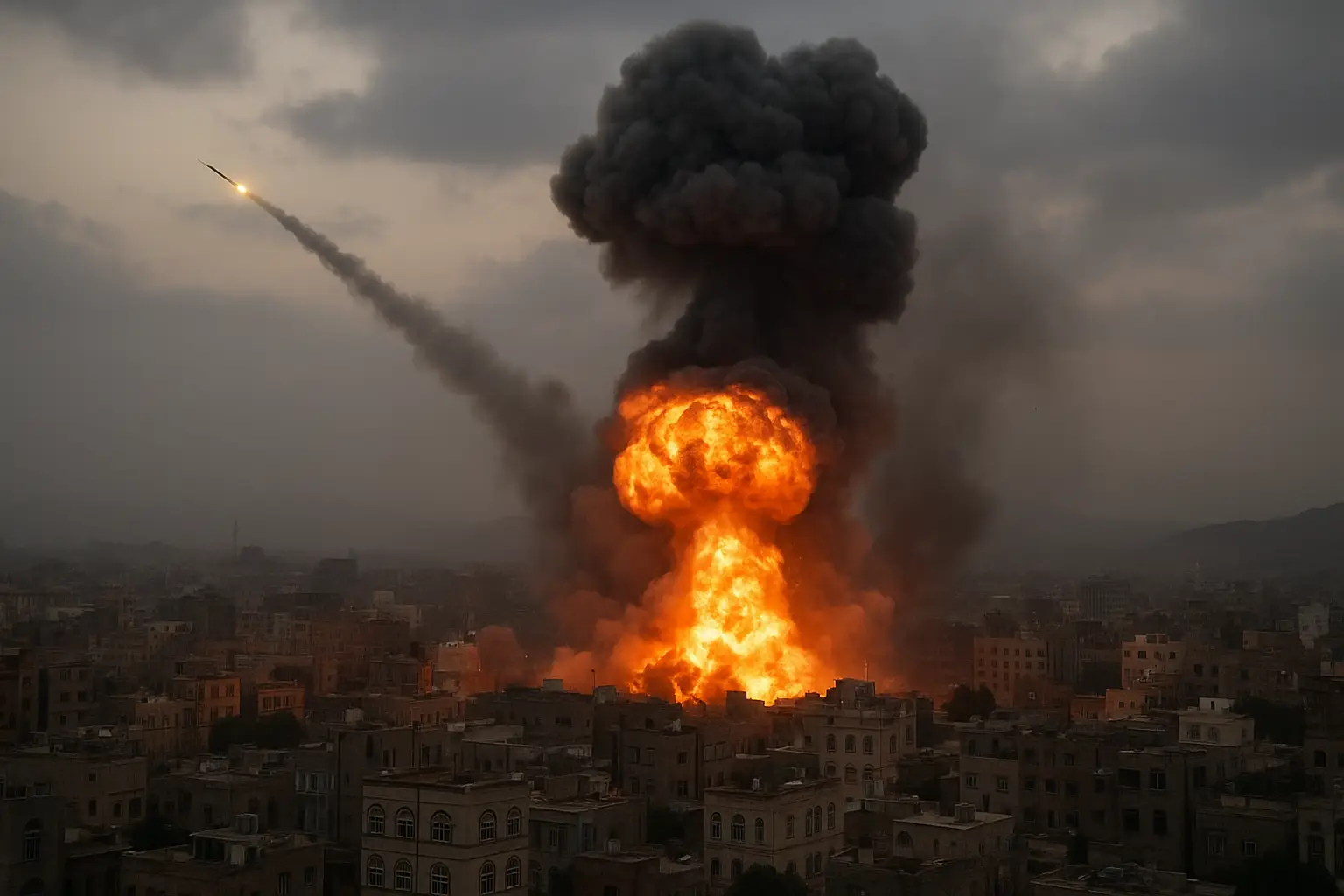
- Israel carried out a series of airstrikes on Yemen’s capital, Sanaa, early Sunday, targeting power stations, fuel facilities, and military compounds. The operation followed a missile attack by Iran-backed Houthi rebels, who used a cluster warhead for the first time in their campaign against Israel.
Airstrikes Across Sanaa
According to witnesses, loud explosions shook the city as Israeli aircraft struck multiple locations. Confirmed targets included:
- A military site near the presidential palace
- The Asar and Hizaz power plants
- A fuel depot and an oil storage facility
Thick plumes of smoke rose over Sanaa, with reports of shattered windows and structural damage in residential neighborhoods. The strikes left large sections of the city without electricity.
Casualties and Damage
The Houthi-controlled health ministry reported at least two people killed and 35 others wounded in the bombardment. Some news agencies cited smaller injury counts, but local hospitals confirmed dozens of casualties. Rescue workers were still searching through debris at several of the bombed sites.
Trigger: A Cluster Missile Against Israel
The strikes came in retaliation for a Houthi missile fired toward Israel on Friday. Israeli officials said the weapon carried a cluster munition, making it harder to intercept and posing heightened risks to civilian areas. Though the missile was destroyed before impact, Israeli authorities described the escalation as “dangerous and unacceptable.”
This was the first documented use of a cluster warhead by the Houthis in their campaign against Israel.
Israel’s Response
The Israel Defense Forces (IDF) said the strikes targeted infrastructure “used for military purposes by the Houthis,” including energy sites supporting their operations. “Any attack on Israel’s population will be met with decisive action,” the IDF said in a statement.
Israeli officials also emphasized that the raids were part of a broader effort to weaken the Houthis’ ability to threaten Israel and disrupt Red Sea shipping.
Houthi Defiance
Houthi leaders condemned the attacks, accusing Israel of deliberately hitting civilian infrastructure. They labeled the strikes a “war crime” and vowed to continue operations in solidarity with Palestinians in Gaza.
“Our support for the people of Gaza will not stop, no matter the sacrifices,” a senior Houthi official said.
Escalation Beyond Gaza
Since the outbreak of the Gaza war in October 2023, the Houthis have increasingly launched drones and missiles at Israel while also targeting commercial ships in the Red Sea. Israel has responded with repeated strikes on Houthi-held territory in Yemen.
Earlier this month, Israel hit the Haziz power station south of Sanaa, temporarily disrupting electricity supplies. Sunday’s assault marks one of the most extensive attacks on Yemen’s capital since Israeli strikes began in May 2025.
Rising Regional Tensions
Analysts warn that the escalation highlights how the Gaza conflict is spilling deeper into the Arabian Peninsula. The Houthis’ adoption of cluster munitions raises concerns of further destabilization, while Israel’s willingness to target Yemen’s power grid underscores the growing intensity of its campaign.
For now, Sanaa remains on edge. Residents fear further strikes could follow if Houthi rocket launches persist, with the conflict drawing new battle lines across an already unstable region.
- A military site near the presidential palace




