



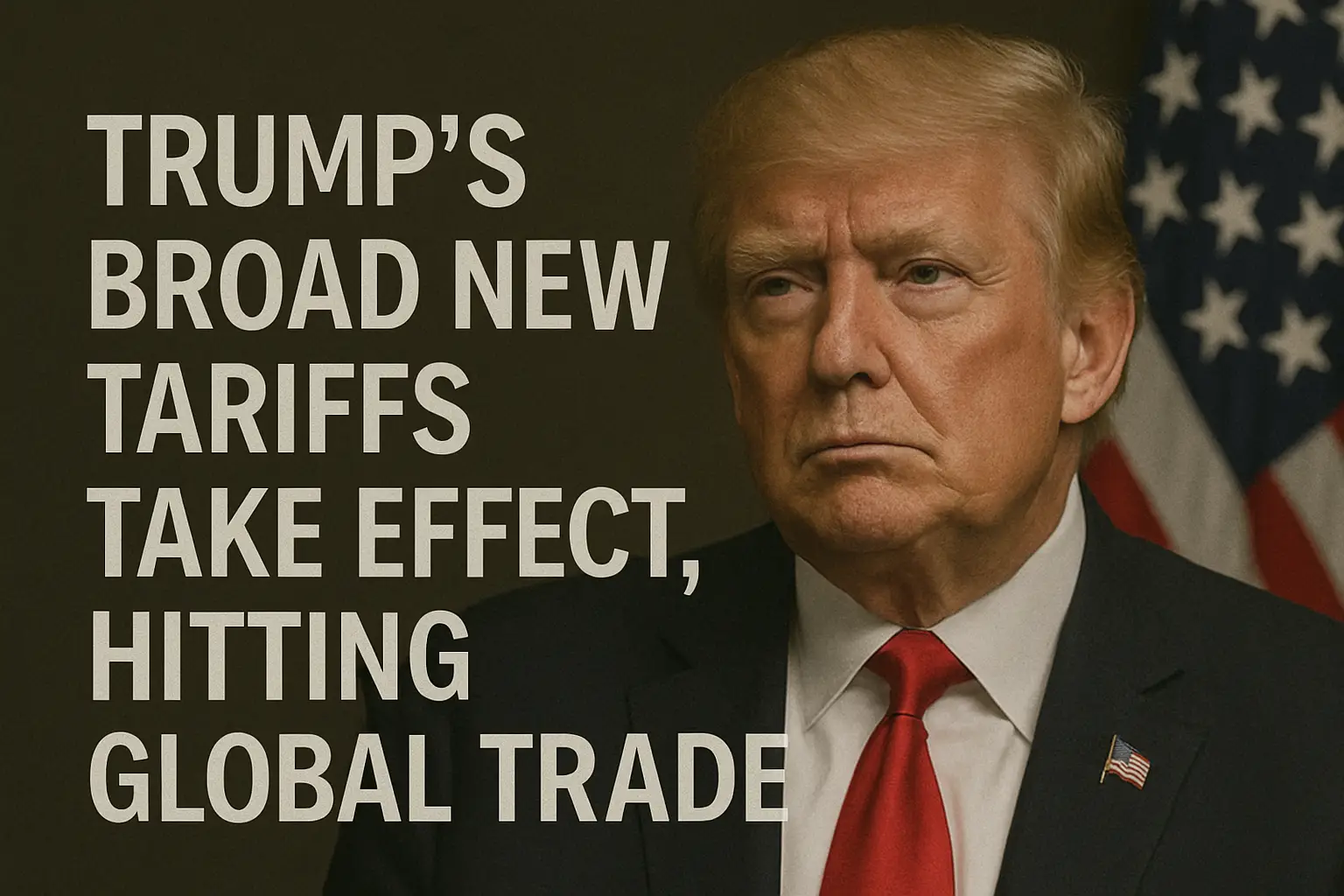
Donald Trump’s sweeping new tariffs officially took effect today, targeting imports from nearly 70 countries in a sharp escalation of global trade tensions. The move imposes duties ranging from 10% to as much as 50%, including a pending 50% levy on Indian goods tied to its continued Russian oil purchases.
Key Highlights:
-
Tariff Scope & Rates
New allied countries like the EU, Japan, and South Korea benefited from reduced rates of 15%, achieved through expedited trade deals. In contrast, nations such as Brazil, Switzerland, Canada, and India face significantly higher duties, some linked to geopolitical disagreements. -
Economic and Market Reactions
Despite concerns, financial markets remained relatively resilient. Global equities dipped modestly, with the FTSE 100 falling by 0.5% and major indexes like the S&P 500 and Nasdaq declining between 1–2%. -
Revenue and Consumer Impact
Treasury projections estimate an annual tariff haul exceeding $300 billion, yet analysts warn immediate effects are likely muted due to pre-shipped inventory and buffer stock. The broader impact may surface later through cost-inflation pressures. -
Country-Specific Tensions
India quickly condemned the move, calling the additional tariffs “extremely unfortunate, unfair, and unreasonable.” Despite diplomatic fallout, economists suggest India’s GDP won’t bear significant damages, especially as it pursues trade diversification -
Shifting Global Trade Landscape
U.S. trading partners are scrambling for exemptions. Countries like Brazil, Chile, and Cambodia have already secured carve-outs on key products, while others lobby fervently to protect strategic industries.
|
Country/Region |
Tariff Impact |
Notes |
|
India |
25% rising to 50% |
Linked to Russian oil purchases |
|
EU, Japan, S. Korea |
≈15% |
Reduced rates via new trade arrangements |
|
Brazil, Switzerland, etc. |
Up to 50% |
Higher duties; some obtaining exemptions |
|
Global Markets |
Moderate dip |
Initial resilience, future cost concerns |
What’s Next?
-
Implementation Window: Some goods shipped before August 7 but arriving by October 5 will still be eligible for the previous, lower tariff rates.
-
Potential Trade Realignments: As tariffs raise costs, exporters may look to alternative markets, accelerating shifts in global supply chains.
-
Legal and Political Fallout: Challenges to the executive authority behind these tariffs persist, adding a legal dimension to the economic disruption.




