



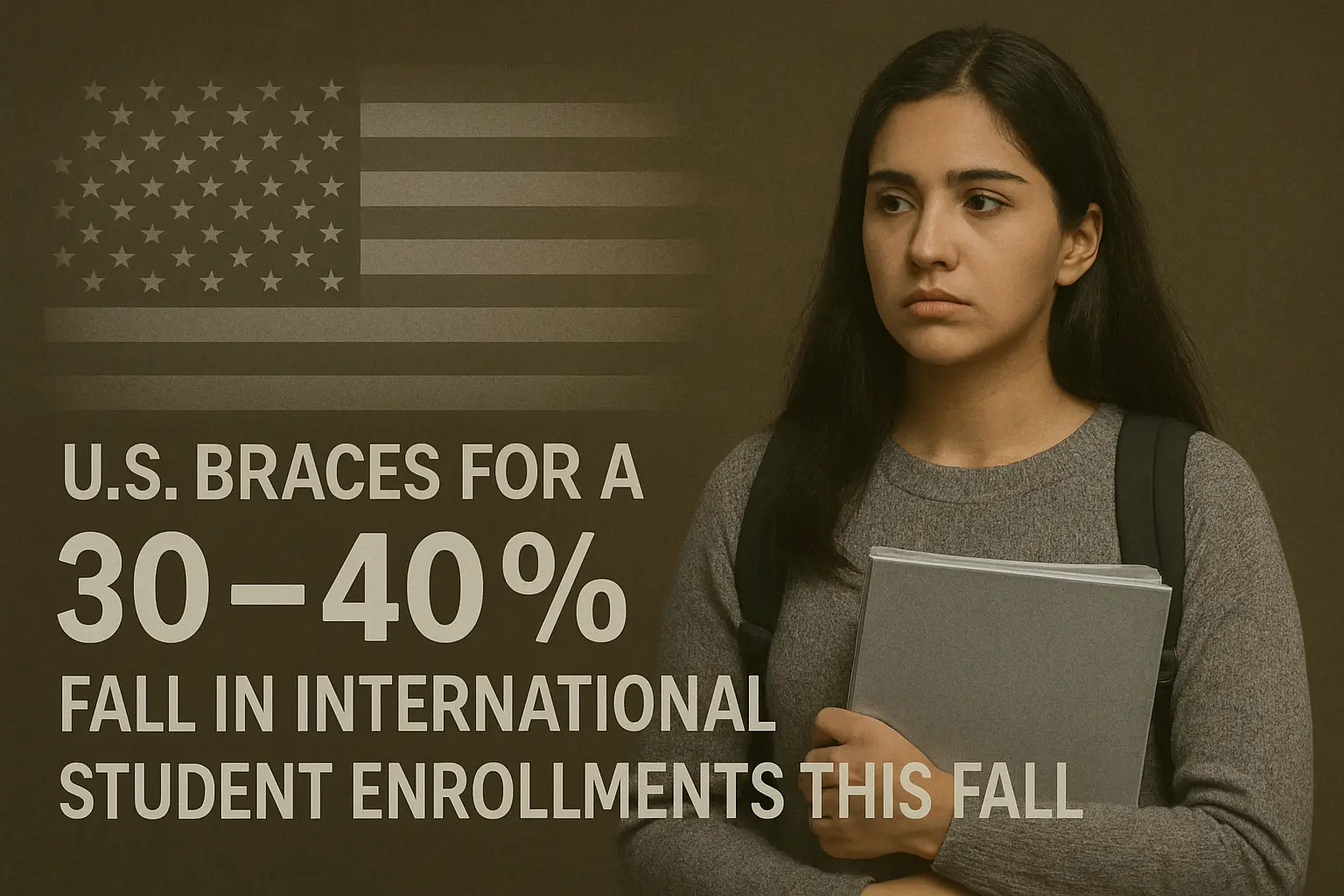
The United States is expected to see a 30–40% decline in new international student enrollments this autumn, with policy shifts and political signals raising concern among prospective applicants, particularly from India.
Policy Shifts Fuel Reversal of Fortunes
Sources indicate that recent proposals from the Trump-era Department of Education and echoed by members of the current administration have tightened student visa regulations, limiting eligibility for international students, especially those from countries like India and China. As reported by India Today, these changes may prompt as many as 1.5 lakh Indian students to defer U.S. admissions this year.
Behind Closed Doors: Policy Changes Explained
As per Times of India, key changes include:
-
Redefining full-time student status which could restrict the ability to work on campus.
-
Tougher criteria for F-1 visas, such as proof of return intent and financial stability.
-
New checks on internship-type learning, including OPT requirements.
Critics argue the proposals are intended to slow the influx of overseas students, citing labor market pressures and educational competition.
Forecasted Impact: 30–40% Decline in Intake
According to NDTV, universities are preparing for a sharp drop in enrollment:
-
Schools reported 30% fewer confirmations already.
-
International student services and university housing offices brace for the shift.
-
Indian universities like Hyderabad and Mumbai are seeing surging interest from deferred students opting for local study routes.
Impact on India–U.S. Academic Ties
India–U.S. educational ties may be strained if prospective Indian students opt instead for universities in Canada, Australia, or Europe. Institutions like UC Berkeley and Stanford—with historically large international cohorts—are already adjusting intake plans and scholarship offers.
What Lies Ahead: Next Steps
Governments and universities may pursue:
-
Legal challenges or advocacy against proposed restrictions.
-
Increased scholarship and visa transparency programs to retain international applicants.
-
Diversification into new recruitment corridors, including the Middle East and ASEAN nations.
A weakening in international student enrollment due to policy obstacles could disrupt U.S. higher education economics, affect talent inflows, and upset the traditional appeal of American degrees.




