



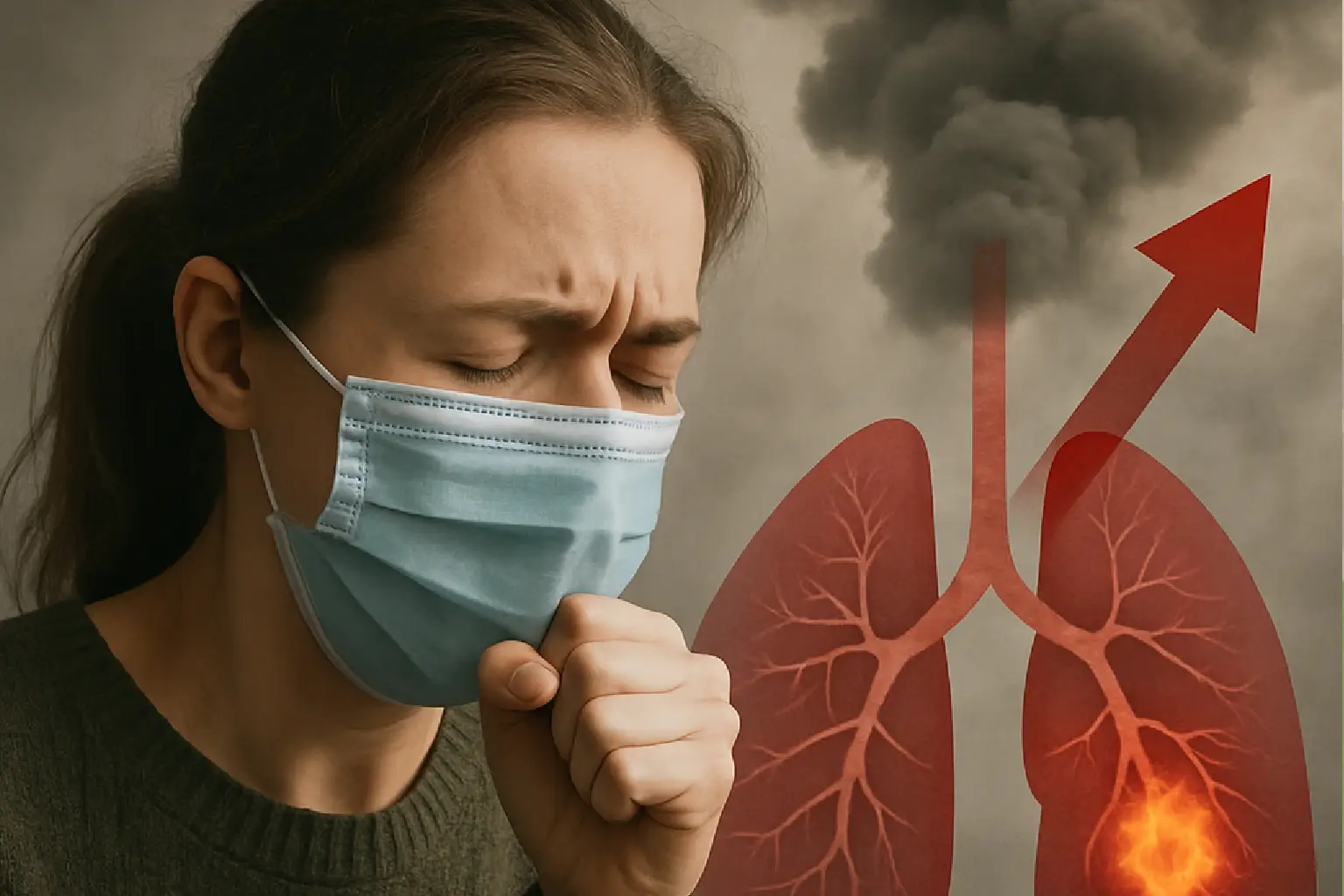
Air pollution, particularly PM2.5 particles, is driving a surge in lung cancer cases among non-smokers, according to new research revealed on World Lung Cancer Day. Scientists have linked tiny airborne pollutants to genetic mutations that can trigger cancer, raising alarms that lung cancer is no longer just a smoker’s disease.
A Bangkok Post report highlights findings from Thailand, where researchers observed spikes in lung cancer cases among urban populations exposed to high PM2.5 levels. Laboratory tests showed that fine particulate matter can alter critical genes in lung tissue, setting the stage for cancerous growths.
PM2.5 Particles: A Hidden Cancer Risk
PM2.5 particles, which are smaller than 2.5 micrometers, can penetrate deep into the lungs and bloodstream, causing long-term damage. Scientists now believe that chronic exposure leads to genetic changes, even in people with no history of smoking.
“We are witnessing an alarming rise in lung cancer among young adults and non-smokers,” said Dr. Ananya Prasert, a leading oncologist in Bangkok. “Air pollution is the silent killer.”
Warning Signs Everyone Should Know
Doctors emphasize the importance of early detection in improving survival rates. According to experts cited by The Times of India, the seven early warning signs of lung cancer include:
- Persistent cough lasting over two weeks
- Shortness of breath or wheezing
- Chest pain that worsens with deep breathing
- Coughing up blood or rust-colored sputum
- Unexplained weight loss or fatigue
- Frequent respiratory infections
- Hoarseness or voice changes
Health experts stress that children, the elderly, and those with pre-existing lung conditions are especially vulnerable to air pollution-induced illnesses.
Not Just a Smoker’s Disease Anymore
Historically considered a smoker’s cancer, lung cancer now increasingly affects non-smokers, including women and young adults. NDTV reports that pollution, second-hand smoke, and genetic factors are reshaping the disease’s profile.
“Lung cancer can affect anyone. Clean air is the first line of prevention,” said Dr. Ramesh Bhatia, a pulmonologist in Delhi.
Global and Local Response
On World Lung Cancer Day, health authorities are urging governments to strengthen air quality monitoring and invest in public health awareness campaigns. Urban centers like Delhi, Bangkok, and Beijing, where PM2.5 levels often exceed safe limits, remain the most at risk.
Medical experts recommend a combination of mask usage, indoor air purifiers, regular screenings, and lifestyle adjustments to reduce risk while advocating for policy-level action to curb pollution.
As the link between environmental pollution and genetic damage becomes clearer, the global fight against lung cancer now extends far beyond smoking cessation.




