



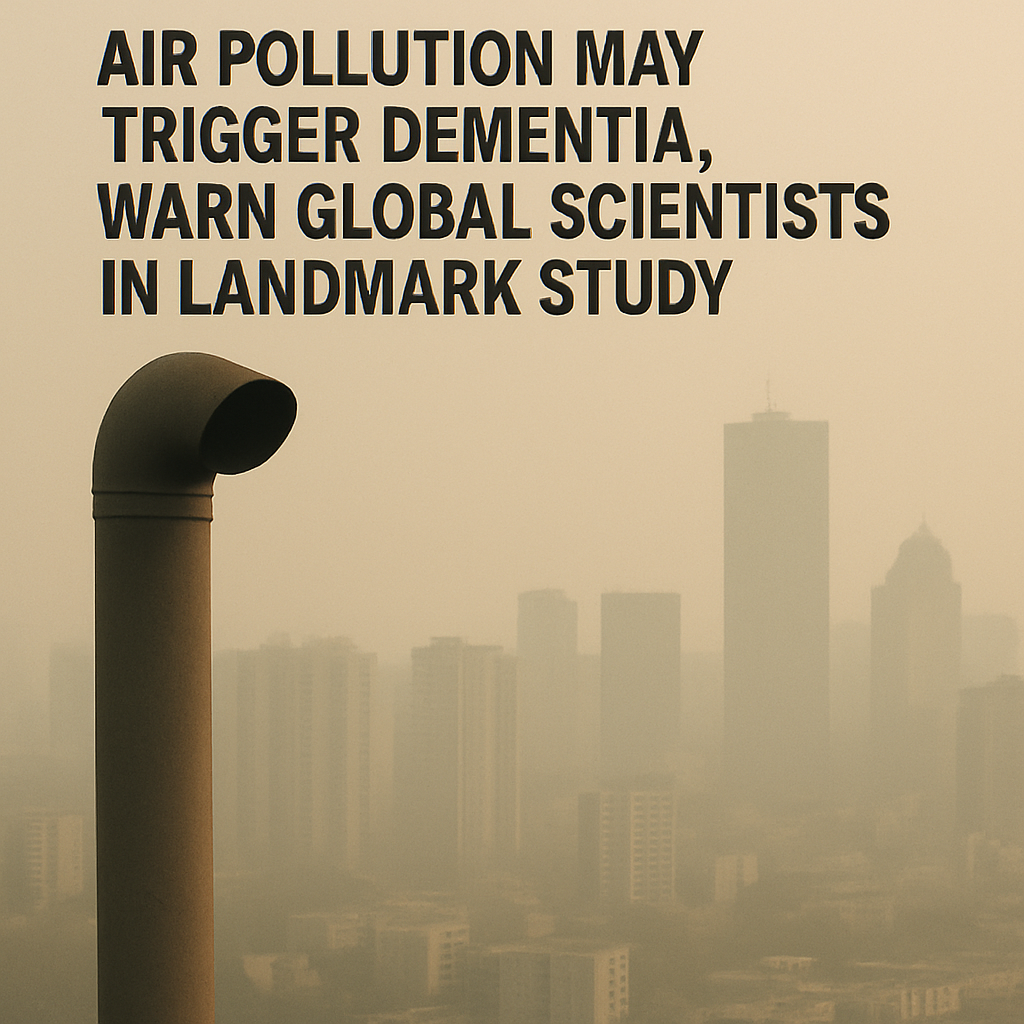
A major international study has found compelling evidence that prolonged exposure to air pollution significantly raises the risk of developing dementia. The research, conducted by leading institutions including the University of Cambridge, adds to a growing body of work connecting environmental pollutants to cognitive decline and memory loss.
According to the study published this week, even tiny airborne particles known as PM2.5—smaller than 2.5 micrometers—can travel deep into the lungs and bloodstream, ultimately affecting the brain. These microscopic pollutants primarily come from vehicle emissions, industrial activities, and the burning of fossil fuels.
Researchers examined data spanning several decades and across diverse geographical regions. Their analysis revealed that individuals living in urban or high-traffic areas are more likely to experience memory-related disorders later in life. The findings suggest that air pollution not only exacerbates existing neurological conditions but could also be a contributing factor in triggering them in the first place.
“We’ve long known that dirty air affects the lungs and heart, but we now have solid evidence that it impacts the brain as well,” said Dr. Jonathan Peterson, one of the lead researchers. “This should be treated as a public health emergency.”
The study noted that people exposed to higher levels of pollution had an up to 17% increased risk of dementia compared to those in cleaner environments. The exact mechanisms are still being investigated, but scientists believe that pollutants may cause inflammation in the brain, damage neurons, and reduce blood flow—conditions all linked to neurodegenerative diseases such as Alzheimer’s.
In India, where air quality in cities like Delhi and Mumbai frequently exceeds safe levels set by the World Health Organization, these findings carry critical implications. According to the Centre for Science and Environment (CSE), nearly 40% of India’s urban population is exposed to hazardous air daily. Given the country’s rapidly aging population, experts are calling for immediate interventions.
The U.S. Environmental Protection Agency (EPA) and public health organizations in the UK have also taken note. There are increasing demands to strengthen clean air laws and reduce emissions from transportation and industry, particularly in dense urban centers.
What makes this study particularly concerning is that it establishes a link even at pollution levels considered “moderate” by current standards. “There is no truly safe level of air pollution,” said Professor Helen Brooks, a neurobiologist from Oxford who was not involved in the study. “This adds urgency to global efforts to clean the air we breathe.”
Public health experts recommend simple actions individuals can take, such as using air purifiers at home, avoiding outdoor activities during high pollution days, and advocating for local policy changes.
The researchers conclude that while more studies are needed to fully understand the neurological impact of air pollutants, the evidence is already strong enough to call for immediate action. As urbanization accelerates globally, the consequences of ignoring environmental triggers of cognitive diseases may be devastating.




