



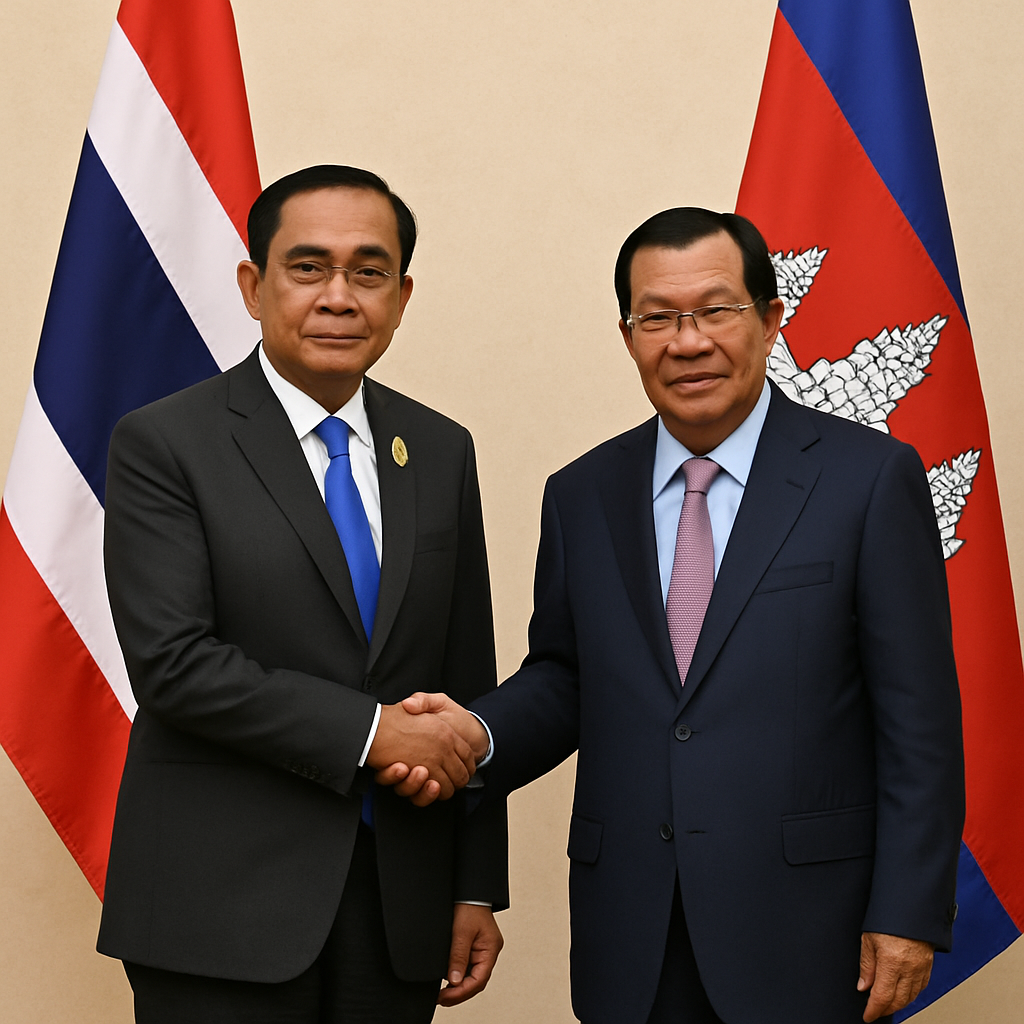
After five days of escalating violence that claimed at least 38 lives and caused mass displacement, Thailand and Cambodia have agreed to an “immediate and unconditional” ceasefire, following urgent peace talks mediated by Malaysia under heavy international involvement.
Key Ceasefire Terms and Timeline
- The ceasefire, agreed upon during talks chaired by Malaysian Prime Minister Anwar Ibrahim, took effect at midnight local time on July 28.
- It includes resumption of direct communications between the prime ministers, foreign and defense ministries, and plans for coordinated military and border-level discussions.
International Facilitation
- The peace talks were co-organized by Malaysia, with diplomatic attendance from both the U.S. and China, including their ambassadors to Malaysia.
- Former U.S. President Donald Trump is credited with pressuring both sides through direct calls, warning that trade negotiations would be paused if hostilities continued—Thailand and Cambodia were facing looming 36% U.S. tariffs otherwise.
Reactions from Leadership
- Prime Minister Hun Manet (Cambodia) welcomed the outcome as essential for enabling displaced civilians to return, and viewed the agreement as a starting point for healing bilateral relations.
- Acting Thai PM Phumtham Wechayachai described the deal as reflecting Thailand’s commitment to peace but declared reservations over Cambodia’s sincerity, citing alleged violations of international law during the conflict.
Crisis Context & Human Impact
- The conflict marked the worst border confrontation in over a decade, triggering an estimated 300,000 people displaced on both sides, and significant civilian casualties.
- The violence began after the killing of a Cambodian soldier in May, and rapidly escalated when a landmine explosion injured Thai troops, sparking artillery exchanges and cross-border airstrikes.
Road Ahead
- A military commanders’ meeting is scheduled for July 29, followed by a border committee session on August 4 in Cambodia to consolidate peace mechanisms.
- While the ceasefire signals hope, analysts warn that underlying tensions remain unresolved and rebuilding trust will take sustained diplomacy.
This breakthrough ceasefire, mobilized under the mediation of ASEAN’s Malaysian chair and backed by major global players, offers a critical reprieve from violence in Southeast Asia. Yet, with trust fragile and trench lines still intact, only continued engagement and compliance with the ceasefire terms can pave the way for lasting peace.




