



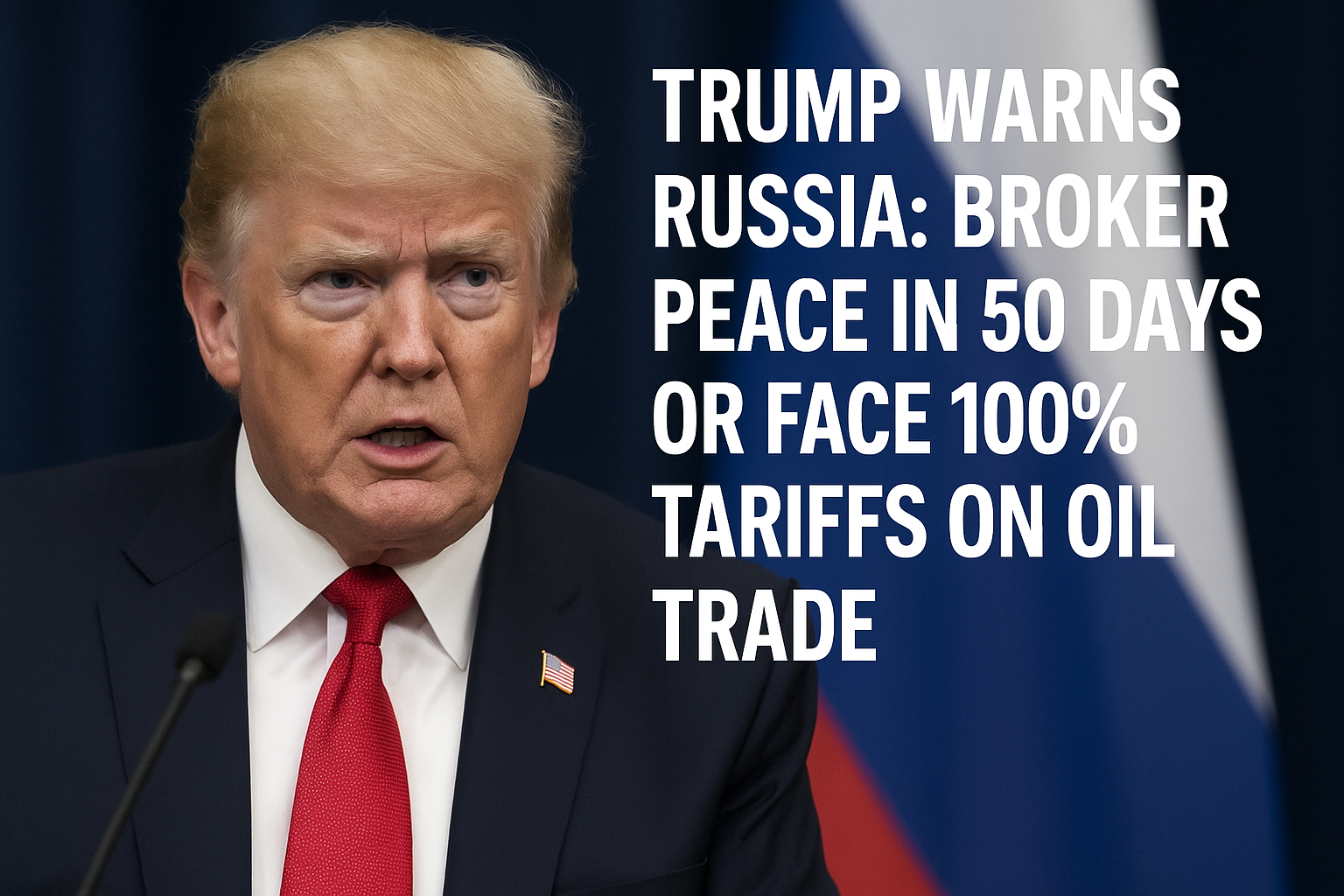
In a bold and high-stakes ultimatum, former U.S. President Donald Trump has given Russia a 50-day deadline to negotiate a peace agreement with Ukraine or face sweeping new economic penalties. Speaking during a press briefing, Trump declared that any nation purchasing Russian oil after the deadline would be hit with 100% tariff sanctions, triggering strong international reactions.
Trump’s message marks a dramatic escalation in pressure on the Kremlin as the Ukraine war drags on into its fourth year. His remarks come as part of a proposed NATO-backed U.S. weapons agreement that Kyiv has hailed as a major breakthrough.
100% Tariffs on Russian Oil Trade Threatened
Under the proposed sanctions, countries importing Russian oil could face 100% U.S. tariffs, effectively isolating Russian energy from global markets. The deadline set by Trump is 50 days, after which these penalties would be enacted unless a viable peace deal is in place.
“Russia has 50 days. Either there’s peace, or the world stops buying their oil—with consequences,” Trump stated firmly.
This unprecedented move would target not only Russia but third-party nations, including India, China, and Turkey, that continue to buy Russian crude amid the war.
U.S. to Send Weapons to Ukraine Under NATO Deal
In parallel with the tariff threat, Trump confirmed that the U.S. will send weapons to Ukraine under a formal NATO mechanism, reaffirming America’s support for Kyiv. The shipment reportedly includes air defense systems, long-range artillery, and surveillance drones, bolstering Ukraine’s capacity to counter ongoing Russian aggression.
Ukrainian President Volodymyr Zelenskyy welcomed the move, calling it a “decisive step” toward strengthening Ukraine’s defense and pushing Russia to the negotiating table.
“This sends a powerful message to Moscow that the world is not backing down,” Zelenskyy said.
Russia Dismisses Threats, Calls Them “Economic Blackmail”
The Kremlin reacted sharply to Trump’s announcement, dismissing it as “economic blackmail” and “political theater.” Russian officials claimed the ultimatum would further destabilize global energy markets and punish neutral trading partners.
“This is not diplomacy—it’s coercion,” said a spokesperson from Russia’s Foreign Ministry.
Russian state media also downplayed the impact of U.S. sanctions, asserting that Russia has diversified its energy partnerships, especially with Asian and Middle Eastern countries.
Global Reactions Mixed
The global response has been divided:
- European leaders cautiously supported the weapons deal but expressed concern over the tariff plan’s potential to disrupt energy prices and inflation.
- China and India have not yet formally responded but are likely to push back due to their energy dependence on Russia.
- NATO allies largely backed the tougher stance, noting that increased pressure may create a diplomatic opening.
Trump’s aggressive new strategy is a gamble designed to force Russia into a corner diplomatically and economically. Whether this mix of military aid and economic coercion will lead to peace or further escalate tensions remains to be seen, but it has undeniably reshaped the geopolitical conversation around the war in Ukraine.




