



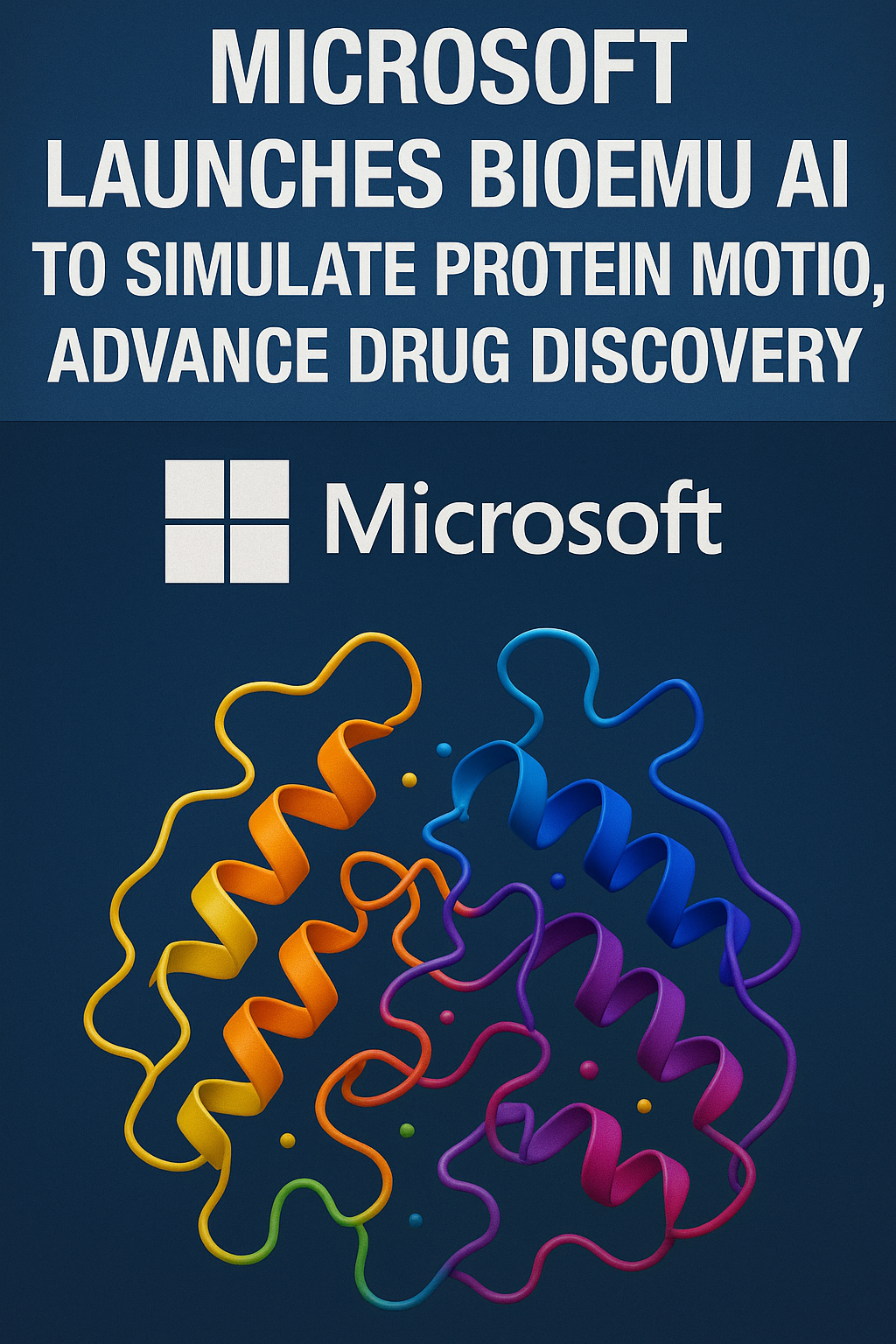
Tech giant Microsoft has unveiled BioEmu, a groundbreaking artificial intelligence system that simulates how proteins move inside the human body—an innovation that could revolutionize drug discovery and accelerate research into diseases like cancer, Alzheimer’s, and genetic disorders.
Unlike earlier AI tools that predict the static structure of proteins, BioEmu focuses on protein motion, helping scientists understand how these biological molecules behave over time, a key to designing more effective drugs.
The Next Leap After AlphaFold
While tools like DeepMind’s AlphaFold made headlines by accurately predicting protein structures, Microsoft’s BioEmu goes further by modeling how those structures shift and flex, enabling a dynamic view of how proteins function.
“Understanding how a protein moves is just as important as knowing what it looks like,” said a Microsoft Research spokesperson. “BioEmu gives us a virtual microscope into the mechanics of life at the molecular level.”
How BioEmu Works
- AI-Driven Simulations: BioEmu uses advanced deep learning trained on large datasets of molecular simulations to predict protein motions over time.
- Speed & Efficiency: Processes that previously took weeks on supercomputers can now be completed in hours, dramatically improving research timelines.
- Research Integration: BioEmu can integrate with pharmaceutical R&D pipelines to test how potential drugs interact with proteins, virtually.
Major Impact on Drug Development
BioEmu’s ability to predict motion allows researchers to:
- Identify active sites on proteins that change shape—ideal targets for drug molecules.
- Model how mutations might alter a protein’s behavior in diseases.
- Reduce dependency on time-consuming and expensive laboratory testing.
This could accelerate the drug discovery process, enabling faster and more cost-effective treatment development for a wide range of conditions.
Industry and Academic Interest
Several biotech companies and research institutes are already testing BioEmu in real-world applications. Early use cases include rare disease research, oncology, and vaccine design. The tool also aligns with Microsoft’s broader commitment to AI in healthcare.
Microsoft CEO Satya Nadella emphasized the societal value of such tools, stating:
“AI isn’t just a tool for productivity—it’s a catalyst for solving global health challenges. BioEmu is a step toward more precise and accessible medicine.”
With BioEmu, Microsoft has moved beyond the static snapshot of proteins to a real-time view of their molecular dance. This breakthrough could pave the way for faster, smarter, and more targeted drug development, potentially saving lives and transforming modern medicine.




