



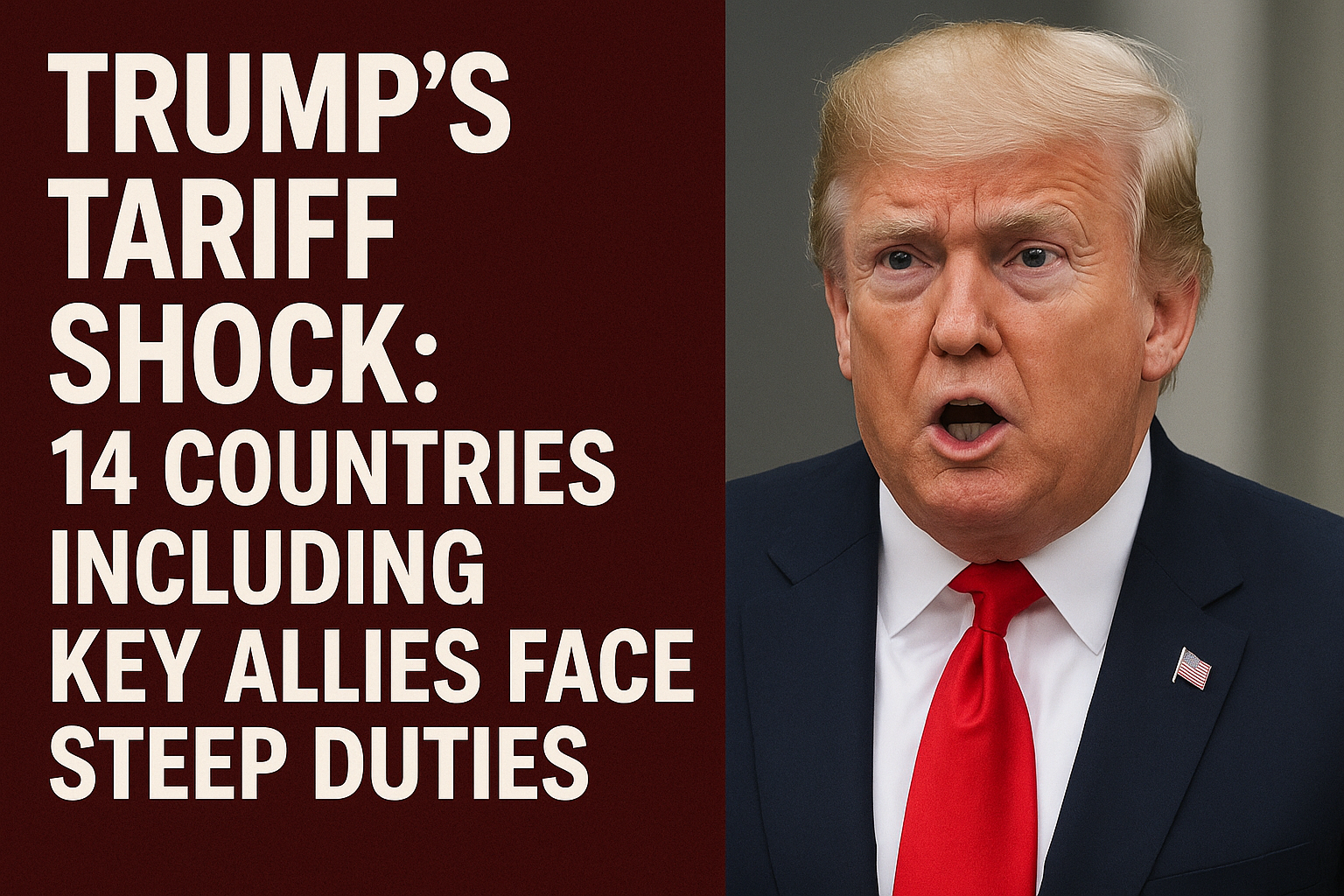
Former U.S. President Donald Trump’s return to trade brinkmanship has rattled global markets once again. The U.S. government has announced steep tariffs on imports from 14 countries — a list that includes both rivals and close allies. Nations affected include Japan, South Korea, Bangladesh, India, Germany, Vietnam, and Turkey, among others.
The new trade measures, which include duties as high as 50% on certain goods, are reportedly part of a broader economic protectionist strategy aimed at reviving American manufacturing and reducing dependence on imports.
This move, however, has triggered alarm bells among global exporters, especially in Asia. Indian exporters, in particular, had been bracing for a blow but have received temporary relief as the U.S. has extended its suspension of reciprocal tariffs until August 1. This extension has been welcomed by industry bodies and trade analysts who see it as an opportunity to renegotiate or mitigate the impact.
According to reports by Moneycontrol and NDTV, industries most affected include electronics, apparel, auto parts, and steel sectors, where countries like South Korea, Vietnam, and India are major players. The U.S. Commerce Department indicated the tariffs are being levied in response to “unfair trade practices” and currency manipulation by some of the listed nations.
Relief for Some, Worry for Others
While the tariff extension offers temporary relief for Indian exporters, concerns remain about the long-term stability of trade relations with the U.S. “This kind of tariff unpredictability discourages investment and supply chain stability,” said a spokesperson from India’s Federation of Export Organisations (FIEO).
Japan and South Korea, traditional U.S. allies, have expressed disappointment through diplomatic channels, emphasizing that such tariffs could strain defense and economic ties.
Meanwhile, UBS strategist Paul Donovan told Bloomberg that the delay in enforcement could be an attempt to “save Christmas” for U.S. retailers and consumers, especially those relying on imported goods for the holiday season.
The Broader Picture
These new measures appear to revive the hardline trade tactics seen during Trump’s first term, reviving tensions that had somewhat cooled under the Biden administration. Some experts believe this could mark the beginning of a renewed trade war with both economic and geopolitical ramifications.
Economists warn that retaliatory tariffs from affected countries could follow, putting more pressure on global supply chains already burdened by inflation and geopolitical unrest.
As the world waits for more clarity, trade ministers across Asia and Europe are expected to hold urgent discussions to reassess export strategies and mitigate fallout.




