



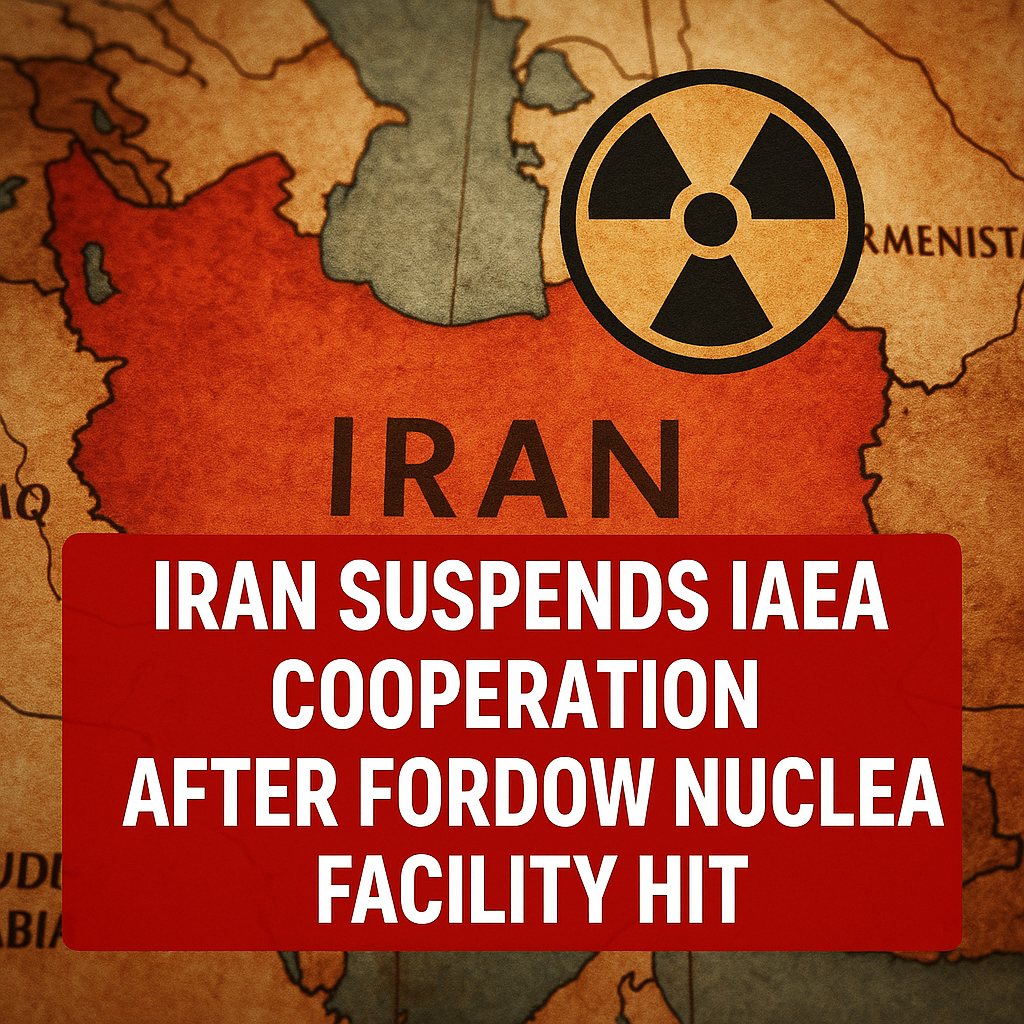
In a bold move intensifying global nuclear tensions, Iran has officially suspended its cooperation with the International Atomic Energy Agency (IAEA), following severe damage to its Fordow uranium enrichment facility. President Ebrahim Raisi signed the legislation into law on Tuesday, cementing Tehran’s decision to reduce transparency with the UN nuclear watchdog.
The move comes days after unconfirmed reports of extensive damage to the Fordow nuclear site, located deep underground near Qom, Iran. While Iranian officials have not publicly named the cause, local reports suggest that a series of military strikes may have targeted the facility, which has long been under international scrutiny due to its capability to enrich uranium to weapons-grade levels.
Iranian state media said the “Strategic Law on the Lifting of Sanctions and Protection of the Iranian Nation’s Interests” was implemented after Parliament’s recent vote. The law mandates the suspension of “voluntary transparency measures” under the Additional Protocol of the Nuclear Non-Proliferation Treaty, effectively barring IAEA inspectors from accessing Iranian nuclear facilities without explicit government approval.
“The West must understand that Iran will not tolerate aggression or manipulation of its sovereign rights,” stated Mohammad Eslami, head of Iran’s Atomic Energy Organization. “We are committed to peaceful nuclear progress, but we will not bow to coercion or external interference.”
This latest development is seen as a response not only to physical threats against Iranian infrastructure but also to mounting pressure from the United States and its allies to curb Iran’s nuclear capabilities. The Biden administration has not officially commented on the reported strike, but U.S. intelligence agencies have expressed growing concerns over Iran’s nuclear trajectory.
Tensions in the region have also been fueled by Israel’s insistence on preventing Iran from acquiring nuclear weapons. Analysts suggest that the Fordow strike—if externally orchestrated—may have been part of a preemptive strategy to delay Iran’s uranium enrichment efforts.
The IAEA expressed regret over the decision. In a statement, Director General Rafael Grossi urged Iran to “return to full transparency and cooperation,” warning that the lack of access undermines international efforts to monitor nuclear proliferation risks.
“The agency’s ability to verify the peaceful nature of Iran’s nuclear program is now significantly limited,” the statement read.
Experts warn that this development could trigger a renewed nuclear standoff similar to that of the early 2000s, potentially collapsing any remaining hopes for the revival of the 2015 Joint Comprehensive Plan of Action (JCPOA), also known as the Iran nuclear deal.
With tensions escalating, the global community awaits further clarification on the extent of the Fordow damage and whether diplomatic channels can prevent further deterioration in relations between Iran and the West.
As of now, the Fordow facility remains under heavy security, with no independent confirmation of the strike’s full impact. However, the political fallout is already reverberating across diplomatic circles, with growing calls for restraint and re-engagement.




