



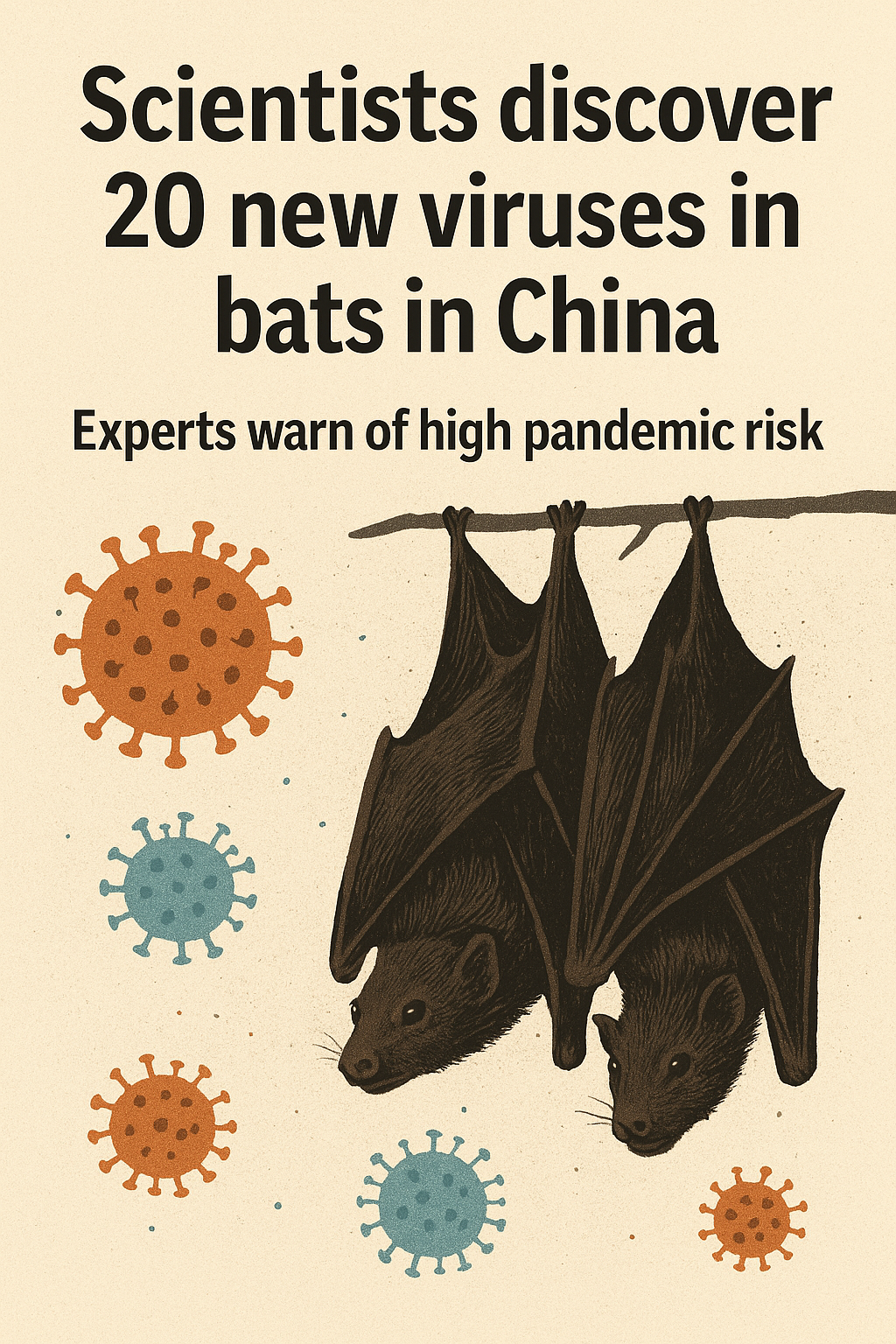
A major new study has revealed the discovery of 20 previously unknown viruses in bat populations in southern China, several of which are genetically similar to highly lethal human viruses like Nipah and Hendra. The breakthrough, reported by international virologists, is being treated as a serious warning sign for potential future pandemics.
The viruses were identified in fruit bats living in orchards in Yunnan province, a known hotspot for zoonotic diseases. Researchers warn that some of these viruses belong to the Paramyxoviridae family, notorious for including diseases that cause severe brain and respiratory infections in humans and animals.
Among the most concerning findings were viruses related to the Nipah virus, which has a mortality rate of up to 75%. Nipah is classified by the World Health Organization (WHO) as a priority disease with pandemic potential due to its high fatality rate and lack of specific treatment or vaccine.
“These viruses haven’t infected humans yet, but their structure suggests it’s entirely possible,” said a researcher involved in the study. “What’s alarming is how close these new strains are to some of the deadliest pathogens we know.”
The viruses were discovered through genetic sequencing of bat samples collected over the past year. Scientists involved in the research emphasize the urgent need for greater surveillance and regulation, especially in areas where wildlife and humans closely interact.
This discovery comes as the world continues to grapple with the aftereffects of the COVID-19 pandemic, itself widely believed to have zoonotic origins. With global health systems still recovering, experts warn that early detection and response to such emerging threats are more important than ever.
Dr. Emily Grant, an epidemiologist at the University of Melbourne, commented:
“A virus jumping from bats to humans is not a matter of if, but when. Learning from COVID-19, we must prioritize early warning systems and fund proactive research.”
China’s health authorities have stated they are reviewing the findings and monitoring bat populations for any signs of spillover. International agencies like the WHO and the CDC are also assessing the data for pandemic preparedness planning.
Public health experts say that protecting forests, limiting human-wildlife contact, and monitoring wildlife trade are critical steps in preventing such viruses from crossing over to humans.
As the scientific community races to better understand these new viruses, the world is reminded once again: the threat of the next pandemic is not gone — it is evolving.




